

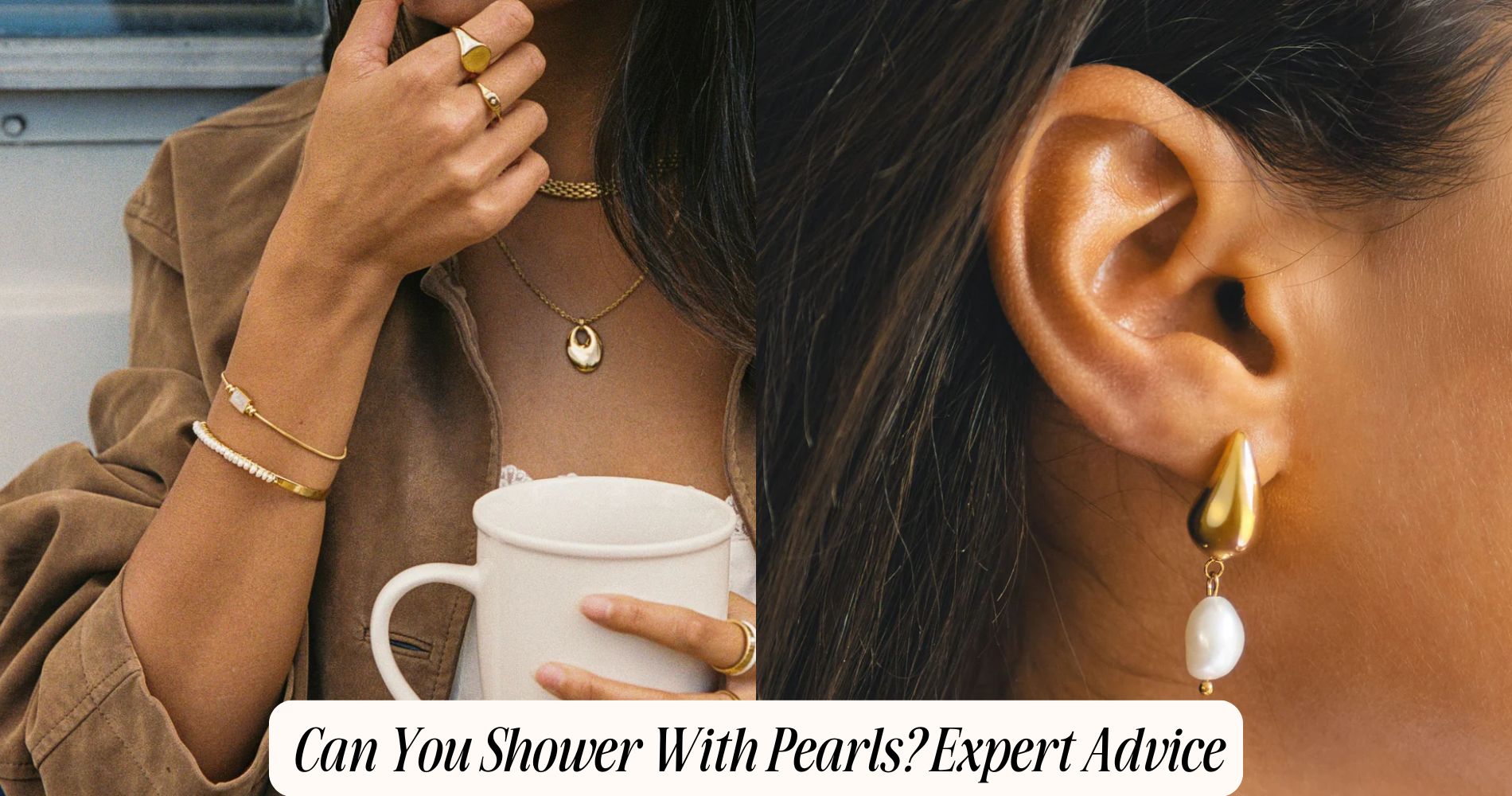
Can You Shower With Pearls? Expert Advice
Can you shower with pearls? No—pearls should never be worn in the shower. Their porous nacre absorbs chlorinated or hard water, which can cause microcracks, dull luster, and weakened silk threads. Heat and steam stress nacre layers and may destabilize dyes, while shampoos and soaps leave residues that abrade surfaces and mute overtones. Always remove pearls before bathing, workouts, and blow-drying, and put them on after skincare and fragrance. Gently wipe with a soft cloth after each wear and store them in a cool, padded, dry space. For everyday elegance handled with proper care, explore styles from our Freshwater Pearls Jewelry collection—next, learn exact cleaning and storage methods.
Why Pearls and Water Don’t Mix
Two simple facts explain why pearls and water don’t mix: pearls are porous organics, and modern water isn’t just H2O.
You’re dealing with calcium carbonate crystals bound by conchiolin and trace moisture—pearl composition that’s sensitive to pH shifts and dissolved minerals.
During water exposure, chlorinated or hard water infiltrates microscopic pores, leaching bound water and weakening the organic matrix. That accelerates microcracking and dulling.
Thermal swings in showers expand and contract nacre layers, stressing the structure. Even brief soaking can raise the risk of delamination at the drill hole and thread degradation in strung pieces.
You protect integrity by keeping pearls dry, wiping them with a soft cloth after wear, and storing them away from humid bathrooms.
Prevention preserves nacre density and surface integrity.
The Effects of Shampoo, Soap, and Conditioner on Luster
Ever wonder why your pearls look flatter after a wash day? You’re seeing how detergents strip their delicate nacre. Common shampoo ingredients—surfactants, fragrances, silicones, and chelators—cling to the surface, displace natural moisture, and leave microfilm that scatters light.
Soap residues and conditioner deposits fill microscopic pores, dulling reflection and muting overtones. Even “gentle” formulas can lower luster by altering surface chemistry and promoting fine abrasion during toweling.
To preserve sheen, remove pearls before washing. If exposure happens, rinse them promptly with cool, clean water, then gently pat dry with a soft, lint-free cloth. Don’t rub. Lay them flat to air-dry fully before storing.
Keep pearls away from leave-in products; aerosols and mists settle invisibly and accumulate. Consistent avoidance maintains nacre integrity and lasting brilliance.
Steam, Heat, and Humidity: Hidden Risks to Pearls
Though pearls seem resilient, steam, heat, and high humidity quietly degrade their nacre. You’re dealing with an organic composite of aragonite platelets and conchiolin; both respond poorly to thermal stress and moisture saturation.
Repeated steam exposure opens micro-gaps between layers, then cool-down cycles contract them, accelerating crazing and dullness. Heat dries the thin organic matrix, making it brittle, while humidity damage swells threads and weakens drill holes, risking loosening or cracking around the bore.
Temperature spikes also destabilize dyes in treated pearls and disturb matching in strands. Metal components expand and contract faster than nacre, creating mechanical stress at knots and cups.
Protect pearls by keeping environments stable, cool, and dry. After incidental moisture, let them air-dry fully at room temperature, away from heaters and enclosed steam.

When to Remove Pearls in Your Daily Routine
Given how steam and heat weaken nacre and fittings, you should set clear points in your day to take pearls off before exposure starts.
Remove pearl jewelry before showering, bathing, or entering a sauna or steam room. Take it off before workouts—sweat is mildly acidic and degrades silk threads.
Skip wearing pearls while blow-drying or using hot styling tools; the heat dries nacre and loosens adhesives.
In your daily routine, pearls go on last and come off first.
Apply sunscreen, perfume, and lotion, let them set, then wear your pearls to avoid chemical contact.
Remove them before dishwashing, cleaning, or swimming—chlorine and detergents strip luster.
If you commute in humid weather, carry a soft pouch and store pearls until you’re indoors, climate-controlled, and sweat-free.
How to Safely Clean Pearls at Home
Because pearls are organic and delicate, clean them with the gentlest methods and minimal moisture. After each wear, wipe them with a soft, lint-free cloth to remove oils and perspiration.
For deeper care, choose pearl cleaning methods that avoid abrasives, acids, ammonia, alcohol, and ultrasonic devices.
Mix a drop of mild, fragrance-free dish soap in a cup of lukewarm water—one of the safest safe cleaning solutions. Lightly dampen a microfiber cloth with the solution and wipe each pearl, keeping liquid away from the drill holes and knots.
Immediately follow with a second cloth barely dampened with plain water to lift residue. Pat dry thoroughly with a soft towel. If strands seem grimy near knots, use a barely moistened cotton swab to target grime without soaking.

Proper Storage to Prevent Scratches and Drying
After cleaning, safeguard your pearls by storing them so they won’t scratch, dehydrate, or stretch. Use a dedicated, fabric-lined box or soft pouch to guarantee proper storage and reliable scratch prevention.
Keep pearls separate from metals and harder gems; nacre is soft and marks easily. Lay strands flat to avoid string fatigue, and never hang them.
Maintain moderate humidity—around 45–55%—so the nacre doesn’t dry out and craze. Avoid airtight plastics that trap chemicals; choose breathable materials like cotton or silk.
Wipe pearls with a lint-free cloth before putting them away to remove skin oils and moisture. Keep them away from heat sources, sunlight, and desiccants.
Label storage containers, and check them periodically for frayed silk, loosened clasps, or abrasive debris.
Wearing Pearls: Care Tips for Necklaces, Studs, and Pendants
While pearls thrive on regular wear, you must treat them gently to preserve their nacre and luster.
Put pearls on last and take them off first. Apply fragrance, hair spray, and sunscreen before you dress; let them dry fully. Keep pearls away from hot tools, chlorinated water, and shower steam—moisture and chemicals dull surfaces and weaken silk.
For necklaces, confirm a snug clasp and avoid tugging from bags or children. Rotate strands to minimize friction at contact points.
For studs, use supportive backs and wipe posts after wear to prevent skin oils from migrating.
For pendants, choose smooth bails and chains; avoid textured metals that abrade.
After each wear, wipe pearls with a soft, slightly damp cloth. Respect pearl fashion and pearl symbolism by preserving their integrity.
Professional Maintenance and Restringing Guidelines
Daily care only goes so far; schedule professional checkups to keep pearls secure and structurally sound. Have a jeweler inspect knots, clasps, and drill holes every 6–12 months, sooner if you wear the strand often or expose it to humidity.
A pro will identify stress lines, thinning silk, and micro-abrasions you’ll miss.
Request professional restringing at the first signs of slack knots, uneven spacing, or frayed thread. Insist on silk or a high-grade synthetic with French wire at the clasp, double-threading at stress points, and uniform knotting between each pearl to prevent rubbing.
Don’t accept improvised straining techniques; they can deform holes and weaken nacre. After restringing, verify length, symmetry, and knot tension.
Store the receipt and service notes to track maintenance intervals.

Frequently Asked Questions
Can Pearl Coatings or Treatments Change Water Resistance?
Yes. Certain coatings moderately enhance water resistance, but they don’t transform pearl durability. You should still limit water exposure. Opt for high-quality lacquers or resin sealants, avoid steam and chlorinated water, and routinely inspect for micro-cracking, lifting, or clouding.
How Do Cultured vs. Natural Pearls Handle Occasional Splashes?
Both handle brief splashes similarly: they’ll survive, but you shouldn’t risk it. Cultured pearls and natural pearls both absorb moisture, weakening nacre and luster. Blot immediately, air-dry fully, avoid soaps and heat, and restring periodically to preserve integrity.
Are Saltwater and Chlorine Exposures Equally Damaging to Pearls?
No. Both harm pearls, but chlorine reactions are harsher and faster than saltwater effects. You’ll see luster loss, dehydration, and micro‑pitting. Rinse with fresh water immediately, dry gently, avoid chemicals, and store cool, buffered, and away from heat.
Do Metal Settings Corrode Faster When Pearls Get Wet?
Yes. Moisture and acids from wet pearls speed metal corrosion, especially silver and low-karat alloys. Prioritize jewelry care: dry pieces promptly, avoid soaps, chlorine, and salt, rinse with fresh water, store separately, and schedule regular professional inspections and cleanings.
Can Skincare Acids or Retinoids Affect Pearls Worn Afterward?
Yes. Acids and retinoids can etch nacre and dull luster. For pearl care and skincare compatibility, apply products first, let them fully absorb, wash hands, then wear pearls. After wear, wipe pearls with a damp, soft cloth.
Conclusion
Treat your pearls like the organic gemstones they are. Don’t shower, swim, or sauna in them. Remove them before washing, exercising, or applying products. Clean gently with a damp, soft cloth; never soak. Let strands dry flat, then store in a soft pouch, away from heat and chemicals. Wear them often so they don’t dry out, but inspect regularly. At the first sign of fraying or stretching, have them professionally restrung—ideally every 1–2 years. Protect luster, preserve value.





Leave a comment
This site is protected by hCaptcha and the hCaptcha Privacy Policy and Terms of Service apply.