

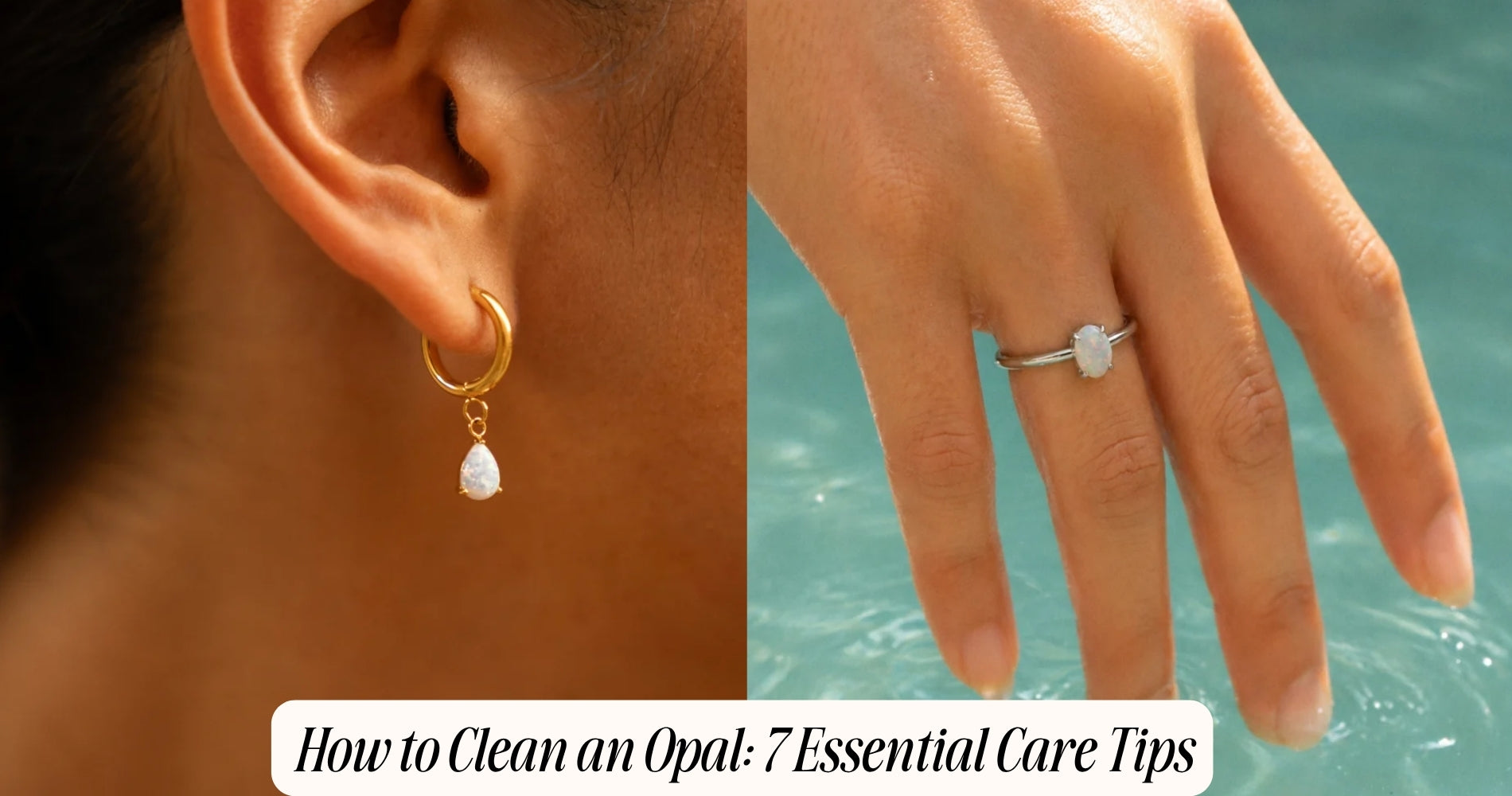
How to Clean an Opal: 7 Essential Care Tips
Opals are among the most captivating gemstones available, known for their unique play of color that seems to shift and shimmer depending on the angle and lighting. But this beauty comes with a bit of extra responsibility, since opals are significantly more delicate than many other popular gemstones. If you own opal jewelry and want to keep it looking its best, learning how to clean an opal properly is essential, since standard gemstone cleaning methods can actually cause serious, sometimes irreversible damage to this particularly sensitive stone.
In this guide, we will walk through seven essential tips for cleaning and caring for opal jewelry safely, helping you avoid common mistakes that could compromise this beautiful stone's appearance and structural integrity. If you love opal's mesmerizing color play, our Stone Collection features a variety of natural gemstone jewelry worth exploring.
Why Opals Require Special Care
Before diving into specific cleaning tips, it helps to understand why opals are so much more delicate compared to many other gemstones. Opals contain a significant amount of water within their internal structure, typically between 3 and 21 percent depending on the specific stone, which contributes to their unique optical properties but also makes them particularly vulnerable to temperature changes, dehydration, and physical impact.
Additionally, opals rank relatively low on the Mohs hardness scale, typically between 5.5 and 6.5, making them considerably softer and more prone to scratching or cracking compared to harder stones like sapphire or diamond, which rank significantly higher on this same scale.

Tip 1: Avoid Soaking Opals in Water
Unlike many other gemstones that can be safely soaked during cleaning, opals should never be submerged in water for extended periods. Because opals naturally contain water within their structure, prolonged soaking can potentially cause the stone to absorb additional moisture unevenly, which may lead to cracking as the stone later dries and the water content readjusts.
Instead of soaking, always opt for a quick, gentle wipe down method when cleaning opal jewelry, which we will cover in more detail in the following tips.
Tip 2: Use a Soft, Slightly Damp Cloth
The safest way to clean an opal is to gently wipe the stone using a soft, slightly damp cloth. This method effectively removes surface oils, lotion residue, and everyday buildup without exposing the stone to the risks associated with soaking or more aggressive cleaning methods.
When wiping, use gentle, light pressure, moving the cloth softly across the surface of the stone rather than applying significant force. After wiping, immediately dry the opal with a separate, dry, soft cloth to remove any remaining moisture from the surface.

Tip 3: Avoid Harsh Chemicals and Cleaning Solutions
Opals are particularly sensitive to chemical exposure, making it essential to avoid standard jewelry cleaning solutions, ultrasonic cleaners, and household chemicals when caring for these delicate stones. Chemicals commonly found in jewelry cleaning products, as well as everyday items like perfume, hairspray, and certain lotions, can potentially damage an opal's surface or affect its characteristic color play over time.
To minimize this risk, always apply perfume, lotion, and hairspray before putting on opal jewelry, allowing these products to fully dry or absorb before the stone comes into contact with your skin or surrounding air.
Tip 4: Never Use an Ultrasonic or Steam Cleaner
While ultrasonic and steam cleaners are commonly used for cleaning many types of jewelry, these methods pose a particularly significant risk to opals. The vibrations produced by ultrasonic cleaners can cause existing microscopic fractures within the stone to worsen, potentially leading to visible cracking or even breakage.
Similarly, steam cleaners introduce both heat and moisture in a way that can be especially damaging to opals, given their sensitivity to both temperature fluctuations and water absorption. Always avoid these cleaning methods entirely when caring for opal jewelry, regardless of how effective they may be for other, more durable gemstones.
Tip 5: Protect Opals From Extreme Temperature Changes
Because opals contain water within their structure, they are particularly sensitive to sudden or extreme temperature fluctuations, which can potentially cause the stone to crack. Avoid exposing opal jewelry to significant temperature changes, such as moving directly from a very cold environment to a hot one, or leaving opal jewelry in a location prone to temperature extremes, such as a car dashboard in direct sunlight.
This sensitivity to temperature change is part of why gentle, room temperature cleaning methods are so strongly recommended for opals, rather than any cleaning approach involving hot water or significant temperature shifts.

Tip 6: Store Opals With Extra Care
Proper storage plays a significant role in maintaining an opal's condition over time, complementing careful cleaning practices. Store opal jewelry separately from harder gemstones and metals to prevent scratching, since opal's relatively low hardness makes it particularly vulnerable to contact with more durable materials.
Additionally, because opals can be sensitive to very dry conditions, which may contribute to dehydration and potential cracking over extended periods, some experts recommend storing opals in a slightly humid environment, such as with a damp cotton ball nearby, though this approach should be used cautiously and is generally more relevant for long term storage rather than everyday jewelry box use.
Tip 7: Have Opals Professionally Inspected Periodically
Given their delicate nature, having opal jewelry periodically inspected by a professional jeweler can help catch any developing issues, such as small fractures or loosening settings, before they become more significant problems. A professional can also advise on any specific care considerations relevant to your particular opal, since factors like the specific type of opal and its individual water content can affect its overall sensitivity and care needs.
This is particularly valuable for inherited opal pieces or those without clear documentation regarding their specific origin and characteristics, since a professional evaluation can provide helpful, piece specific guidance beyond general care recommendations.
Understanding Different Types of Opal
It is worth noting that not all opals are created equal in terms of durability, and understanding the specific type you own can help inform your care approach. Precious opal, known for its distinctive play of color, is generally more delicate and requires the careful handling described throughout this guide. Common opal, which lacks this color play, tends to be somewhat more durable, though it still benefits from gentle care given its relatively soft nature compared to harder gemstones.
Additionally, some opals undergo treatments, such as stabilization with resin, which can affect their specific care requirements. If you are unsure about your particular opal's type or treatment history, consulting with a professional jeweler can help clarify the most appropriate care approach for your specific piece.

What to Do If Your Opal Shows Signs of Damage
If you notice cracking, clouding, or a change in your opal's color play, it is best to have the stone evaluated by a professional jeweler promptly, rather than attempting any at home remedies. Because opals are so sensitive to further damage from improper handling, professional evaluation and, if necessary, repair offers the safest path forward for addressing any developing issues.
In some cases, minor surface issues may be addressable through professional polishing or treatment, though more significant structural damage, such as deep cracks, may require more substantial repair or, in some unfortunate cases, replacement of the stone entirely.
Why Gentle Care Matters So Much for Opals
Unlike more durable gemstones that can tolerate a wider range of cleaning methods and everyday wear without significant risk, opals require a consistently gentle approach due to their unique combination of water content and relative softness. Taking the time to understand and follow these specific care guidelines helps ensure your opal jewelry continues to display its captivating color play for many years, rather than risking damage through well intentioned but inappropriate cleaning methods.
Final Thoughts
Learning how to clean an opal properly comes down to gentle, careful handling that respects this gemstone's unique sensitivity to water, chemicals, and temperature changes. By avoiding soaking, harsh chemicals, and ultrasonic cleaners, and instead relying on a soft, slightly damp cloth for regular maintenance, you can help preserve your opal's beautiful, distinctive color play for years to come.
With just a little extra care and attention, your opal jewelry can remain a stunning, treasured part of your collection, continuing to display the mesmerizing shimmer that makes this gemstone so uniquely captivating.
Frequently Asked Questions
1. Can I clean my opal with jewelry cleaning solution?
No, standard jewelry cleaning solutions are often too harsh for opals. A soft, slightly damp cloth is the safest option for regular cleaning.
2. Why should I avoid soaking my opal in water?
Opals contain water within their structure, and soaking can cause uneven moisture absorption, potentially leading to cracking as the stone later dries.
3. Is it safe to wear opal jewelry every day?
Yes, with proper care, opals can be worn regularly, though extra caution around chemicals, temperature changes, and physical impact is important for daily wear.
4. What should I do if my opal cracks?
Consult a professional jeweler promptly, since attempting at home repairs on a delicate, already damaged opal could worsen the issue.





Leave a comment
This site is protected by hCaptcha and the hCaptcha Privacy Policy and Terms of Service apply.