

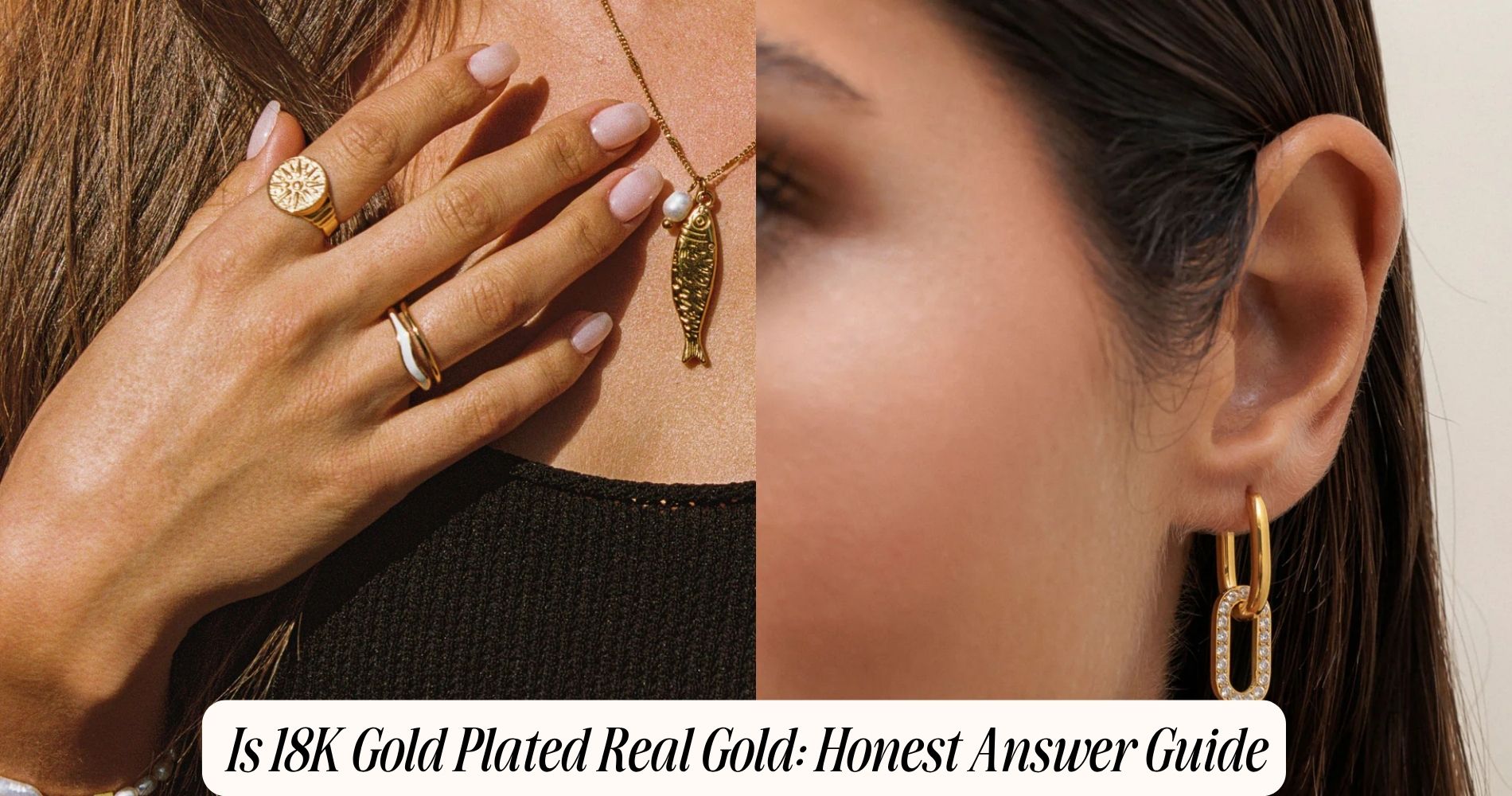
Is 18K Gold Plated Real Gold: Honest Answer Guide
The phrase "18K gold plated" appears on product pages across the jewelry market and generates a specific question worth answering clearly: is the gold real, and does that matter for how the piece behaves? If you are asking is 18K gold plated real gold, the direct answer is yes and no, depending on which part of the piece you are asking about. The plating layer uses genuine 18K gold. The base metal beneath it is not gold at all. Everyday Gold Jewelry built on PVD coating rather than standard electroplating takes a fundamentally different approach to the gold appearance problem.
This guide explains what 18K gold plating actually means, how long it lasts, how it compares to other gold jewelry constructions, and what the honest expectations are for daily wear.
What 18K Gold Plated Actually Means
Gold plating is a manufacturing process that deposits a thin layer of gold onto the surface of a base metal through electroplating. In this process, the piece is submerged in a solution containing dissolved gold ions, and an electric current causes those ions to deposit onto the metal surface in a thin, even layer.
The 18K designation refers specifically to the purity of the gold used in that deposited layer. 18K gold is 75% pure gold and 25% other metals, typically silver, copper, and zinc. This is genuine gold. The 18K designation on a plated piece is not misleading in terms of what the plating material is: the gold layer is real 18K gold.
What the 18K designation does not describe is the base metal beneath the plating, the structural material that makes up the bulk of the piece. In virtually all 18K gold plated fashion jewelry, that base metal is brass, a copper-zinc alloy. Some pieces use copper or zinc alloys directly. A small number of quality plated pieces use sterling silver or stainless steel as the base. The base metal determines how the piece behaves over time far more than the gold layer does, because the gold layer is too thin to have meaningful structural or chemical impact.

How Thick Is 18K Gold Plating
The gold layer in a standard 18K gold plated piece is typically 0.5 to 1 micron thick. Higher-quality plated pieces at the upper end of the fashion jewelry market reach 2 to 2.5 microns. These numbers describe a genuinely thin deposit. One micron is one thousandth of a millimeter, which is approximately 70 times thinner than a human hair.
The 18K purity of the plating layer does not change this thickness. An 18K plated piece and a 14K plated piece can be deposited at identical thicknesses: the karat number describes the gold content of the deposited material, not how much of it is applied. A thicker layer of 14K gold plating would outlast a thinner layer of 18K gold plating, all other variables being equal. Buyers who assume 18K plating means more gold or longer-lasting gold than lower karat plating are comparing the wrong variable.
At 0.5 to 1 micron, the gold layer has no meaningful mechanical durability. Daily friction, particularly on ring shanks, bracelet clasps, and necklace chain joins, wears through that layer within weeks to months. The process is gradual and uneven: the highest-friction points lose their plating first while lower-contact surfaces retain it longer, which produces the patchy, worn appearance that most people recognize as plating failure before the piece looks uniformly different.

Is 18K Gold Plated Real Gold: The Honest Breakdown
The question has two honest answers depending on what is actually being asked.
Is the gold layer real gold? Yes. The deposited layer in 18K gold plated jewelry uses genuine 18K gold alloy. It is real gold in terms of material composition.
Is the piece real gold? No, not in any meaningful sense. Real gold jewelry, meaning solid gold, contains gold throughout its structure. An 18K gold plated piece contains gold only in a surface layer that represents a negligible fraction of the total material by weight. The piece is fundamentally a brass object with a thin gold coating.
This distinction matters for three practical reasons:
Durability. Real solid gold does not wear away from a piece because the gold is the piece. Gold plating wears away because it is a surface coating on a different structural material. Once the coating is gone, the brass beneath it is exposed.
Tarnish and skin reaction. Solid gold does not tarnish and does not cause green skin discoloration. Gold plating does not tarnish while intact, but once the brass base is exposed through plating wear, the copper in brass reacts with skin chemistry to produce both tarnishing and the green skin marks most people associate with fashion jewelry.
Value. Solid gold has intrinsic material value that can be weighed and assessed. Gold plated jewelry has essentially no recoverable gold value. The quantity of gold deposited on a plated piece is so small that it is commercially unrecoverable.

18K Gold Plated vs Other Gold Constructions
Understanding where 18K gold plating sits relative to other gold jewelry constructions helps calibrate expectations correctly.
| Construction | Gold Content | Plating Thickness | Base Metal | Daily Wear Lifespan |
|---|---|---|---|---|
| 18K gold plated (brass base) | Trace, surface only | 0.5 to 2.5 microns | Brass or copper | Weeks to months |
| 18K gold plated (steel base) | Trace, surface only | 0.5 to 2.5 microns | Stainless steel | Months to 1 year |
| Gold vermeil | Trace, surface only | 2.5 microns minimum | Sterling silver | 6 months to 2 years |
| Gold filled | 5% of total weight minimum | 50 to 100 microns | Brass | 1 to 5 years |
| PVD gold-tone coating | Trace, surface only | 2 to 5 microns | Stainless steel | Years, with warranty |
| Solid 18K gold | 75% gold throughout | N/A (solid metal) | None | Indefinite |
The base metal column in this table is the most revealing variable for predicting how a piece behaves over time. An 18K gold plated piece on a brass base and an 18K gold plated piece on a stainless steel base carry the same gold layer, but once that layer wears through, the brass base corrodes and causes skin reactions while the steel base remains stable and does not.
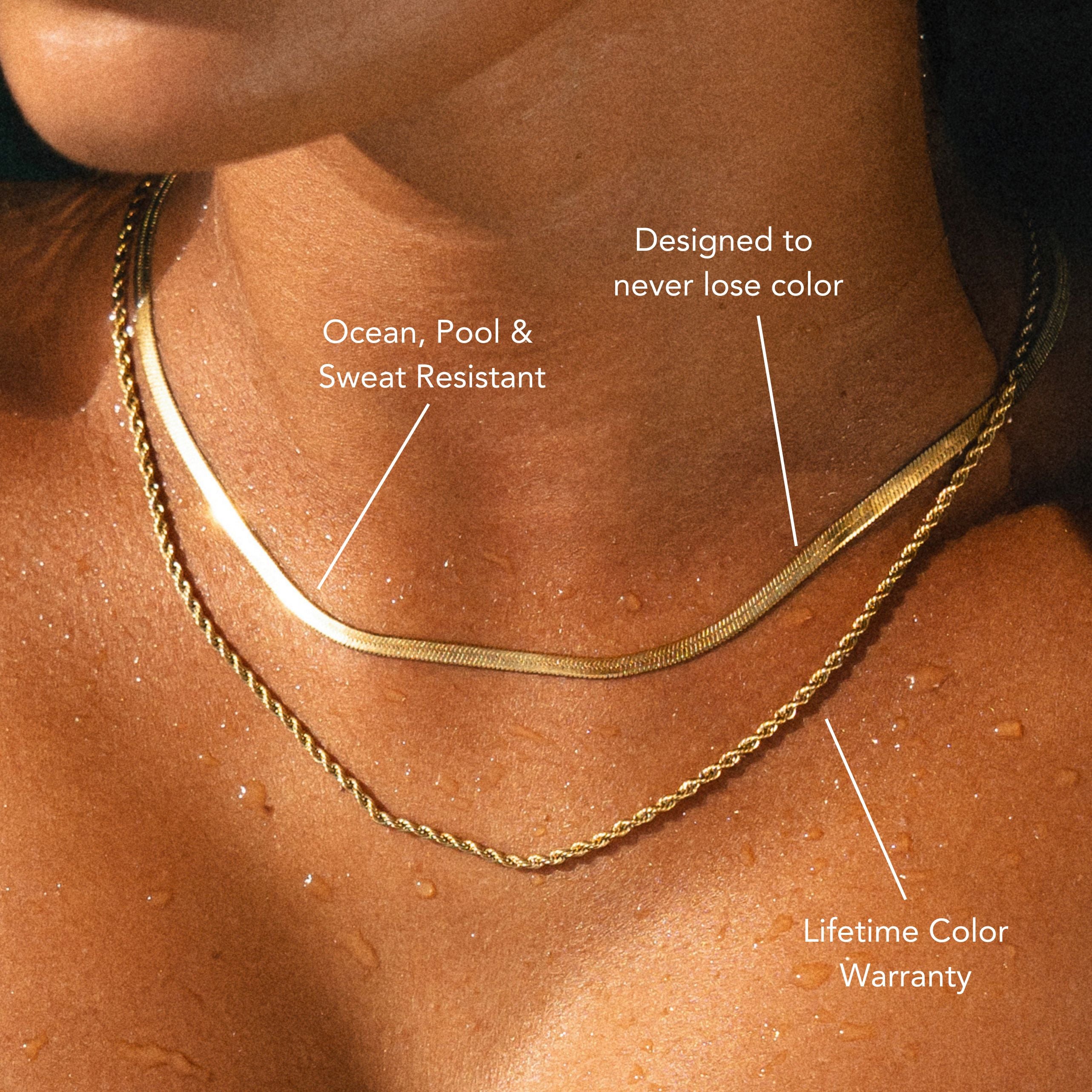
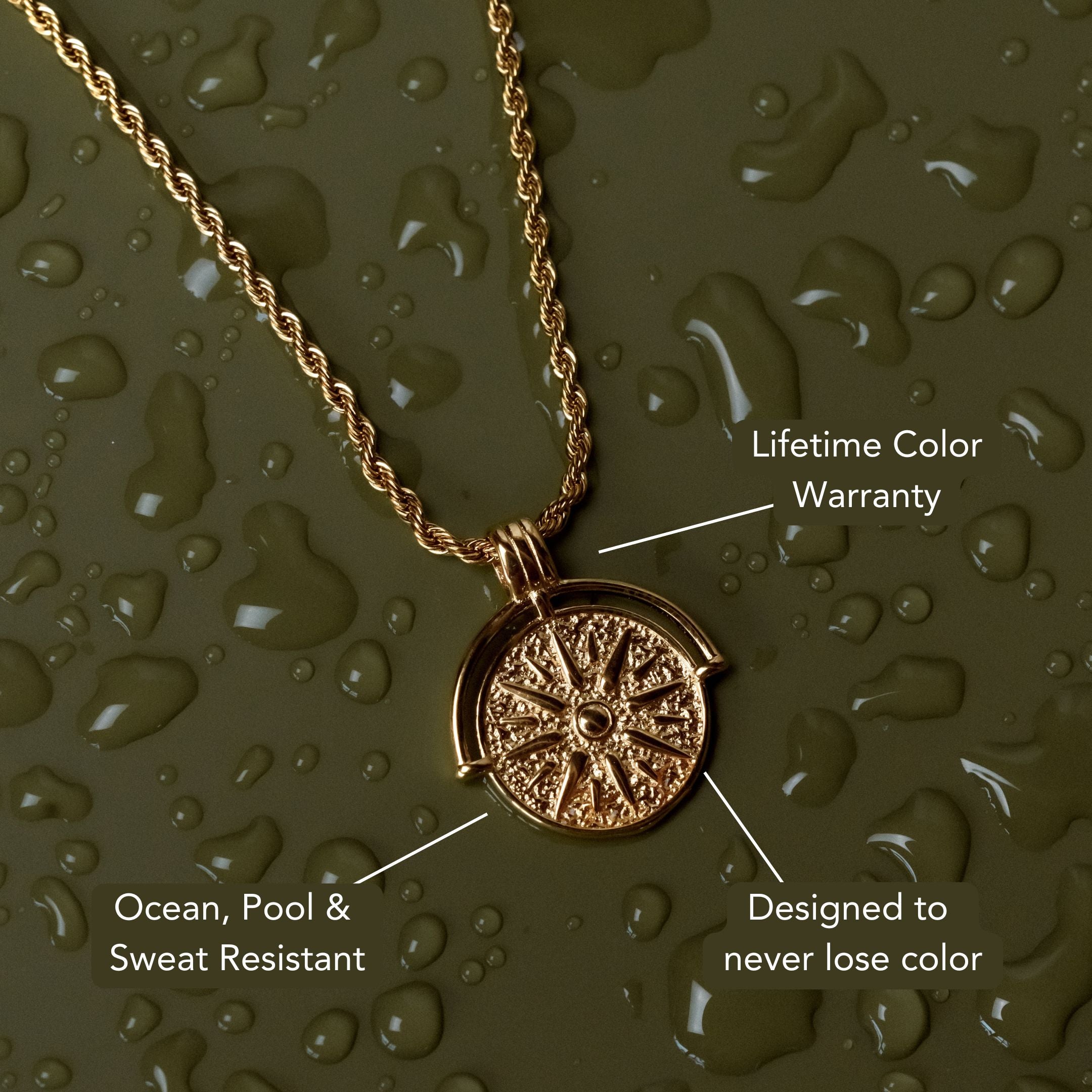
The PVD row warrants specific attention. PVD (Physical Vapor Deposition) coating over stainless steel is not described as 18K gold plated because the coating process and material differ from electroplating. The gold tone comes from a titanium or zirconium nitride compound rather than a gold alloy deposit. The coating is not real gold by composition, but its performance through daily wear, including resistance to tarnishing, skin contact, and water exposure, significantly outperforms genuine 18K electroplating because the atomic-level bond is fundamentally more durable than electroplating's surface adhesion.

How Long Does 18K Gold Plating Last
Realistic lifespan expectations for 18K gold plated jewelry depend heavily on the base metal, the plating thickness, and how the piece is worn.
On a brass base with standard 0.5 to 1 micron plating, daily wear through showers, gym sessions, and skin contact typically produces visible plating wear within two to four months on rings and bracelets, three to six months on necklaces, and one to three months on earring posts. These are the real-world timelines that buyers experience, not the theoretical upper limits of controlled storage.
Extending the life of 18K gold plated jewelry involves removing it before water exposure, applying perfume and skincare products before putting the jewelry on, storing it in a dry airtight container, and handling it gently. Each of these steps reduces the factors that accelerate plating wear. They represent a genuine maintenance commitment that buyers should account for when choosing plated jewelry.
On a stainless steel base, 18K gold plating lasts longer because the base metal does not corrode when the plating eventually wears through. The plating failure itself still occurs at the same rate, but its consequences are less severe: instead of green skin and visible corrosion at exposed points, the stainless steel underneath remains stable.
Frequently Asked Questions
Is 18K gold plated jewelry worth buying?
It depends on how you plan to wear it. For occasional wear with careful maintenance, 18K gold plated jewelry provides gold appearance at accessible prices. For daily active wear through water, sweat, and friction, the plating wears through within months and the brass base beneath it causes the tarnishing and skin reactions most people want to avoid. For daily active wear, PVD-coated stainless steel or solid gold are more suitable constructions.
Will 18K gold plated turn green?
The 18K gold plating itself will not turn your skin green while it remains intact. Once the plating wears through to expose the brass or copper base beneath it, the reactive base metal will cause green skin discoloration through contact with skin acids and moisture. This typically happens first on ring shanks and bracelet undersides, the highest-friction contact points, within weeks to months of daily wear.
Is 18K gold plating better than 14K gold plating?
For the appearance of the gold layer while intact, 18K produces a slightly richer, warmer yellow gold tone than 14K. For durability, karat alone does not determine how long plating lasts: thickness and the quality of the electroplating process matter more. A thick 14K plating outlasts a thin 18K plating. The 18K designation on plated jewelry is primarily a marketing indicator of gold tone rather than a durability specification.
How can you tell if jewelry is gold plated or solid gold?
Look for a hallmark stamp. Solid gold carries a karat stamp on the piece itself: 14K, 18K, or 24K. Gold plated pieces sometimes carry a GP or GEP stamp (gold plated or gold electroplated) alongside a karat designation. The absence of any hallmark on a piece marketed as gold strongly suggests plating over an unspecified base. Weight is a secondary indicator: solid gold feels denser than a plated piece of similar size.
Does 18K gold plating tarnish?
The 18K gold layer itself does not tarnish because gold is chemically stable. The tarnishing that people experience with gold plated jewelry comes from the base metal beneath the plating, typically brass or copper, which tarnishes and corrodes once exposed through plating wear. The tarnishing is from the base metal, not the gold.
Conclusion
Is 18K gold plated real gold gets a split answer: the plating layer uses genuine 18K gold, but the piece as a whole is not gold in any meaningful structural or practical sense. The gold layer is real but too thin to last through daily active wear, and the brass base beneath it causes the tarnishing and skin reactions that appear once the plating wears through. For occasional wear with careful maintenance, plated jewelry delivers gold appearance at accessible prices. For pieces worn every day through the full range of life, the construction behind the gold tone determines whether it lasts a season or indefinitely.







Leave a comment
This site is protected by hCaptcha and the hCaptcha Privacy Policy and Terms of Service apply.