

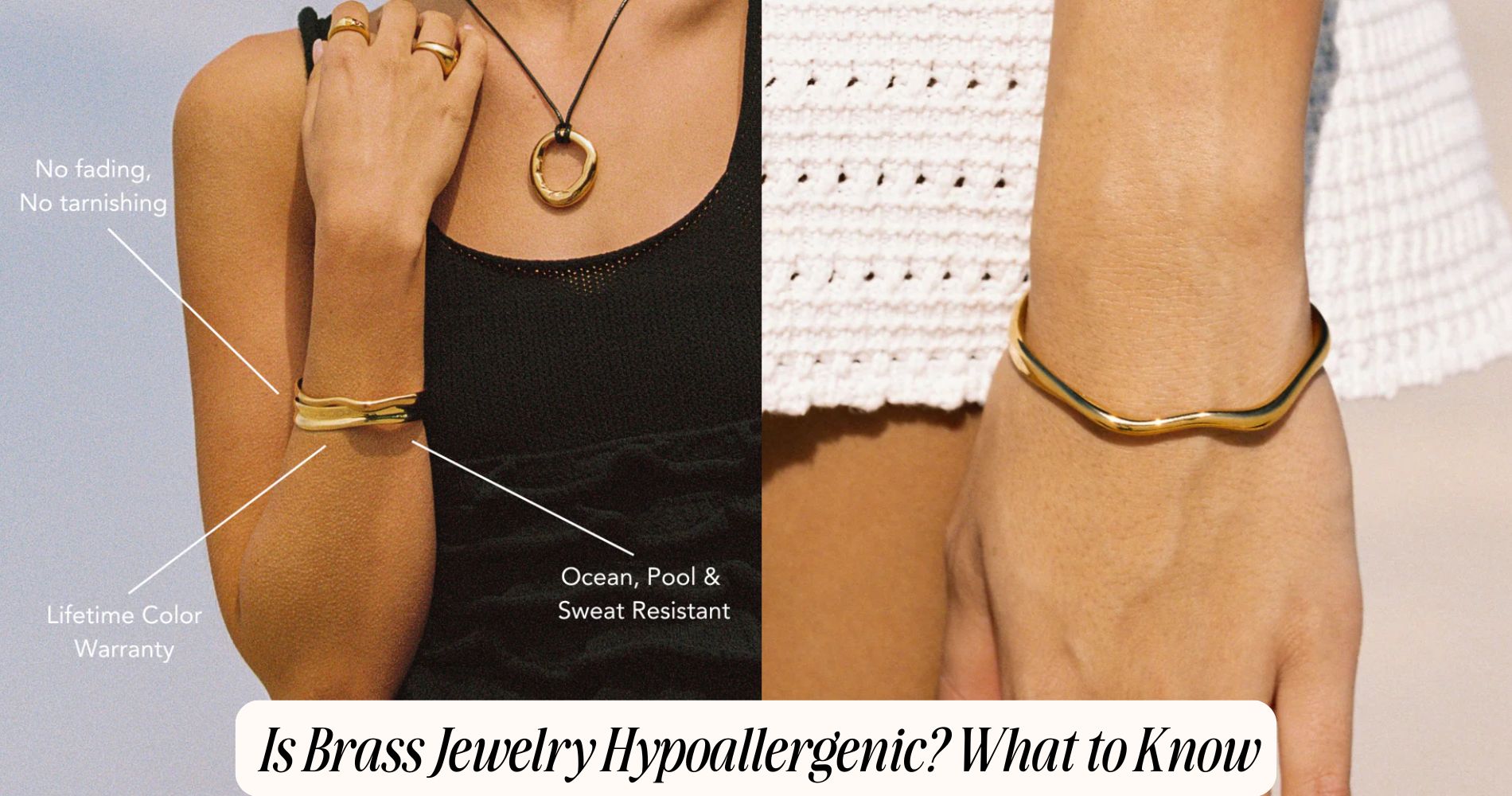
Is Brass Jewelry Hypoallergenic? What to Know
Is brass jewelry hypoallergenic? No—brass isn’t hypoallergenic. It’s a copper–zinc alloy that can release metal ions in sweat and humidity, leading to irritation, green staining, or allergic dermatitis—especially if lead or trace nickel are present. Risk is higher if you have sensitive skin, past metal allergies, piercings, or frequent friction and moisture exposure. To reduce issues, keep pieces dry, wipe them after wear, choose smooth finishes, or apply a clear barrier coating. If reactions continue, switch to titanium or implant-grade steel. For everyday comfort with less maintenance, options like Waterproof Jewelry can be a smarter long-term choice.
What Brass Is Made Of and Why It Matters
Although it’s often grouped with “gold-tone” metals, brass is a copper–zinc alloy whose exact composition drives both its look and skin compatibility.
You’ll see brass composition vary: common formulations range from roughly 60–90% copper with 10–40% zinc. Small additions of other metal alloys—like tin, aluminum, silicon, or lead—tune color, hardness, and machinability. Higher zinc typically yields a paler, more gold-like tone; higher copper reads warmer.
Composition matters because it dictates corrosion behavior, surface stability, and durability.
Leaded brasses machine cleanly but aren’t ideal for prolonged skin contact; low-lead or lead-free brasses are preferable for jewelry. Silicon- or aluminum-bearing brasses resist tarnish better than basic cartridge brass.
When you evaluate brass jewelry, ask for documented alloy grade or compliance certificates to understand what you’re wearing.

How Brass Interacts With Skin and Causes Reactions
Because brass is mostly copper and zinc, it can shed metal ions in sweat and humid conditions, and those ions drive most skin reactions. When you wear brass against warm, moist skin, perspiration lowers pH and increases ion release.
Copper ions can oxidize, leaving green residue, while zinc ions can irritate the stratum corneum. In susceptible people with metal allergies, ions bind skin proteins and form haptens, triggering a delayed-type (Type IV) hypersensitivity response.
You may notice localized itching, redness, dryness, or vesicles beneath the jewelry. Friction and occlusion—tight clasps, rings, or watchbacks—amplify exposure time and ion concentration.
Saltwater, chlorinated pools, cosmetics, and cleansers can accelerate corrosion and ion shedding. Rinsing skin, thoroughly drying, and creating a barrier layer reduce contact, lowering the risk of skin reactions.
Who Is Most Likely to Be Sensitive to Brass
Who reacts most?
You’re more likely to react to brass if you have a history of metal allergies, especially to nickel, since many brass alloys contain trace nickel. If you’ve had earlobe itching from costume earrings or belt-buckle rashes, you’re in a higher-risk group.
People with sensitive skin, atopic dermatitis, or hand eczema show increased reactivity due to a compromised skin barrier that facilitates ion penetration. Frequent sweating, friction, and humid climates amplify exposure by accelerating metal ion release.
Pierced sites, where skin is thinner or disrupted, react more readily. Women report reactions more often, likely from higher cumulative jewelry exposure. Occupational contact (jewelers, hairstylists, machinists) also raises risk through repeated handling.
A prior positive patch test to nickel or copper predicts higher likelihood.

Ways to Reduce Irritation and Tarnish From Brass Jewelry
Defense starts with barriers: create a physical seal between skin and brass to limit ion release and oxidation.
Apply clear nail polish, a lacquer, or dermatologist-tested protective coatings to contact surfaces; reapply when wear is visible. Choose pieces with smooth finishes; microabrasions increase corrosion and skin exposure.
Keep skin and jewelry dry. Sweat, water, and lotions accelerate copper/zinc leaching and tarnish. Remove brass before exercise, swimming, or handwashing.
After wear, wipe with a soft, dry cloth to remove salts and oils. For jewelry care, clean periodically with mild soap and water, dry thoroughly, then store in airtight bags with anti-tarnish strips or silica gel.
Rotate wear to reduce cumulative exposure. If irritation occurs, stop use, cleanse skin, and reassess fit, finish, and maintenance frequency.
Alternatives and When to Choose a Different Metal
Although brass suits many budgets and styles, you should switch metals if you’ve had recurrent dermatitis, green discoloration, or reactions that persist despite barriers and dry-wear habits.
Choose inert metals with low allergenic potential. Go for titanium or implant-grade stainless steel (ASTM F-136/F-138) for piercings and daily wear. Platinum and 18k+ palladium white gold are stable and rarely sensitizing.
Consider fine silver alternatives (sterling can contain trace nickel; verify assays) or argentium silver, which substitutes germanium. For gold, pick 14k–18k yellow gold labeled nickel free options; avoid unknown white-gold alloys.
Niobium is another reliable, corrosion-resistant choice. If you’ve confirmed nickel allergy, insist on third-party nickel-release testing (EN 1811) and clear composition labeling.
For severe histories, start with titanium or niobium exclusively.

Frequently Asked Questions
Does Brass Jewelry Turn Skin Green Permanently or Is It Temporary?
It’s temporary. Brass oxidation effects cause copper salts to rub off, creating green discoloration that washes away. You’re not stained permanently. Skin reaction duration varies: minutes to days, influenced by sweat, pH, lotions. Use barriers or coatings.
How Does Humidity or Sweat Affect Brass Jewelry Wearability?
Humidity and sweat reduce wearability: moisture accelerates brass corrosion, amplifies sweat reaction, and increases skin staining. You’ll see faster tarnish, green residue, and irritation risk. Mitigate humidity effects by drying skin, removing jewelry during exercise, applying barrier coatings, and cleaning promptly.
Can Clear Nail Polish Effectively Seal Brass Against Skin Contact?
Yes, temporarily. You can use clear nail polish to create a skin barrier; nail polish effectiveness declines with friction, sweat, and time. Reapply frequently, inspect for chips, and consider medical-grade barrier films or protective coatings for longer-lasting results.
Are There Cultural or Historical Reasons People Choose Brass Jewelry?
Yes. You choose brass for its cultural significance and historical craftsmanship: West African lost-wax bronzes, South Asian temple adornments, Roman and Victorian accessories. It’s affordable, durable, symbolic of status, protection, and ritual, and patinas beautifully, reinforcing ancestral continuity.
How Should Brass Jewelry Be Stored to Minimize Skin Reactions Later?
Store brass dry, cool, and airtight. Use silica packets, storage techniques that limit humidity, and protective pouches or anti-tarnish bags. Wipe oils after wear. Separate pieces to prevent abrasion. Avoid bathrooms. Periodically seal with microcrystalline wax to reduce skin exposure.
Conclusion
Brass isn’t reliably hypoallergenic. Because it often contains nickel and sometimes lead, you’re more likely to react if you have nickel sensitivity, eczema, or compromised skin barriers. You can reduce risk by choosing nickel‑free brass, sealing pieces with clear lacquer, keeping jewelry dry, cleaning tarnish promptly, and removing it during sweating or sleep. If you react despite precautions, switch to inert metals: solid titanium, niobium, platinum, or high‑karat (18k+) yellow gold. When in doubt, patch‑test before regular wear.





Leave a comment
This site is protected by hCaptcha and the hCaptcha Privacy Policy and Terms of Service apply.