

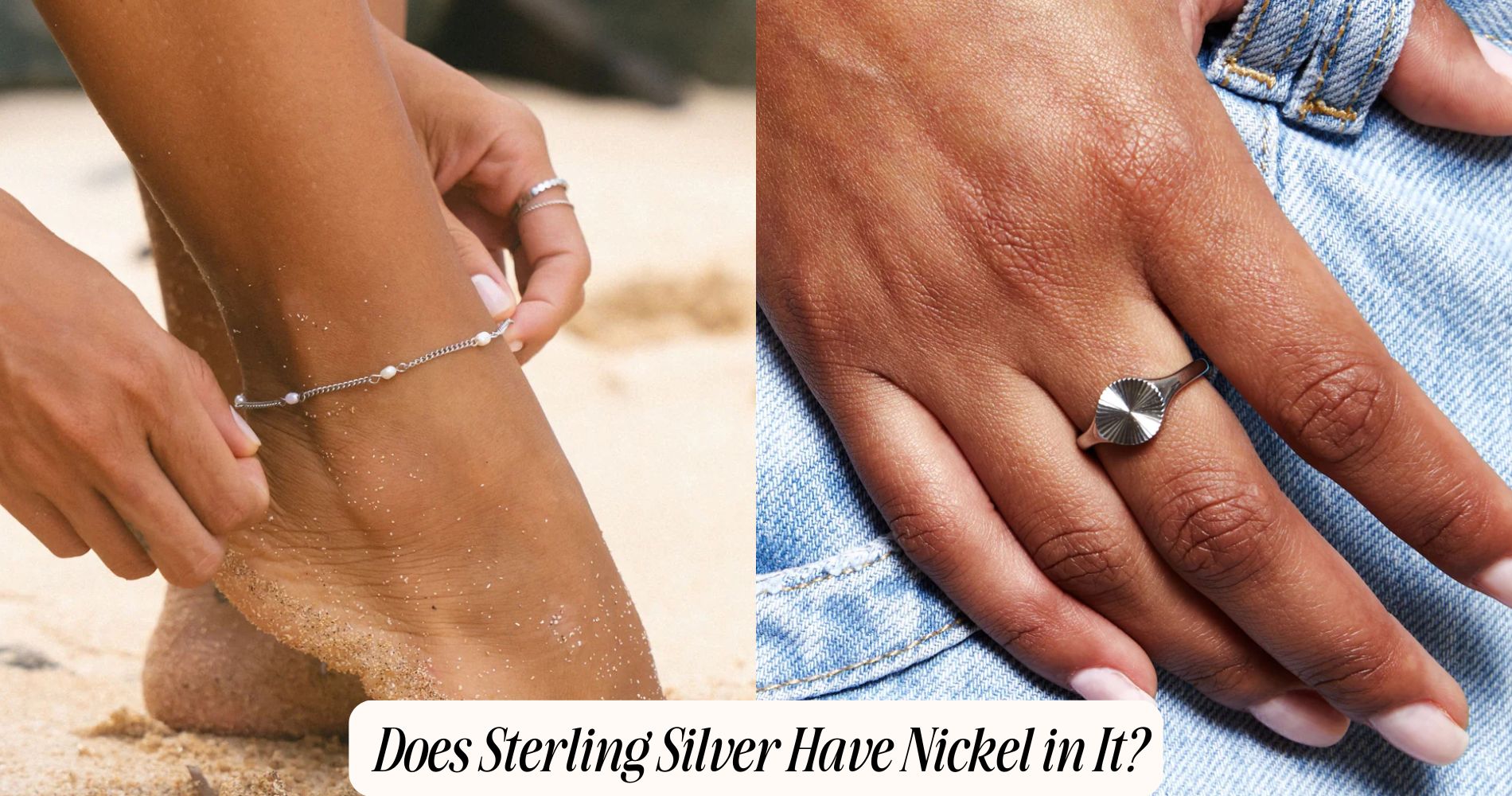
Does Sterling Silver Have Nickel in It?
Does sterling silver have nickel in it? In most cases, no—true sterling silver (.925) is made of 92.5% pure silver with the remaining portion typically copper or other non-nickel metals added for strength and workability. However, low-quality pieces, plated jewelry, or mixed-alloy components may introduce nickel and cause skin reactions. If you’re sensitive, always verify hallmarks, request material specs, or use spot/XRF testing. For worry-free everyday wear, explore our Hypoallergenic Jewelry collection—then continue to learn simple ways to check and avoid nickel exposure.
Does Sterling Silver Contain Nickel?
Although sterling silver's composition varies by region, it doesn't typically include nickel; it's an alloy of 92.5% pure silver and 7.5% other metals, most commonly copper.
You should understand that standard sterling formulations are designed to minimize allergenic risk by excluding common sensitizers like nickel, but nonstandard alloys or surface treatments can introduce nickel contamination.
When evaluating jewelry safety, inspect hallmarks, supplier specifications, and test results rather than assume purity.
If you have nickel allergies, request certification or opt for stamped .925 pieces from reputable vendors and avoid base-metal cores or plated items that may leach nickel.
For clinical or regulatory concerns, perform patch testing or laboratory elemental analysis to confirm absence of nickel in the finished product.

What Is Sterling Silver Made Of?
Since standard sterling was described in the previous section, here's what the alloy actually is: sterling silver is defined as an alloy containing 92.5% by mass elemental silver, with the remaining 7.5% composed primarily of copper or other metal additives chosen to improve hardness, wear resistance, and casting properties.
You should view silver composition quantitatively: 925 parts per thousand silver establishes baseline ductility and conductivity.
The 7.5% fraction defines mechanical behavior; copper increases tensile strength and reduces surface softening, while alternative alloy types—such as those using zinc, germanium, or platinum group microalloys—target oxidation resistance and hypoallergenic performance.
When you evaluate a piece, check hallmarking and manufacturer data to confirm exact composition and the specific alloy types used.
When Does Nickel Appear in Silver Jewelry : And Why?
When manufacturers need to lower costs, improve hardness, or meet specific alloying requirements, they'll sometimes substitute or add nickel to silver alloys.
You’ll most often encounter nickel in lower-grade or non-hallmarked items rather than true sterling. You’ll see nickel appear during jewelry manufacturing when producers aim for enhanced tensile strength, improved casting flow, or reduced use of more expensive metals like copper and silver.
Nickel may also be introduced in silver-plated pieces or mixed-alloy components (clasps, settings) to standardize production across mixed-metal assemblies.
That means you must consider nickel allergies when sourcing or wearing items: even small nickel-containing components can trigger reactions.
Understanding supply-chain choices and alloy specs helps you assess nickel risk in silver jewelry.

How to Test Sterling Silver for Nickel (Marks, Kits, and Seller Questions)?
How can you reliably determine whether a piece marked "925" or "sterling" contains nickel?
Begin with objective inspection: verify stamped hallmarks, assess solder joints and non-metal components where nickel plating or alloys often appear.
Use quantitative testing methods: request XRF (X‑ray fluorescence) analysis from a jeweler for elemental composition or use certified chemical spot tests designed to detect nickel ions; document procedure and results.
For consumer-level screening, use commercial nickel test kits following manufacturer protocols, noting sensitivity limits and potential false negatives on plated surfaces.
Ask sellers for mill certificates or ASTM/EN compliance declarations.
Correlate findings with clinical history: if you or clients report allergy reactions despite "sterling" marks, prioritize laboratory-grade analysis and supplier traceability over visual cues.
Nickel-Free Alternatives and Buying Tips for Sensitive Skin
If your inspection or testing suggests nickel may be present despite "925" markings, you should prioritize materials and suppliers that guarantee nickel-free compositions.
You’ll evaluate alloys and coatings quantitatively: opt for known copper alternatives like pure silver, argentium silver, or alloys specifically formulated without nickel.
Request compositional certificates or independent lab reports; verify nickel detection limits and testing methods. For immediate skin safety, choose plated barriers (rhodium, PVD) with adhesion data and wear-rate metrics.
Consider hypoallergenic options such as titanium, niobium, or medical-grade stainless steel where analytical data shows non-detectable nickel.
When buying, inspect return policies, ask for lot testing, and prefer vendors with ISO-accredited labs. Document supplier claims and testing certificates before purchase to mitigate dermatological risk.

Frequently Asked Questions
Can Sterling Silver Tarnish Faster Because of Nickel Content?
Yes — if nickel’s present, it can increase sterling silver’s tarnish rate and trigger nickel sensitivity; you’ll observe faster surface oxidation where nickel alloys create galvanic cells and variable corrosion kinetics accelerating discoloration.
Is Nickel Ever Deliberately Added to Sterling Silver Alloys?
Yes — manufacturers sometimes add nickel deliberately to sterling silver alloys to improve hardness and corrosion resistance; you’ll consider nickel properties and alloy composition when specifying mechanical strength, wear resistance, and potential skin-allergy risks in applications.
Do Silver-Plated Items Contain Nickel Underneath?
Yes — silver-plated items can have nickel underneath; you’ll often find nickel-based base metals or plating layers causing allergic reactions, so you should verify substrate composition or choose nickel-free plating to avoid sensitization.
Can Nickel in Silver Be Removed by Polishing or Plating?
You can reduce surface nickel by polishing and plating; polishing effectiveness is limited to surface layers, while nickel removal techniques like electrochemical stripping or proper replating fully isolate or remove nickel, requiring professional, technical treatment.
Are Vintage Sterling Pieces More Likely to Contain Nickel?
Yes — you’re more likely to encounter nickel in vintage jewelry because older alloying practices sometimes used nickel-containing mixes; if you have a nickel allergy, you should test or seek documented composition before wearing vintage sterling pieces.
Conclusion
You can usually assume sterling silver itself doesn’t contain nickel: by definition it’s 92.5% silver and 7.5% other metals, most commonly copper. Nickel can appear when manufacturers add it to lower-cost alloys, plate non-silver pieces with a silver layer, or repair jewelry with mismatched metal. To be safe, check .925 stamps, ask sellers for alloy specs, and use nickel-test kits. If you’re sensitive, choose certified nickel-free alloys or high-purity fine silver.






%20is%20made%20of%2092.5%25%20pure%20silver%20with%20the%20remaining%20portion%20typically%20copper%20or%20other%20non-nickel%20metals%20added%20for%20s...)
コメントを書く
このサイトはhCaptchaによって保護されており、hCaptchaプライバシーポリシーおよび利用規約が適用されます。