


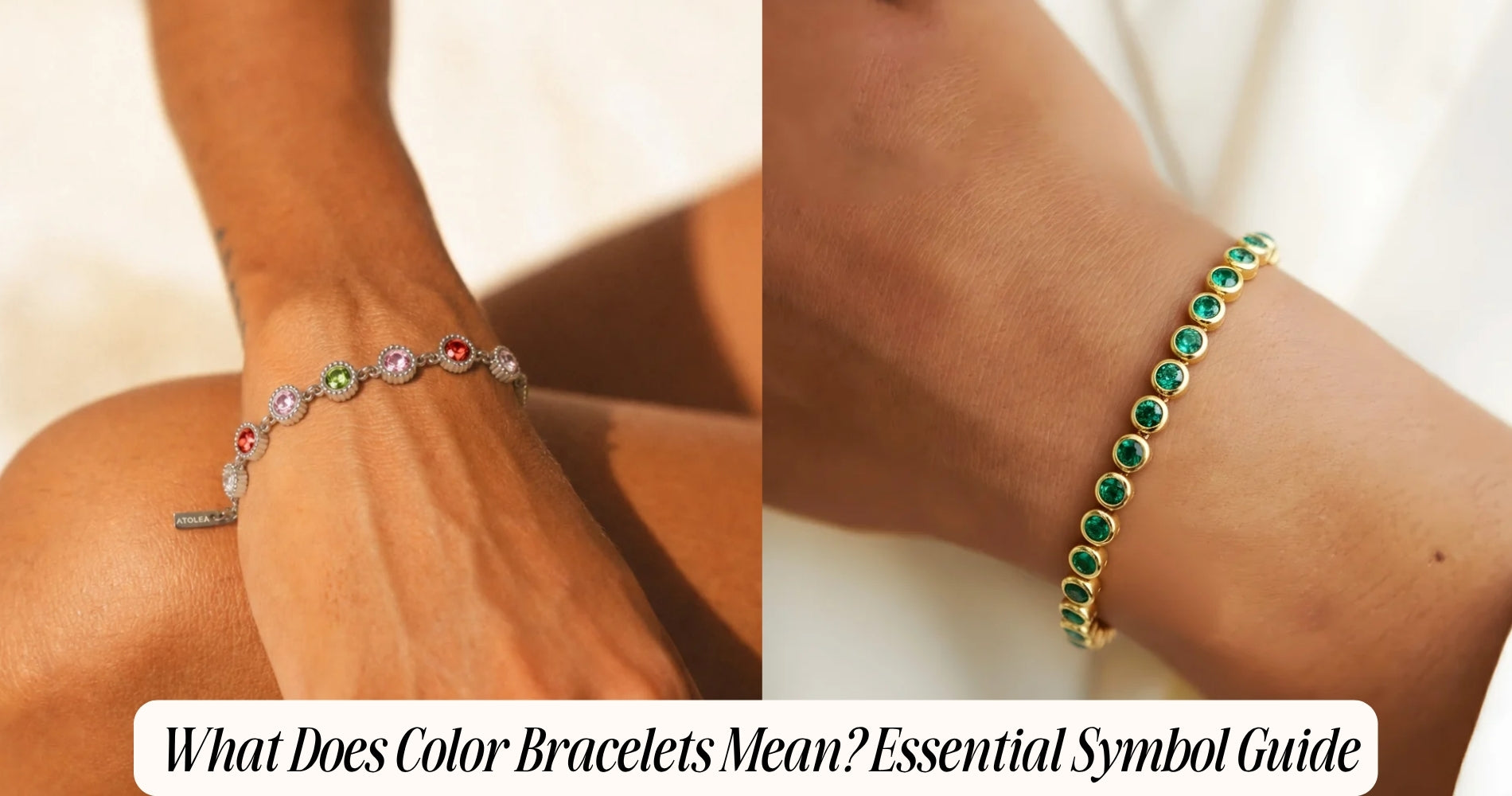
What Does Color Bracelets Mean? Essential Symbol Guide
Color plays a powerful role in how we interpret and connect with the jewelry we wear, and bracelets are no exception. Whether you have received a colorful beaded bracelet as a gift, purchased one to support a specific cause, or simply gravitated toward a particular shade for its aesthetic appeal, you may find yourself wondering what does color bracelets mean beyond simple visual preference.
In this guide, we will explore the layered symbolism behind popular bracelet colors, covering everything from general color psychology to specific awareness cause associations and spiritual chakra meanings. If you want to build a colorful, meaningful bracelet collection of your own, our Everyday Bracelets collection offers a variety of styles worth exploring as you think about which colors resonate with you.
Why Color Carries So Much Symbolic Weight
Color psychology, the study of how different colors influence human emotion and behavior, plays a significant role in why specific bracelet colors carry such strong symbolic associations. Beyond general psychological associations, colors have also taken on more specific, culturally recognized meanings over time, whether through spiritual traditions, awareness campaigns, or simply widely shared cultural associations that have developed and solidified over recent decades.
Understanding these different layers of color symbolism can help you choose bracelets more intentionally, whether you are drawn to a color for its general emotional association, its connection to a specific cause, or its spiritual significance within certain traditions.

General Color Symbolism in Bracelets
At a foundational level, most colors carry broadly recognized psychological and symbolic associations that apply across many different contexts, including jewelry.
- Red is commonly associated with passion, energy, courage, and strength. Bracelets featuring red are often chosen by those seeking to embody confidence or draw attention to bold, decisive energy.
- Blue carries strong associations with calm, trust, communication, and stability. Blue bracelets are frequently chosen by those seeking a sense of peace or emotional balance in their daily life.
- Green typically represents growth, renewal, balance, and connection to nature. Bracelets in shades of green often appeal to those focused on personal growth or a desire to feel more grounded and connected to the natural world.
- Yellow is widely associated with positivity, joy, optimism, and confidence. Yellow bracelets are often chosen to represent a bright, cheerful outlook or a desire to cultivate more happiness in daily life.
- Purple carries associations with spirituality, wisdom, luxury, and intuition. Bracelets in purple tones frequently appeal to those drawn to introspection or a deeper spiritual connection.
- Orange represents enthusiasm, creativity, and warmth, often chosen by those seeking to embody more energetic, expressive qualities in their personal style.
- Black typically symbolizes strength, protection, and sophistication, frequently chosen for its versatile, grounding aesthetic alongside its symbolic associations with personal power.
- White commonly represents purity, clarity, and new beginnings, often chosen to mark a fresh start or a desire for simplicity and clarity in one's life.
- Pink carries strong associations with love, compassion, and gentleness, frequently chosen to represent affection, whether romantic, platonic, or self directed.

Awareness Cause Bracelet Colors
Beyond general color symbolism, specific colors have become closely associated with particular awareness causes over the past few decades, largely due to organized campaigns designed to raise visibility and support for specific issues.
- Pink is most widely recognized as the color associated with breast cancer awareness, a connection that has become deeply embedded in popular culture since the widespread adoption of the pink ribbon symbol in the 1990s.
- Yellow has become associated with various causes over time, including support for military service members and their families, as well as broader associations with suicide prevention awareness in some contexts.
- Purple is frequently associated with causes including domestic violence awareness, Alzheimer's disease awareness, and lupus awareness, among others, depending on the specific regional or organizational context.
- Teal has become associated with causes including ovarian cancer awareness and anxiety disorder awareness.
- Orange is commonly associated with causes including leukemia awareness and, in some contexts, broader gun violence prevention awareness campaigns.
- Blue carries associations with several causes, including autism awareness, colon cancer awareness, and child abuse prevention, depending on specific regional campaigns and organizations.
Because certain colors have been adopted by multiple different causes over time, it is not uncommon for a single color to carry several different awareness associations depending on specific context, campaign, or organization.
Chakra Color Symbolism
For those drawn to more spiritual or wellness focused interpretations, bracelet colors are sometimes chosen based on their association with the seven chakras, energy centers within the body according to certain Eastern spiritual traditions, particularly those rooted in Hindu and yogic philosophy.
Red corresponds to the root chakra, associated with grounding, stability, and basic survival needs.
Orange corresponds to the sacral chakra, associated with creativity, emotion, and sensuality.
Yellow corresponds to the solar plexus chakra, associated with confidence, personal power, and self esteem.
Green corresponds to the heart chakra, associated with love, compassion, and emotional balance.
Blue corresponds to the throat chakra, associated with communication and self expression.
Indigo corresponds to the third eye chakra, associated with intuition and inner wisdom.
Purple or violet corresponds to the crown chakra, associated with spiritual connection and higher consciousness.
Some people specifically choose bracelet colors, particularly within beaded gemstone bracelets, based on which chakra they feel drawn to balance or strengthen within their own personal wellness practice.
Cultural Variations in Color Symbolism
It is worth noting that color symbolism is not entirely universal, and specific meanings can vary considerably depending on cultural context. For example, while white is commonly associated with purity and new beginnings within many Western traditions, it carries associations with mourning and death within certain other cultural traditions, particularly across various parts of Asia.
Similarly, red carries strong associations with luck and prosperity within Chinese culture specifically, while also representing passion and energy within many broader Western contexts. Understanding these cultural nuances can be particularly important when choosing or gifting color-specific jewelry across different cultural backgrounds, since the same color can carry meaningfully different associations depending on the specific cultural lens applied.

Combining Colors for Layered Meaning
Many bracelets, particularly beaded or woven styles, incorporate multiple colors within a single design, allowing for a more layered, combined symbolic meaning. For example, a bracelet combining blue and green might represent both calm communication and balanced growth, while a piece combining red and purple could symbolize a blend of passionate energy and spiritual intuition.
This ability to combine multiple color meanings within a single piece is part of why multi colored bracelets have become particularly popular for those seeking a more personalized, nuanced symbolic statement rather than relying on a single, more narrowly defined color meaning.
Choosing Bracelet Colors With Intention
If you want to select bracelet colors based specifically on their symbolic meaning, start by considering which particular quality, cause, or spiritual association resonates most strongly with your personal intentions or values. Whether you are drawn to yellow for its association with joy and positivity, purple for its spiritual symbolism, or a specific color tied to a cause meaningful to you personally, choosing with this kind of intention can add deeper significance to an otherwise simple accessory choice.

Final Thoughts
So, what does color bracelets mean? The answer depends significantly on context, spanning general color psychology, specific awareness cause associations, chakra symbolism, and broader cultural traditions. Whether you are drawn to a particular color for its calming psychological association, its connection to a cause close to your heart, or its spiritual significance within chakra symbolism, understanding these layered meanings can help you choose bracelets with greater intention and personal significance.
Whatever colors speak to you most, bracelets offer a simple yet meaningful way to express personal values, support causes you care about, or simply bring a bit more intentional color symbolism into your everyday style.
Frequently Asked Questions
1. What color bracelet represents breast cancer awareness?
Pink is the most widely recognized color associated with breast cancer awareness, tied to the popular pink ribbon symbol.
2. Does color symbolism in bracelets vary across cultures?
Yes, certain colors carry different meanings depending on cultural context, such as white representing purity in some traditions and mourning in others.
3. What does a purple bracelet typically symbolize?
Purple is commonly associated with spirituality, wisdom, and intuition, and is also tied to several awareness causes, including domestic violence and Alzheimer's awareness.
4. Can a multi colored bracelet carry combined symbolic meaning?
Yes, bracelets featuring multiple colors can represent a blended combination of the individual meanings associated with each color included in the design.







コメントを書く
このサイトはhCaptchaによって保護されており、hCaptchaプライバシーポリシーおよび利用規約が適用されます。