

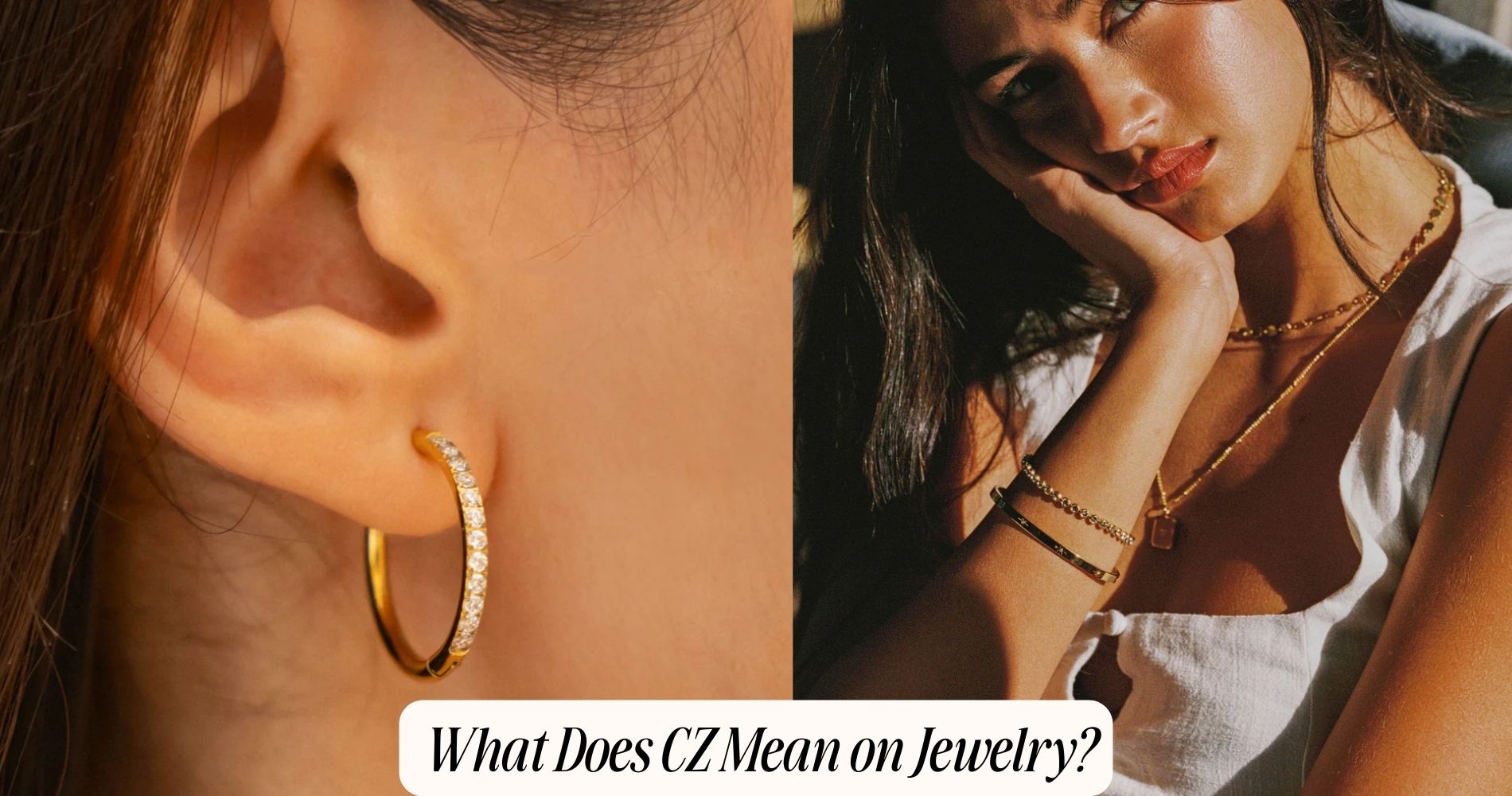
What Does CZ Mean on Jewelry?
What does CZ mean on jewelry? When you see “CZ” on jewelry, it means the stones are cubic zirconia — a synthetic zirconium dioxide crystal engineered to mimic diamond optics at far lower cost. You’ll get high dispersion and predictable cutting characteristics, but lower hardness (≈8–8.5 Mohs), greater density, and different wear behavior than diamond, which is why pairing them with durable settings like those in Atolea’s Waterproof Jewelry collection is ideal for everyday use. CZ suits fashion and budget pieces, not heavy-wear heirlooms. If you want practical identification, care guidance, and comparisons with moissanite or lab-grown diamonds, keep going.
What “CZ” Means and Why Jewelers Use It
CZ stands for cubic zirconia, a synthesized crystalline form of zirconium dioxide that mimics the optical properties of diamond while costing a fraction of the price.
You’ll see jewelers label pieces “CZ” to denote material composition, ensuring transparency about value and maintenance requirements. Functionally, CZ symbolism communicates accessibility and non-precious status to consumers and retailers, distinguishing imitation from natural gemstones in inventory, catalogs, and appraisals.
You’ll also notice CZ affordability influences design choices: manufacturers can allocate metal quality or setting labor differently when using CZ, optimizing cost-performance ratios.
As a buyer, you’ll use the CZ mark to calibrate expectations about hardness, longevity, and resale potential, enabling precise purchasing decisions and consistent valuation across market segments.

What Cubic Zirconia Is and How It’s Made
A lab-grown crystalline form of zirconium dioxide, cubic zirconia is produced through controlled high-temperature processes that yield a single-phase, optically clear material with diamond-like refractive properties.
You’ll find its cubic crystal lattice stabilized by intentional dopants and precise thermal gradients during synthesis. In practical terms, cubic zirconia properties—optical dispersion, refractive index, and uniformity—are engineered by controlling precursor purity, dopant concentration, and cooling rates.
The cz manufacturing process typically uses skull melting or hydrothermal techniques to avoid contamination and attain monocrystalline growth; post-growth annealing and controlled cooling minimize internal stress and color centers.
You can then expect consistent cutting and polishing response, as machinability and cleavage behavior are predictable from the synthesized microstructure.
Cubic Zirconia vs. Diamonds: Look, Hardness, and Price
One clear way to compare cubic zirconia and diamonds is to evaluate optical appearance, mechanical hardness, and market price side by side so you can weigh trade-offs for intended use.
You’ll notice cubic zirconia characteristics include high dispersion and refractive index that yield intense fire but slightly lower brilliance and less contrast than diamond comparison metrics indicate.
Hardness on Mohs: CZ ≈ 8–8.5 versus diamond 10; you can expect faster surface wear, more scratches, and quicker loss of polish on CZ under daily abrasion.
Density differs too: CZ is heavier per volume, affecting perceived heft in matched dimensions.
Price separates them most: CZ costs a small fraction of diamond retail, enabling large visual size at low cost but with reduced long-term durability and resale value.
CZ Compared to Other Simulants (Moissanite, Glass, Lab-Grown)
Although they all imitate diamond, you'll see clear and specific differences in optical properties, hardness, density, and cost when comparing cubic zirconia to moissanite, glass, and lab-grown gemstones.
You’ll assess cz properties overview: CZ has refractive index ~2.15–2.18, dispersion 0.058, and Mohs ~8–8.5, producing strong fire but lower brilliance than moissanite. Moissanite’s higher refractive index and dispersion yield more brilliance and durability (Mohs ~9.25).
Glass is amorphous, low hardness (~5–6), low density variation, and minimal dispersion, so it scratches and dulls quickly. Lab-grown diamonds match natural diamond optics and hardness (10), commanding higher prices.
Consider cz market trends: CZ remains dominant for low-cost, high-visual-impact pieces, but you’ll notice increasing competition from affordable moissanite and accessible lab-grown stones.

When to Choose CZ: Use Cases and Budget Rules
If you're prioritizing visual impact and strict budget control, choose CZ for pieces where appearance outweighs long-term resale or extreme durability; CZ gives diamond-like fire and clarity at a fraction of the cost, enabling larger carat-equivalent sizes without the price premium.
You'll select CZ for fashion jewelry, costume sets, stage and film props, and temporary pieces—use cases where wear time is limited and loss or damage risk is acceptable.
Apply budget rules: allocate lower per-piece spend, prioritize size and brilliance over material permanence, and accept higher replacement frequency.
For everyday wear, reserve CZ for earrings and occasional rings rather than high-contact settings.
Quantify lifecycle cost versus perceived value to determine when CZ meets functional and fiscal criteria.
Identifying CZ: Marks, Simple Tests, and Professional Checks
When you need to tell cubic zirconia (CZ) from diamond or other simulants, rely on a tiered approach: inspect for maker’s marks and metal hallmarks first, run a few quick noninvasive bench tests (fog, thermal response, refractive cues under magnification), then escalate to instrumented measurements or a professional appraisal if results stay ambiguous.
Start by noting identifying characteristics: consistent facet edges, heavier weight for size, and absence of fluorescence often point to CZ.
Simple testing methods you can perform include the fog test, loupe magnification to examine facet junctions and inclusions, and touch-temperature comparison.
If uncertainty remains, request refractive index reading, thermal conductivity probe, or spectroscopy from a gem lab.
Document findings and provenance to support any professional conclusions.
Caring for CZ Jewelry: Cleaning, Wear, and Repairs
Because cubic zirconia is harder than many common metals but softer than diamond, you should clean, wear, and repair CZ pieces with methods tailored to its specific physical and mounting properties.
You’ll use gentle cleaning methods: a soft-bristled brush, mild detergent in warm water, and short ultrasonic cycles only if settings and mountings are verified safe. Avoid steam cleaners and harsh chemicals that etch or dull the stone.
For wear precautions, remove CZ jewelry during abrasive tasks, exercise, and exposure to chlorine or cosmetics that can degrade settings. Inspect prongs and bezels regularly; CZ’s toughness can mask micro-movements that loosen mounts.
For repairs, choose jewelers who assess setting integrity, re-seat stones with low-heat techniques, and document any replacement materials used.
Questions to Ask Sellers When a Piece Is Marked “CZ”
Having covered care and repair considerations, you’ll now want to ask targeted questions that verify a piece marked “CZ” meets your expectations for quality, durability, and value.
Ask the seller for certification or documentation describing cut grade, color range, and any treatments; CZs lack standardized grading, so documentation from the seller increases seller credibility.
Request metal assay marks and plating thickness (microns) to evaluate wear risk.
Inquire about mounting method and prong/socket integrity to assess stone retention and repair likelihood.
Ask for provenance, return policy, and warranty terms to quantify residual value and serviceability.
Finally, discuss price negotiation based on documented material specs, visible wear, and comparable-market listings; use technical discrepancies to justify adjustments.

Frequently Asked Questions
Are CZ Stones Hypoallergenic for Sensitive Skin?
Yes—you’ll usually tolerate CZ stones because CZ properties are inert and non-reactive; the risk for sensitive skin comes from metal settings or plating (nickel), not the cubic zirconia itself, so check metal composition.
Can CZ Be Resized When Set in Plated Jewelry?
Yes—you can resize plated jewelry, but you'll face limits: plating can wear, base metal strength matters, and settings risk loosening. Consider professional resizing, alternative resizing options like shanks or spring inserts, and re-plating afterward for finish.
Do CZ Stones Lose Sparkle Over Years?
Yes — CZ stones can lose sparkle over years if neglected; you’ll need routine CZ maintenance to prevent surface scratches and dirt buildup. CZ durability is good, but exposure to chemicals and abrasion will gradually dull brilliance.
Is CZ Safe for Children’s Jewelry?
Yes — you're safe using CZ in children's jewelry when pieces meet safety standards; CZ children's safety depends on non-toxic plating, secure settings, and CZ jewelry durability under wear, moisture, and cleaning to prevent choking or skin irritation.
Can CZ Be Used in Engagement Rings Long-Term?
Yes — you can choose CZ engagement rings for long-term wear, but note CZ durability is lower than diamond; CZ scratches and loses sparkle faster, so you'll need regular polishing, careful settings, and realistic expectations about longevity and maintenance.
Conclusion
When you see “CZ” on jewelry, it labels cubic zirconia — a manufactured, optically convincing diamond simulant prized for affordability and consistency. You’ll choose CZ when budget, size, or color uniformity matter more than resale value or extreme hardness. Expect lower hardness and different wear characteristics than diamond or moissanite; inspect marks and use basic tests or a professional appraisal when provenance or durability is critical. Maintain CZ with gentle cleaning and periodic checks to preserve appearance.





コメントを書く
このサイトはhCaptchaによって保護されており、hCaptchaプライバシーポリシーおよび利用規約が適用されます。