

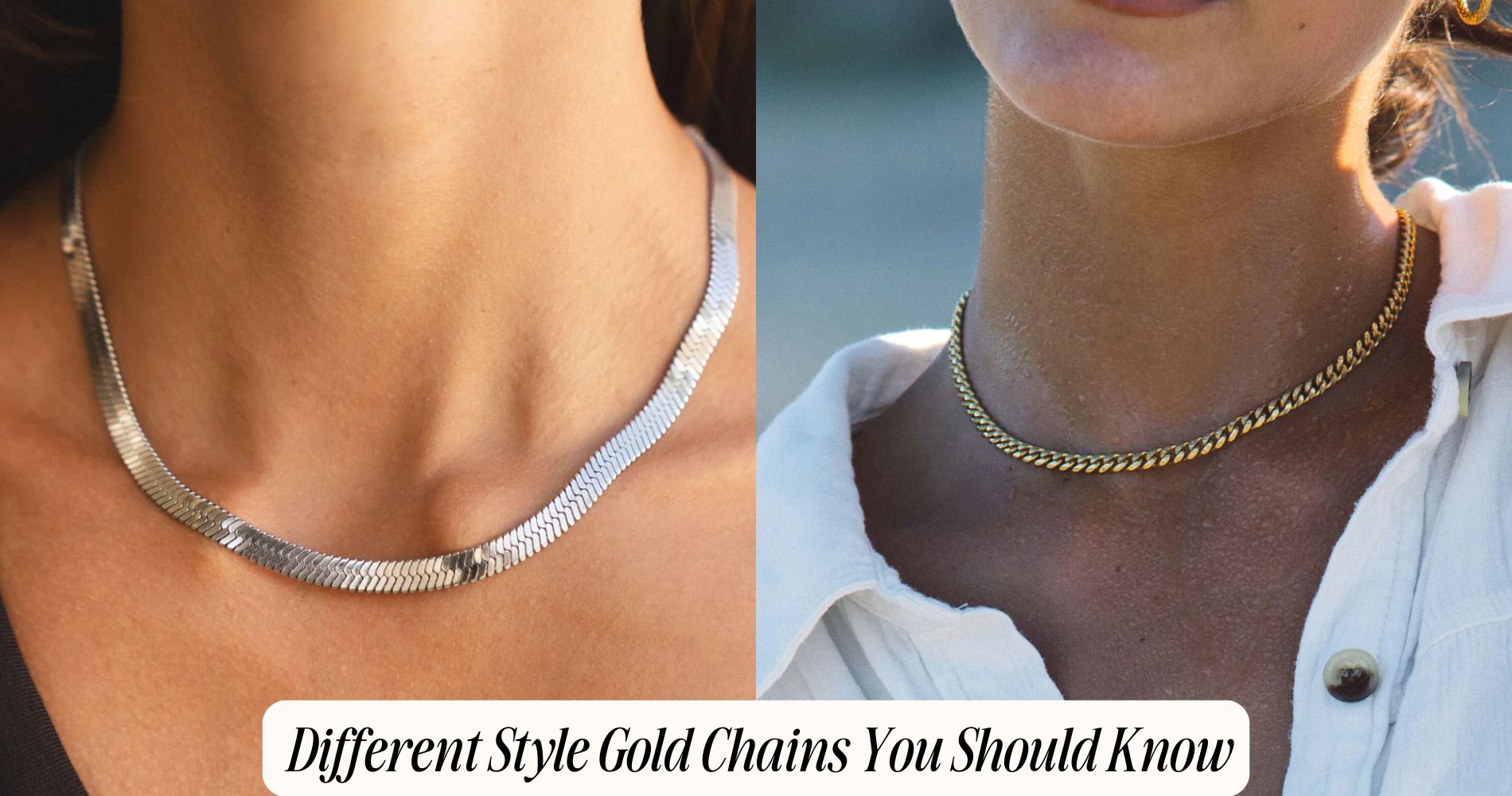
Different Style Gold Chains You Should Know
When shopping for different style gold chains, it helps to recognize the link patterns that determine strength, shine, and how a chain wears over time. Cuban links (popularized in 1970s Miami) feature thick, beveled oval links for a bold look, while Figaro chains (an Italian classic) alternate long and short links for rhythmic texture. Rope chains twist strands for maximum shimmer, box chains use squared links that resist kinks, and herringbone chains lie flat with a mirror-like finish. Franco chains are dense and V-shaped for durability, wheat chains braid oval links for a refined feel, and snake chains form a sleek, flexible tube with a smooth surface. For everyday wear, choose solid 14K or 18K gold when possible, store chains flat, avoid chlorine, and clean gently with mild soap. If you want low-maintenance shine that holds up to real life, explore styles like Waterproof Necklaces next.
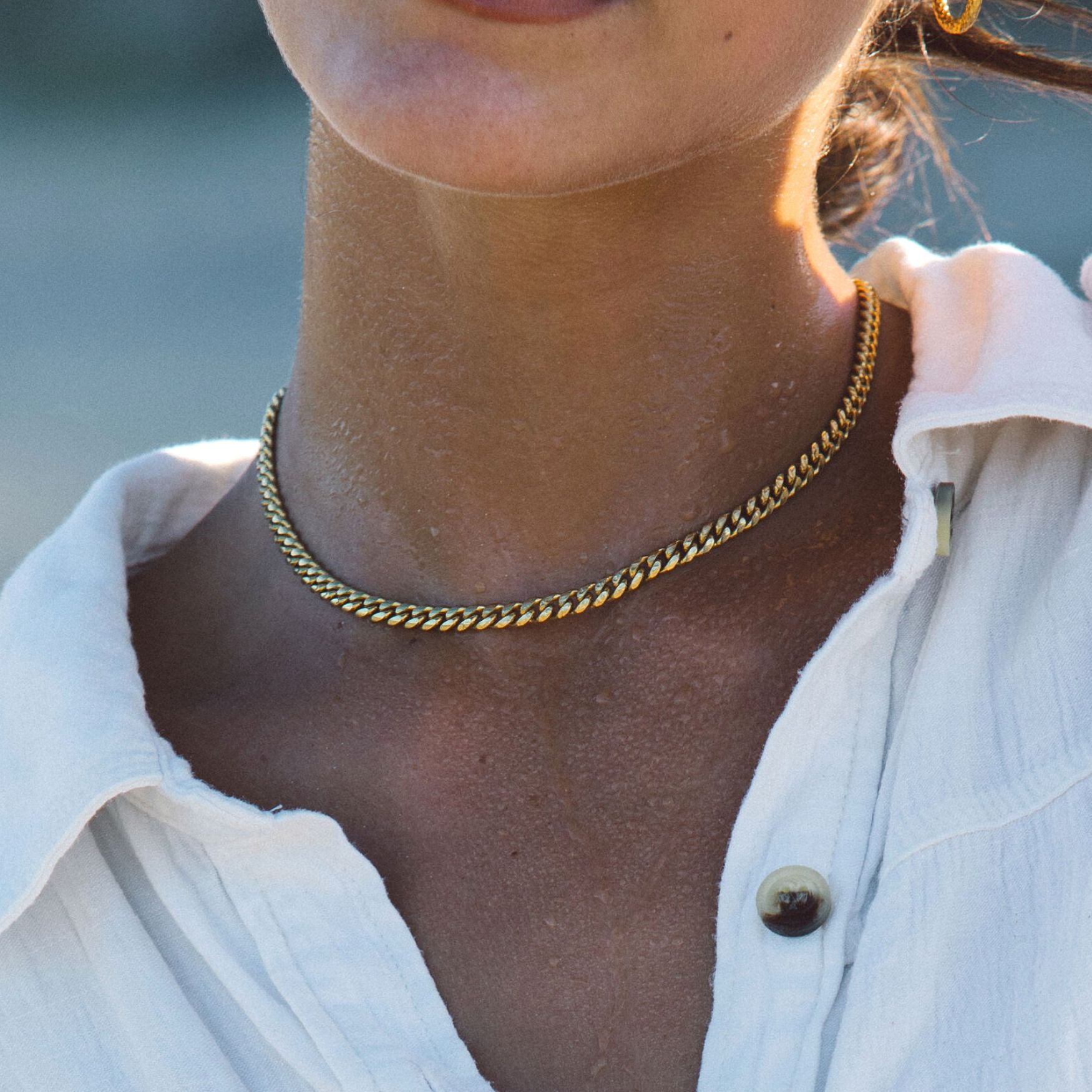
Cuban Link Chains
Why did Cuban link chains become the benchmark of bold gold? You trace it to Cuban link history: 1970s Miami clubs where jewelers thickened curb-style links, soldered them tight, and gave hip-hop a durable, high-polish emblem.
You recognize the engineering—uniform oval links, beveled edges, and precise interlocking that resists tangling and stretching.
When selecting Cuban link styles, you weigh gauge, link pitch, and finish. A heavyweight Miami Cuban with tight tolerances reads luxe; hollow builds cut weight but dent easier.
Choose solid 14k or 18k for strength-to-luster balance; plated options save money but need frequent replating.
Care is straightforward: store flat, clasped, in a soft pouch; avoid chlorine and abrasive media; clean with mild soap, warm water, and a microfiber cloth; inspect clasps and solder joints regularly.
Figaro Chains
After Cuban links’ uniform heft, Figaro chains offer cadence: a repeating pattern of one long oval link followed by two or three shorter curb-style links.
You get a flattened, diamond-cut profile that reflects light crisply, yet lies comfortably on the clavicle. In figaro chain history, Italian workshops in 18th–19th century Naples and Florence popularized this metric alternation; the name likely nods to Il barbiere di Siviglia’s Figaro, symbolizing flair and rhythm.
Modern figaro chain styles range from slim 2–3 mm accents for pendants to bold 6–10 mm statement links, in solid gold or durable hollow constructions.
Care well: store flat to prevent twisting, use mild soap and a soft brush, rinse thoroughly, dry before clasping, and inspect soldered links and the lobster clasp regularly.
Rope Chains
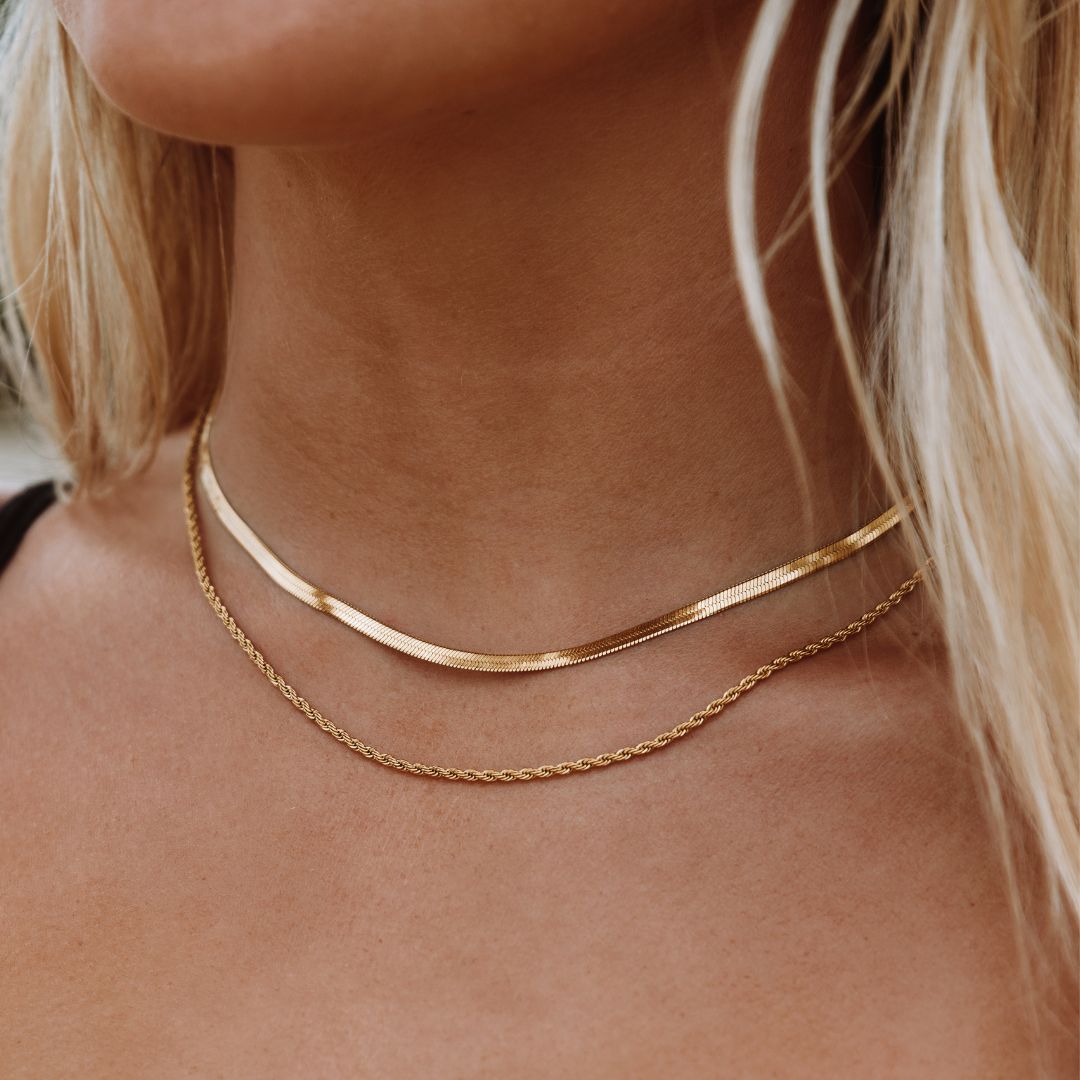
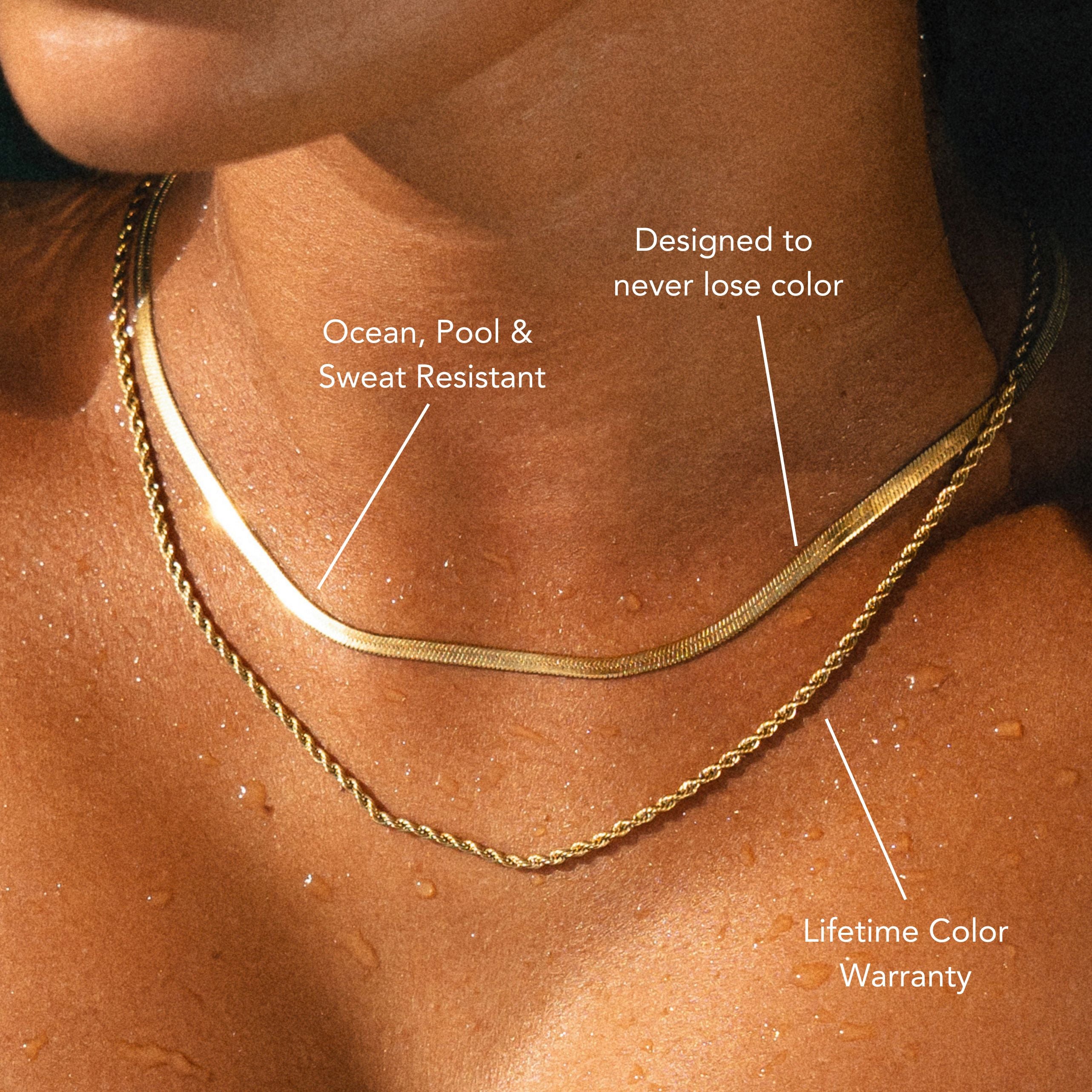
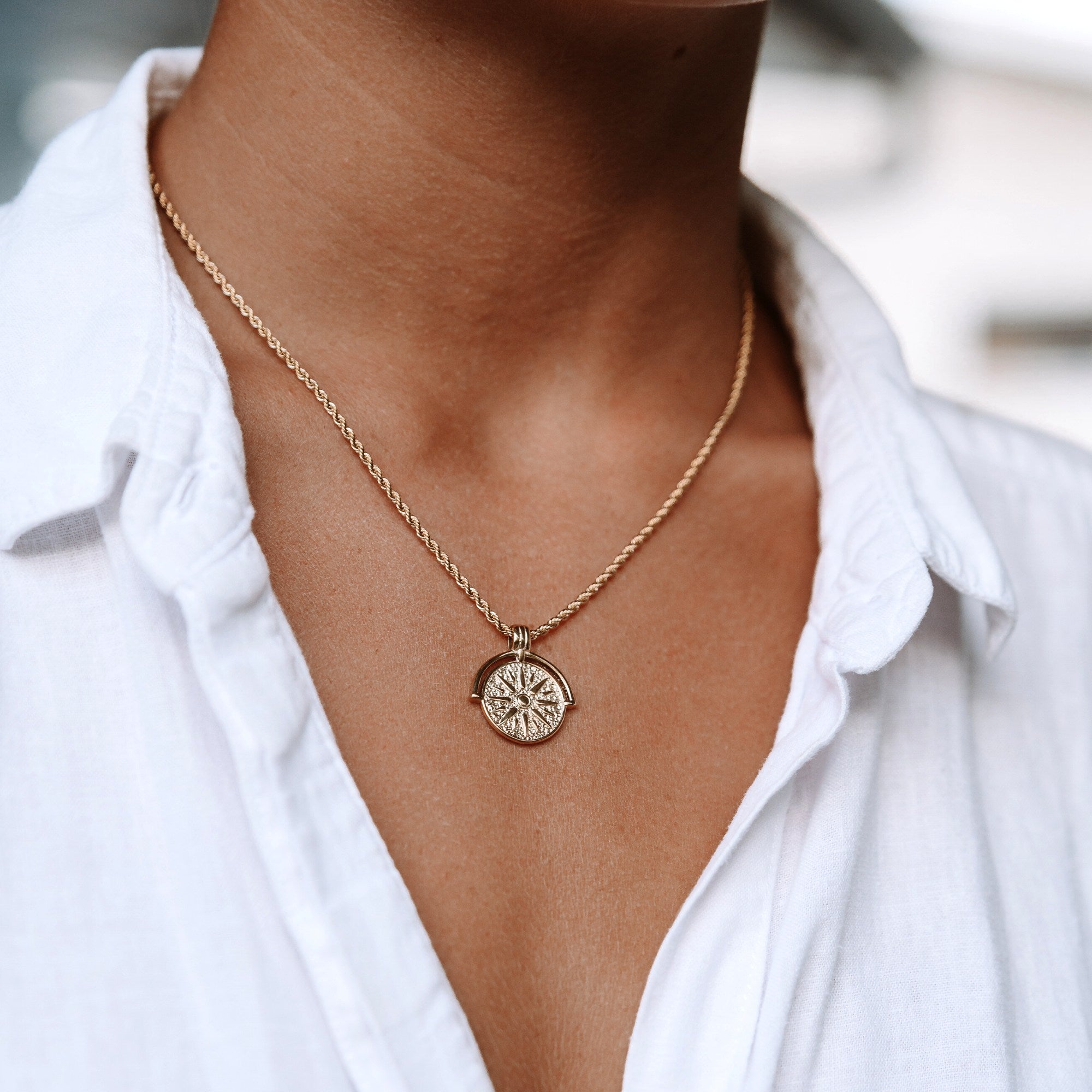
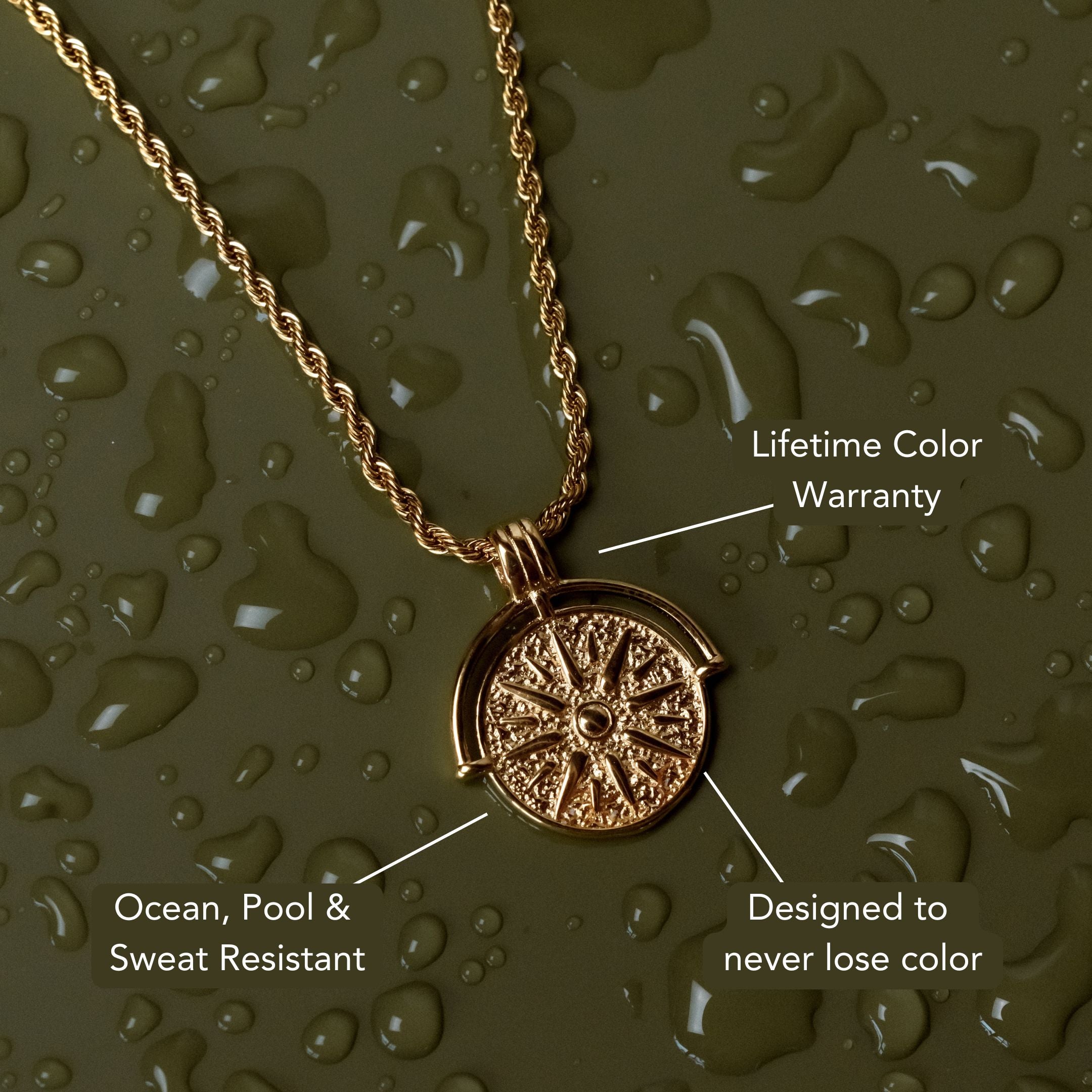
Rope chains twist multiple strands of oval or round links into a helical cord that catches light from every angle, creating a continuous shimmer.
You’ll find rope chain styles ranging from delicate diamond-cut variants to solid, hand-braided constructions. Jewelers popularized them in the late 20th century as statement pieces, though their twisted motif echoes ancient Mediterranean rope motifs.
Choose rope chain thickness by purpose:
1.5–3 mm for pendants, 4–6 mm for daily wear, 7 mm+ for bold standalone looks.
Solid gold offers superior durability; hollow builds reduce weight but dent more easily. Check soldered end caps and a secure lobster clasp.
Care tips: avoid tugging, store coiled in a soft pouch, clean with lukewarm soapy water, and dry thoroughly to protect luster.

Box Chains
Box chains interlock square or rectangular links into a smooth, geometric profile that resists kinking and distributes tension evenly. You get crisp edges, uniform articulation, and excellent tensile strength, making them reliable daily wear.
Historically, jewelers embraced this architecture in mid-20th-century Italy, when precision chain-making machinery enabled consistent, hollow or solid box chain styles.
Today, you’ll choose box chain materials such as 14k or 18k yellow, white, or rose gold; some opt for platinum for maximum durability. Gauge and link dimension determine flexibility and pendant compatibility.
Care is straightforward: clean with lukewarm water, mild soap, and a soft brush; rinse and blot dry. Store flat to prevent torsion. Inspect soldered joints and clasps periodically.
Avoid abrasive compounds and ultrasonic cleaners if stones or solder repairs are present.
Herringbone Chains
While box links favor articulated strength, herringbone chains trade open linkage for tightly set, flat “V”-shaped segments that create a liquid, mirror-like surface across the neckline. You get a sleek, high-polish ribbon effect because the segments—called chevrons—overlap in a precise, low-profile pattern that maximizes reflectivity.
Understanding herringbone chain history helps you style it wisely. Originating from ancient Near Eastern and Roman metalwork that mimicked fishbone textiles and masonry, the motif re-emerged in mid-20th-century Italian goldsmithing, then surged in 1980s urban fashion.
It’s glamorous but inherently less flexible than round-link chains, so avoid sharp bends.
Prioritize herringbone chain care: lay it flat for storage, clasp it before putting it away, and never coil tightly. Remove it before sleep, workouts, or snag-prone layers.
Seek professional straightening if kinks occur; DIY bending worsens damage.

Franco Chains
Four-sided by design, Franco chains use interlaced V-shaped links derived from Italian curb and foxtail traditions to form a dense, flexible square profile that resists tangling and snapping under daily wear.
You get a structurally stable chain with excellent drape and impressive tensile strength, ideal for pendants or solo wear. Historically, jewelers in Milan refined these interlocked chevrons to marry curb durability with foxtail fluidity, creating modern Franco chain styles in classic, rounded, or diamond-cut variants.
Choose Franco chain materials that suit use: solid 14k or 18k gold for daily durability, hollow links for lighter weight, or two-tone gold for contrast.
Maintain integrity by storing flat, wiping with a non-abrasive cloth, and ultrasonically cleaning only solid constructions. Inspect clasps and soldered joints periodically.
Wheat Chains
Although they’re often mistaken for rope, wheat chains interweave four strands of teardrop- or oval-shaped links in a braided pattern that yields a supple, rounded profile with excellent drape and snag resistance.
You’ll appreciate wheat chain characteristics like balanced flexibility, dimensional fullness, and strong tensile integrity, making them dependable for pendants without kinking. Originating from Italian workshops in the late 20th century, wheat chains modernized medieval plaited motifs into precision-cut, machine-consistent links.
Explore wheat chain styles in varying gauges and finishes: high-polish for luster, satin for muted sheen, diamond-cut for sparkle. Choose solid gold for durability; hollow constructions reduce weight but dent easier.
For care, store flat, clasped, and separate from abrasive pieces. Clean with lukewarm water, mild soap, and a soft brush; avoid ultrasonic if solder joints are delicate. Periodically inspect clasps and end caps.
Snake Chains
Two defining traits set snake chains apart: a seamless silhouette and fluid movement. You’re looking at tightly linked plates or bands that create a continuous, serpentine tube—sleek, flexible, and reflective without visible gaps.
In snake chain history, Hellenistic artisans admired serpent motifs for protection and eternity; later, Art Deco workshops refined the compact link geometry for modern polish.
Choose 14–18k gold for durability; higher karat softens and kinks easier. For snake chain styling, pair a slender 1–2 mm strand with pendants under 5 grams; heavier charms strain the core wire.
Store coiled in a single loop to prevent torsion. Don’t bend sharply; guide it around the neck. Clean with mild soap, rinse, and blot—no ultrasonic cleaners. Ask a jeweler to reshape minor kinks promptly.
Frequently Asked Questions
How Do I Verify Ethical Sourcing of Gold Used in Chains?
Verify ethical sourcing by requesting documented chain-of-custody and gold certifications (RJC, Fairmined, Fairtrade). Check mine origin, recycled content, and third-party audits. Historically exploitative supply chains improved post-Kimberley. Maintain records, favor transparent retailers, and store provenance documents with care tips and receipts.
What’s the Best Insurance Option for High-Value Gold Chains?
Choose standalone jewelry insurance after professional appraisal services. You’ll get agreed-value coverage, mysterious disappearance protection, and worldwide travel. Historically, homeowners riders underinsure. Photograph pieces, store receipts, update appraisals biennially, use a safe, and document wear patterns to validate claims.
How Do Gold Market Prices Affect Chain Resale Value?
Gold price fluctuations directly move your chain’s melt value; resale market trends shift premiums for craftsmanship and hallmarks. Historically, bullion spikes boost liquidity. You’ll maximize returns by retaining invoices, preserving patina, avoiding deep polishing, and selling during tight bid-ask spreads.
Which Clasp Types Are Most Secure for Daily Wear?
Choose a lobster clasp for daily wear; it’s strongest and resists accidental opening. Spring ring is weaker and older, fine for lightweight chains. Inspect mechanisms monthly, clean grit, avoid chlorine, and replace worn triggers to maintain security and longevity.
How Should I Store Chains to Prevent Tangling and Scratches?
Store each chain separately in soft pouches or lined trays; clasp ends and lay flat for tangle prevention. Use anti-tarnish materials, silica gel, and travel tubes. Historically, jewelers favored hanging hooks—adopt vertical chain storage to minimize abrasion and micro-scratches.
Conclusion
You’ve now got the essentials—from Cuban links born in 1970s hip‑hop to Renaissance‑era wheat chains and sleek mid‑century herringbone. Match profiles and gauges to your neckline and pendant weight, and check alloys (14k vs. 18k) for durability and color. Store flat herringbones to prevent kinks, avoid twisting snake and rope chains, and clean gently with mild soap. Inspect clasps and soldered links regularly. With smart care and informed choices, your gold chain will age beautifully.




%20feat...)
Leave a comment
This site is protected by hCaptcha and the hCaptcha Privacy Policy and Terms of Service apply.