

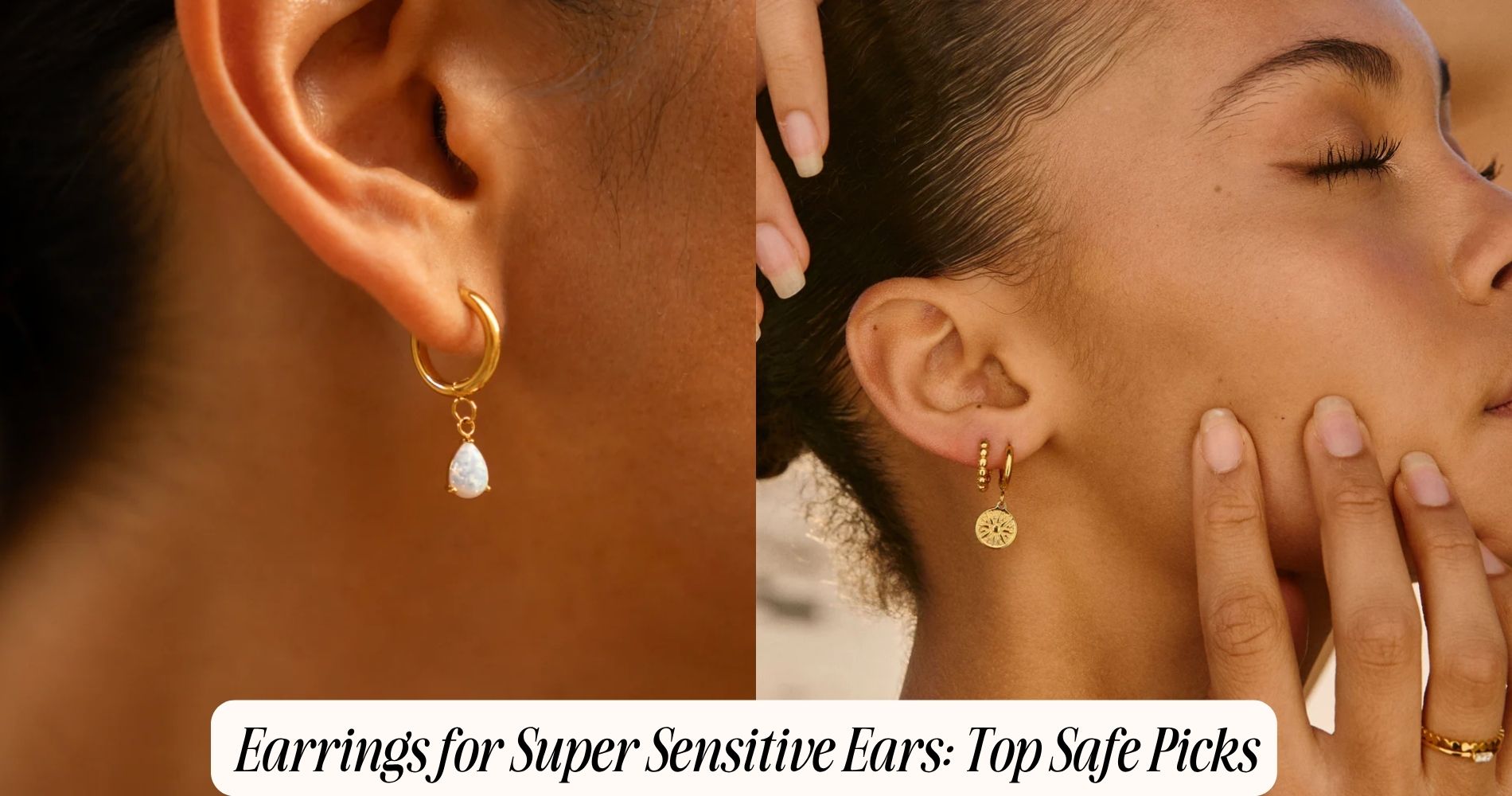
Earrings for Super Sensitive Ears: Top Safe Picks
If your ears react to most earrings with redness, itching, swelling, or discharge, the problem is almost certainly the metal in the post rather than earrings in general. Ears that seem too sensitive to wear jewelry often simply need the right material, because the reactions most people experience are specific to nickel contact rather than a sensitivity to earrings themselves. Finding earrings for super sensitive ears means identifying the materials that genuinely do not trigger those reactions and the styles that minimize contact with reactive surfaces. Hypoallergenic Hoop Earrings built on verified safe materials are a starting point. This guide covers what causes ear sensitivity, which materials are genuinely safe for reactive piercings, which styles minimize irritation risk, and how to transition back to comfortable earring wear if your piercings have been reactive for years.
What Causes Sensitive Ear Reactions
Most earring reactions are contact dermatitis triggered by nickel. Nickel is added to most fashion jewelry alloys, primarily brass and various steel grades, because it is inexpensive, hard, and easy to work with in manufacturing. When nickel-containing metal sits against piercing tissue, nickel ions leach out through moisture from sweat and skin chemistry. In people with nickel sensitivity, those ions trigger an immune response that produces the redness, itching, swelling, and weeping that most sensitive ear wearers recognize.
Nickel sensitivity is extremely common. Estimates suggest between 10 and 20 percent of the population has some degree of nickel sensitivity, making it one of the most prevalent contact allergens globally. It is also cumulative: repeated low-level nickel exposure can develop a full sensitivity in someone who initially tolerated fashion jewelry without issue. This explains why ears that seemed fine with cheap earrings for years can suddenly begin reacting: the sensitivity threshold has been crossed through accumulated exposure.

Copper is a secondary irritant. It does not trigger immune responses in the same way as nickel, but it reacts with skin acids and moisture to produce the green discoloration and mild irritation that some people experience from brass-based earrings. Bacterial accumulation from insufficient cleaning adds a third layer of irritation that is sometimes mistaken for a metal reaction but is addressed through cleaning rather than material change.
Truly hypoallergenic earrings for super sensitive ears need to address the nickel variable specifically. The term hypoallergenic itself is not regulated in jewelry marketing, which means it can appear on products that still contain nickel in their alloy. Material specification, not the hypoallergenic label alone, is what determines safety for genuinely reactive ears.
Materials That Are Genuinely Safe for Super Sensitive Ears
Implant-grade titanium
Titanium is the safest earring material available for sensitive ears. It is completely nickel-free in its pure form and is used in surgical implants, orthopedic screws, and dental implants that remain inside the body permanently without causing reactions. For earrings, implant-grade titanium (ASTM F136) is the material standard recommended by the Association of Professional Piercers for healing and sensitive piercings.
Titanium does not corrode, does not leach reactive ions, and does not participate in any surface reaction with skin chemistry. For ears that react to virtually everything, titanium is the definitive starting point because it eliminates both nickel and the corrosion products from other reactive metals simultaneously.
Implant-grade surgical steel (ASTM F138)
Implant-grade surgical steel contains a small percentage of nickel in its alloy composition, but the nickel is tightly bound within the alloy structure and does not leach at measurable levels under normal wearing conditions. The key distinction is between implant-grade steel (ASTM F138, also called 316LVM) and standard 316L stainless steel: implant-grade steel undergoes additional vacuum melting that further reduces impurities and produces a smoother, more inert surface than standard surgical steel. For most people with nickel sensitivity, implant-grade steel is tolerated without reaction. For the most severely nickel-sensitive individuals, titanium remains the safer choice.
Solid gold at 14k and above
Solid gold at 14k contains no nickel in its standard yellow gold alloy composition (yellow gold alloys use silver, copper, and zinc alongside gold). It does not corrode, does not release reactive ions, and has a long history of safe use in sensitive piercings. White gold is the exception: many white gold alloys use nickel as a whitening agent, particularly at 9k and 10k karat levels. For sensitive ears, white gold should be avoided unless the alloy composition is confirmed nickel-free.

Niobium
Niobium is a less commonly known but highly biocompatible metal that is nickel-free and does not corrode. It is used in body jewelry specifically for its performance in sensitive piercings. Niobium can be anodized to produce a range of colors without adding reactive coating materials, which makes it useful for people who want colored earrings without coating concerns. It is slightly less widely available than titanium but equally safe for reactive ears.
PVD-coated 316L stainless steel
PVD-coated 316L stainless steel is the most accessible option for sensitive ears at everyday jewelry price points. The PVD coating bonds a titanium or zirconium nitride layer at the atomic level over the stainless steel base, creating a surface that does not release nickel ions into the piercing environment. While the steel base contains nickel in its composition, the PVD surface layer prevents that nickel from reaching the skin. This is not a theoretical protection: PVD coatings are used in medical devices that contact tissue specifically because they create a stable, inert surface regardless of the underlying alloy's composition.
For moderately sensitive ears, PVD-coated stainless steel provides reliable protection. For the most severely sensitive piercings, implant-grade titanium remains the definitive recommendation because it contains no nickel at any level of the construction.
Styles That Work Best for Super Sensitive Ears
Flat back labret studs
Flat back studs are the professional piercing community's standard recommendation for sensitive piercings at every stage from initial healing through ongoing wear. The flat disc back sits flush against the lobe without a protruding mechanism that traps moisture and product residue against the rear of the piercing. The post sits cleanly inside the piercing channel without a butterfly clutch that can harbor the sebum and bacterial accumulation that compounds metal-related irritation.
For super sensitive ears, the flat back stud eliminates multiple irritation sources simultaneously: the moisture trap, the mechanical pressure from a protruding back, and the soap residue accumulation that butterfly backs create. The threaded or threadless front piece allows the post to be fully removed for cleaning, which reduces the bacterial buildup that standard studs with fixed posts and butterfly backs accumulate.
Huggie hoops
Huggie hoops in implant-grade titanium or PVD-coated stainless steel are the hoop style most compatible with sensitive ears. Their close-fitting hinged construction sits against the lobe with minimal contact surface gap and keeps the closure mechanism pressed against the ear rather than hanging exposed to accumulate sweat and environmental compounds. The hinged closure is simpler in mechanism than multi-component clasps that create more metal-to-metal contact surfaces.
For sensitive ears transitioning from studs to hoops, starting with huggies rather than larger hoops reduces the exposure surface and the mechanical movement of the earring against the piercing during daily activity.

Simple open hoops with hinged closures
Open hoops in a single continuous piece of metal with a hinged closure present the fewest construction joints and the least accumulated contact surface for irritation compounds. Fewer joints mean fewer points where lower-quality alloys might be used for mechanisms while the visible surface uses a different material. For sensitive ears, a one-material construction with a clean hinge closure and no small catches or tabs is preferable to complex multi-component designs.
Styles to avoid for super sensitive ears
Butterfly back studs should be avoided for the most sensitive piercings. The butterfly mechanism traps moisture and product residue directly against the lobe, concentrating reactive conditions at the piercing site. Multiple-component earrings where the decorative face, the post, and the back mechanism may be made from different materials should be carefully verified before use: a titanium post with a brass butterfly back provides no protection against the brass back's contact with the lobe.
Drop and dangle earrings are not the best choice for initial return to earring wear after a period of reaction. Their weight places sustained downward tension on the piercing and their multiple-component constructions are harder to verify as fully nickel-free throughout.
How to Return to Earring Wear After Reactions
For ears that have not worn earrings in months or years due to persistent reactions, a gradual return reduces the risk of triggering the inflammatory cycle that has prevented earring wear.
Start with implant-grade titanium flat back studs in the smallest comfortable size, 4mm to 6mm face diameter. Wear them for two hours on the first day and assess the response. No reaction after two hours is a good sign. Gradually extend wear time over one to two weeks before attempting continuous wear.
Clean the piercings and the earring posts daily with saline solution during the return period. This removes any accumulated sebum and bacterial buildup that has developed during the period without earrings and prevents bacterial irritation from compounding any mild initial response to wearing again.
If any redness, itching, or swelling develops, remove the earrings, clean the piercing with saline, and allow the irritation to fully resolve before trying again. Persistent reactions to confirmed implant-grade titanium or niobium warrant a consultation with a dermatologist to assess whether additional sensitivities or a piercing-specific issue is present.

Frequently Asked Questions
What are the best earrings for super sensitive ears?
Implant-grade titanium (ASTM F136) earrings are the safest option for the most reactive ears. They are completely nickel-free, do not corrode, and are clinically proven biocompatible through their use in surgical implants. For sensitive ears that tolerate low nickel exposure, PVD-coated 316L stainless steel provides an accessible alternative with a non-reactive surface at the piercing contact point.
Can sensitive ears wear gold earrings?
Yes, with an important caveat. Solid yellow gold at 14k and above is safe for sensitive ears because it contains no nickel in its standard yellow alloy composition. White gold is often nickel-containing and should be avoided unless the specific alloy is confirmed nickel-free. Gold-plated earrings are not appropriate for sensitive ears because the reactive base metal beneath the plating contacts the piercing once the plating wears through.
Why do my ears react to surgical steel but not titanium?
Standard surgical steel (316L) contains nickel in its alloy composition. While the nickel is typically bound tightly enough that most people do not react, very nickel-sensitive individuals can respond to the low-level nickel exposure that even high-quality stainless steel produces. Titanium contains no nickel in any form, which is why it is tolerated by people who react to surgical steel. Implant-grade steel (ASTM F138) has lower impurity levels than standard 316L and is tolerated by more nickel-sensitive wearers than standard steel, but titanium remains the definitive option for the most reactive ears.
How do I know if my earrings are actually hypoallergenic?
Look for a specific material name rather than relying on the hypoallergenic label alone. Earrings labeled hypoallergenic without a named base metal may still contain nickel. Material names that confirm genuine hypoallergenic construction are: implant-grade titanium (ASTM F136), niobium, solid gold at 14k and above (yellow gold specifically), and PVD-coated 316L stainless steel for most sensitivity levels. The material specification in the product description is the only reliable verification.
Can I wear hoops if I have sensitive ears?
Yes, in the right material and style. Huggie hoops and simple hinged hoops in implant-grade titanium or PVD-coated stainless steel are appropriate for sensitive ears. The hoop wire passes through the piercing and sits against the outer ear, so the same material requirements apply as for stud posts. Avoid fashion hoops in unspecified metals or plated construction, which contact the piercing site directly through the wire.
Conclusion
Earrings for super sensitive ears are not a compromise between safety and style. Implant-grade titanium, niobium, solid yellow gold, and PVD-coated stainless steel all produce earrings that do not trigger nickel-related contact dermatitis while covering the full range of styles from flat back studs to huggies to small hoops. The material specification in the product description is the one verification that matters. With the right material in a construction that does not trap moisture or product residue against the piercing, ears that have reacted to everything can wear earrings comfortably through gym sessions, beach days, and daily life without the irritation cycle that reactive materials produce.






Leave a comment
This site is protected by hCaptcha and the hCaptcha Privacy Policy and Terms of Service apply.