

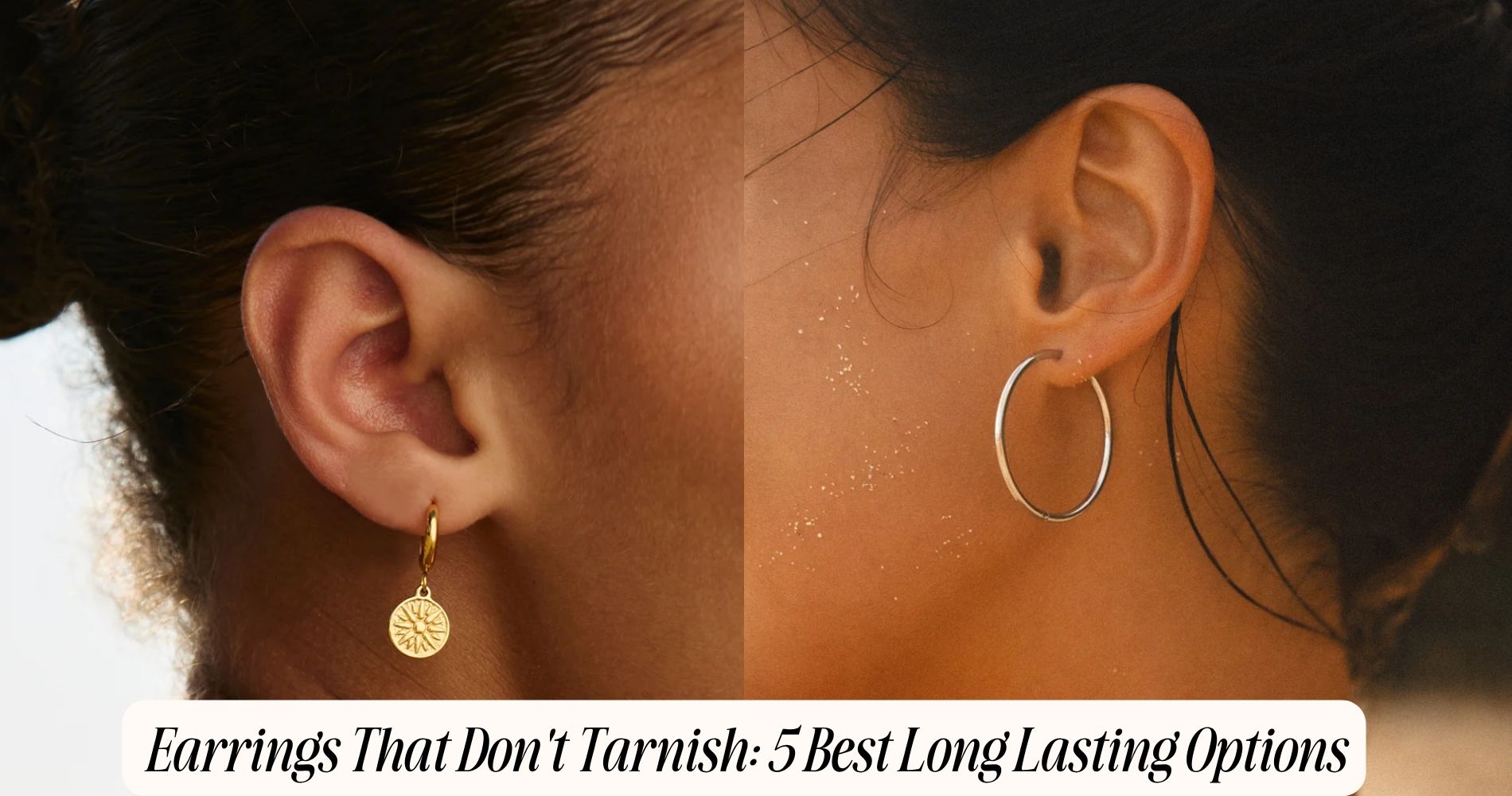
Earrings That Don't Tarnish: 5 Best Long Lasting Options
Earring tarnish is almost always a material problem before it is a maintenance problem. The style of earring matters too, because different constructions create different conditions for tarnishing to develop, and the same base metal behaves differently inside a stud setting versus on a hoop wire. Finding earrings that don't tarnish means matching the right material to the right style for the way you actually wear them. Waterproof Earrings built for daily active wear demonstrate this combination working correctly. This guide covers the five best earring styles for long-lasting tarnish resistance, explains which materials qualify for each style, and gives you the construction details that separate pieces that hold their appearance from those that degrade within months.
Why Earring Style Affects Tarnishing
Before the five options, it is worth understanding why style is not irrelevant to tarnish resistance.
Different earring styles create different tarnishing conditions at the points where metal contacts skin, air, and moisture most intensively. A hoop wire that passes through a piercing sits in sustained skin contact along its full curved length, accumulating sweat and moisture inside the curve. A flat-back stud post sits inside a piercing channel where the enclosed, warm environment concentrates reactive compounds. A butterfly back traps soap and moisture in its wing mechanism against the rear of the lobe. A threader chain passes entirely through the piercing, creating maximum surface area contact with the piercing environment.

Each style concentrates tarnish-accelerating conditions at a specific point in its construction. The material determines whether a reaction occurs at that point. The combination of a tarnish-prone material and a construction that concentrates reactive conditions produces faster tarnish than either factor alone. The combination of a tarnish-resistant material in a well-designed construction produces earrings that maintain their appearance through the conditions that would degrade a lesser piece within weeks.
1. Flat Back Stud Earrings
Flat back studs are the most practical tarnish-resistant earring style for continuous daily wear. The flat disc back sits flush against the rear of the lobe rather than using a butterfly clutch, which eliminates the soap and moisture trap that butterfly backs create. The post sits inside the piercing cleanly without a protruding mechanism that accumulates product residue.
The tarnish risk in a standard stud is concentrated almost entirely at the post. A butterfly back stud with a reactive post shows tarnishing inside the piercing channel before it appears on the visible face because the enclosed, moist piercing environment accelerates the reaction at the post surface faster than air exposure affects the outer face. This is why a stud can look fine from the front while the post has already begun to corrode.
Flat back studs in PVD-coated 316L stainless steel address both failure points simultaneously. The 316L base does not corrode inside the piercing environment, and the PVD finish on the outer face does not lift or dull through shower wear, gym sessions, and daily skin contact. The flat back construction eliminates the soap trap, and the non-reactive post eliminates the piercing-channel corrosion. Both the material and the construction earn their place in a tarnish-resistant earring.
Best sizes for daily non-tarnish wear: 4mm to 8mm face diameter. Smaller faces have enough contact surface for secure flat backs. Larger faces create more product accumulation on the outer surface through daily product application, which is manageable with periodic wiping.
Key construction detail: Check that the post and back are specified as the same material as the outer face. Some pieces use 316L or titanium for the visible face but an unspecified alloy for the post, which defeats the purpose for piercing health and tarnish resistance at the point that matters most.
2. Huggie Hoop Earrings
Huggie hoops combine the visual of a hoop with the close-lobe fit that makes them one of the most secure and tarnish-resistant hoop styles for active wear. Their small inner diameter (10mm to 14mm) means the hoop wire passes through the piercing and sits close against the lobe without creating the open hanging loop of larger hoops that swings freely and contacts more air surface.
The tarnish-specific advantage of a huggie is that its hinged closure sits against the lobe rather than hanging exposed to air. The hinge mechanism, which is the most construction-complex area of any hoop, stays protected against the ear rather than swinging freely and accumulating sweat, sunscreen, and environmental compounds.

Huggie hoops in PVD-coated stainless steel hold their gold or silver tone through the concentrated sweat and product exposure that the skin-contact close fit involves. The hinge mechanism in quality huggies uses the same material as the hoop body, which prevents the two-tone discoloration that happens when a lower-quality metal hinge tarnishes while the PVD-coated hoop face remains intact.
Best fit for tarnish-resistant wear: A huggie that fits snugly without pressing into the lobe. A loose huggie swings more and creates more air and moisture exposure at the hinge. A properly fitted huggie stays close to the ear through gym sessions, ocean swims, and sleep without the pendulum movement that accelerates wear on open hoop closures.
3. Small Classic Hoop Earrings
Classic hoops in the 15mm to 25mm inner diameter range are among the most worn everyday earring styles and one of the most affected by tarnish when the wrong material is used. The hoop wire passes through the piercing and the curved surface sits against the outer ear, creating sustained skin contact along a longer surface than a stud post. Sweat, sunscreen, and product residue accumulate along the wire curve throughout the day.
For a tarnish-resistant classic hoop, the wire gauge and closure type are the construction variables that matter alongside the base metal. A thin wire hoop in a reactive metal tarnishes faster than a thicker one because a thinner gauge has proportionally more surface area relative to its metal volume, which concentrates the surface reaction. A catch-and-wire closure creates a narrow gap at the closure point where moisture accumulates and tarnish initiates.

Small hoops in solid 14k gold or PVD-coated 316L stainless steel handle the sustained skin contact of daily wear without the wire surface oxidizing or the closure gap producing the patchwork tarnish that plated hoops show first at their catch points. A hinged closure eliminates the catch gap entirely and removes the moisture trap at the closure point.
Closure priority for tarnish resistance: Hinged closures outperform catch-and-wire closures for tarnish resistance because they eliminate the gap at the closure point. If a hoop uses a wire-through-catch mechanism, the catch area is the first point to show tarnish on any reactive metal. Hinged closures in the same non-reactive material as the hoop body remove that weak point.
4. Titanium Stud and Hoop Earrings
Titanium earrings deserve their own entry because they represent the most reliably tarnish-free and skin-safe option regardless of style. Titanium's passive oxide surface layer prevents any tarnishing reaction from occurring under any normal wearing condition, and its fully nickel-free composition makes it the safest option for sensitive piercings worn through daily active conditions.
The tarnish-specific advantage of titanium over PVD-coated stainless steel is that titanium does not rely on a coating for tarnish resistance. The tarnish resistance is intrinsic to the metal itself. There is no finish layer to evaluate, no bond to assess, and no coating coverage concern at the post versus the face. A titanium earring is tarnish-resistant throughout its construction by material nature rather than by applied finish.
Titanium earrings are available in both stud and hoop styles, though the range is narrower than stainless steel due to manufacturing constraints. For people with highly reactive skin chemistry who experience tarnishing and irritation from most fashion jewelry, and who want absolute certainty about their earring material without evaluating coating specifications, titanium is the definitive choice.
Style range consideration: Titanium is most widely available in stud and simple hoop styles. Elaborate designs with multiple components or complex mechanisms are less common in titanium than in stainless steel at accessible price points. If a specific style is required, PVD stainless steel covers the full style range with comparable tarnish resistance for most wearers.
5. Solid Gold Earrings (14k and Above)
Solid gold earrings at 14k and above do not tarnish because gold at that karat level is chemically stable under all normal wearing conditions. The gold matrix at 58.5% (14k) or 75% (18k) by weight maintains the non-reactive character of pure gold through daily wear, water exposure, and sustained skin contact in every style from studs to drops to hoops.
The style-specific advantage of solid gold over coated alternatives is that there is no finish layer to degrade at any point in the construction. A solid gold hoop wire does not show tarnish at the closure gap. A solid gold post does not corrode inside the piercing. A solid gold back mechanism does not show the differential tarnishing between a coated body and an uncoated mechanism that lower-quality earrings develop over time.

The practical limitation is price. Solid gold earrings sit at a cost level that makes them less accessible for everyday active wear pieces exposed to loss risk in ocean swimming, gym sessions, and travel. For people who want tarnish-resistant earrings at accessible everyday prices, PVD-coated stainless steel delivers the same tarnish performance through daily active wear at a fraction of the cost.
| Style | Best Material | Tarnish-Prone Point | Construction Priority |
|---|---|---|---|
| Flat back stud | PVD 316L steel or titanium | Post inside piercing | Flat back closure, uniform material |
| Huggie hoop | PVD 316L steel or solid gold | Hinge mechanism | Same material hinge, snug fit |
| Small classic hoop | PVD 316L steel or solid gold | Closure gap, wire curve | Hinged closure over catch-and-wire |
| Titanium stud or hoop | Titanium (intrinsic) | None under normal conditions | Grade confirmation |
| Solid gold stud or hoop | 14k gold minimum | None under normal conditions | Karat hallmark verification |
Frequently Asked Questions
What earrings will never tarnish?
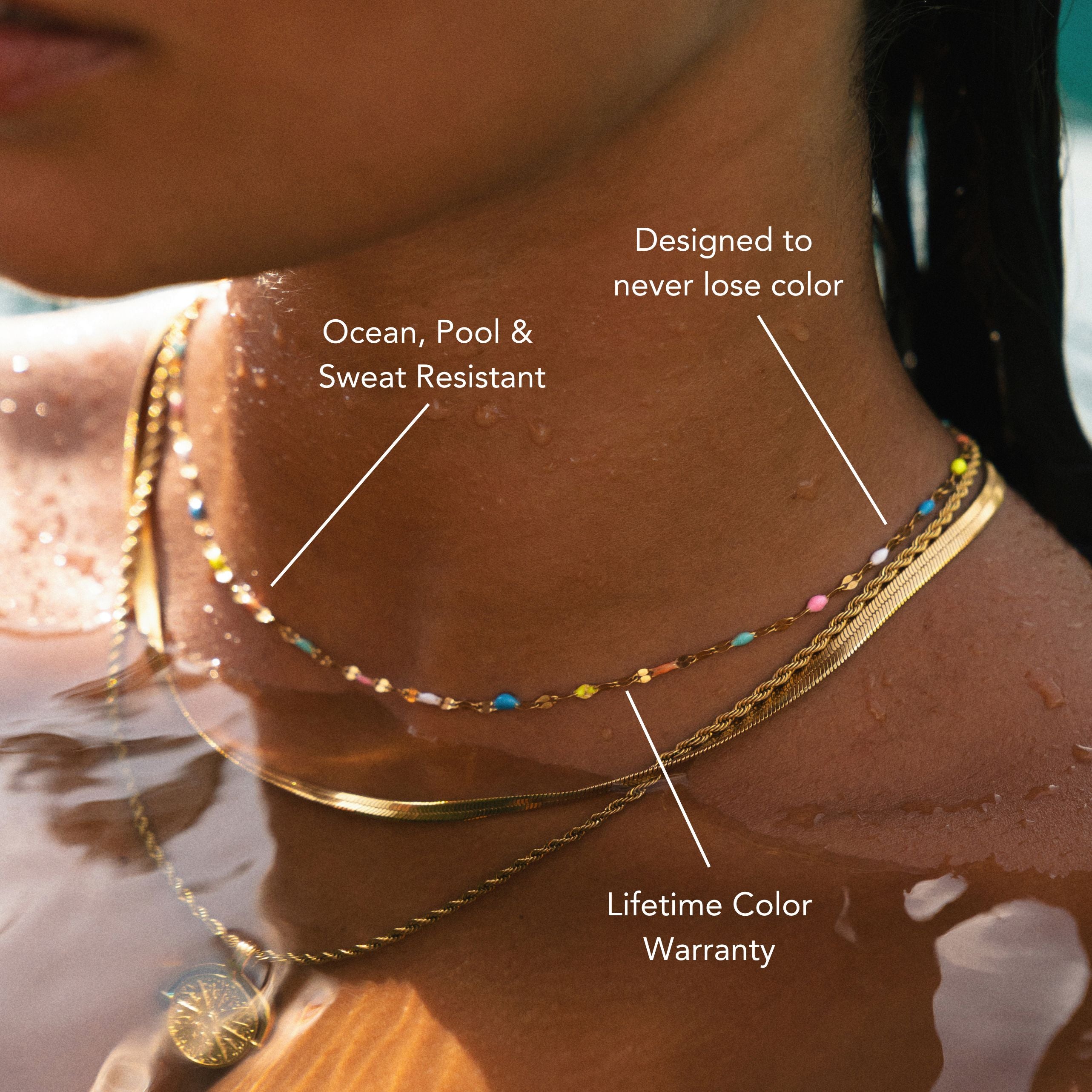
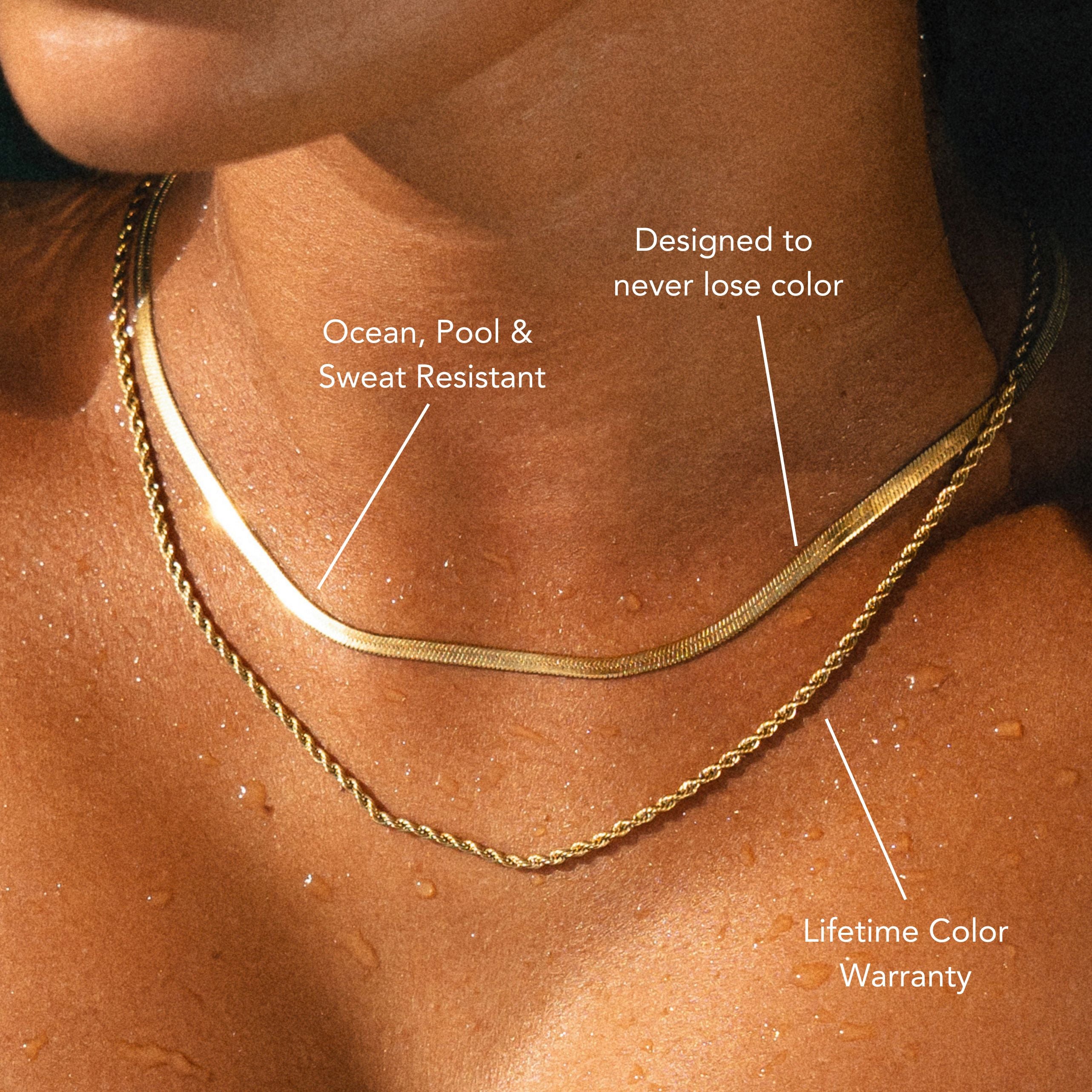
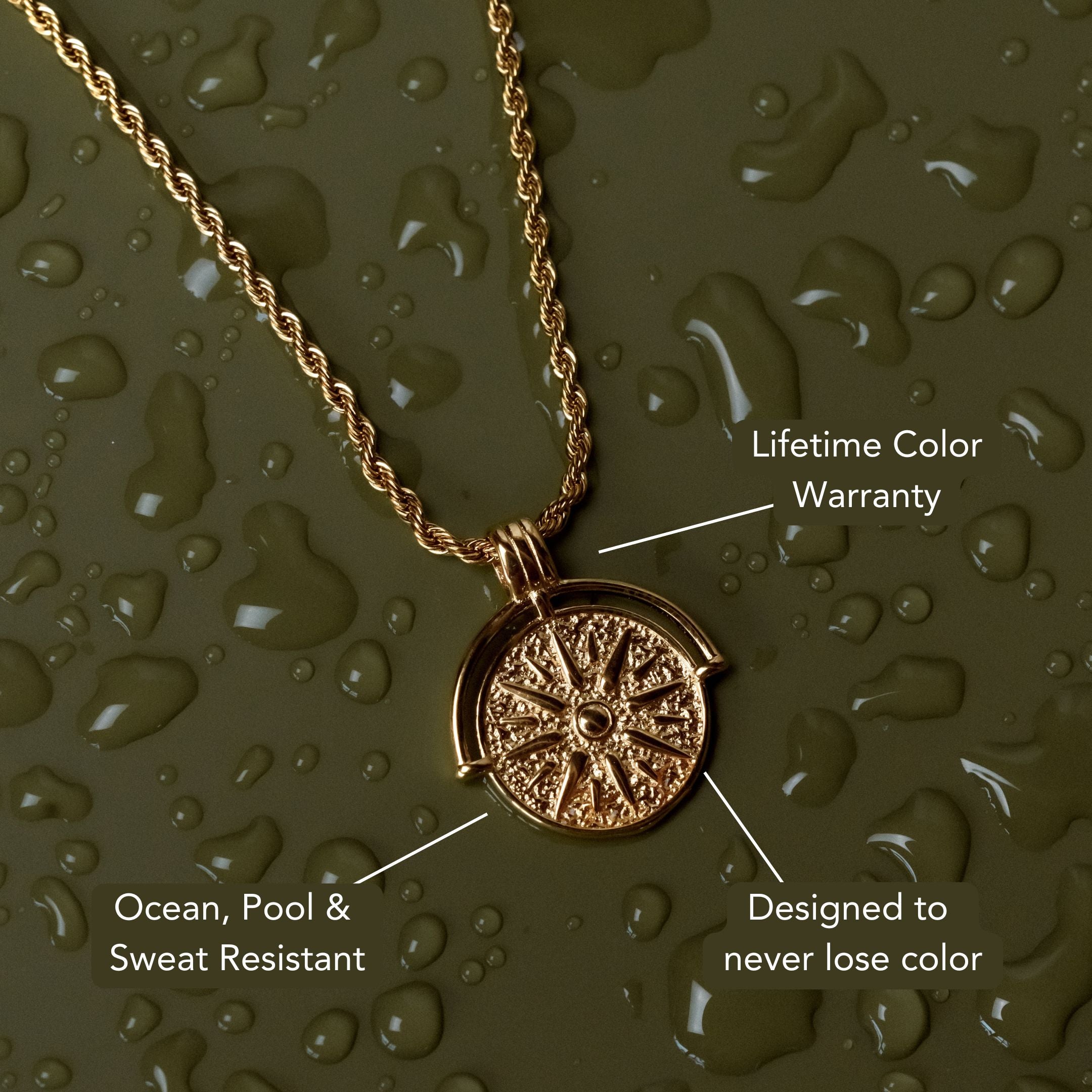
Solid gold earrings at 14k and above and titanium earrings do not tarnish under any normal wearing condition. PVD-coated 316L stainless steel earrings maintain their finish without tarnishing through daily active wear including showers, gym sessions, and ocean swimming, backed by a lifetime color warranty from brands that stand behind the construction.
Do gold-plated earrings tarnish?
Yes. Gold-plated earrings have a reactive base metal, typically brass or copper, beneath the gold layer. The plating degrades fastest at the post inside the piercing and at closure mechanisms, both of which experience the most moisture and friction. Once the plating wears through at those points, the base metal tarnishes and causes both discoloration and skin reactions.
Which earring style tarnishes the least?
Flat back labret studs tarnish the least because their construction minimizes the areas where reactive conditions concentrate. The flat back eliminates the soap trap of butterfly backs, the post sits cleanly in the piercing without a protruding mechanism, and the simple face-and-post construction has fewer gaps and joins where moisture accumulates. In a non-reactive material, the flat back stud is the most maintenance-friendly earring construction available.
Can you wear non-tarnishing earrings in the shower?
Yes, if they are made from PVD-coated stainless steel, solid gold, or titanium. All three handle daily shower exposure without the finish degrading or the base metal corroding at the post or face. Sterling silver and gold-plated earrings should not be worn in the shower because water and soap exposure accelerates their tarnishing significantly.
How do I know if my earrings will tarnish?
Check the base metal specification in the product description. If the description names 316L stainless steel, solid gold at a specific karat, or titanium as the base metal, the piece is built from tarnish-resistant materials. If the description names only the finish (gold plated, gold tone) without specifying the base, assume a reactive base metal and expect tarnishing once the finish wears through at the post and closure points.
Conclusion
Earrings that don't tarnish are defined by the combination of a non-reactive base material and a construction that does not create concentrated tarnish conditions at the specific points where tarnish initiates. Flat back studs eliminate the butterfly back trap. Huggie hoops protect the hinge against the lobe. Small hinged hoops remove the closure gap weakness. Titanium earrings are tarnish-free by material nature. Solid gold earrings are tarnish-free throughout their construction. Any of these five in the right material holds its appearance through the daily conditions that degrade fashion jewelry within a season.





Leave a comment
This site is protected by hCaptcha and the hCaptcha Privacy Policy and Terms of Service apply.