

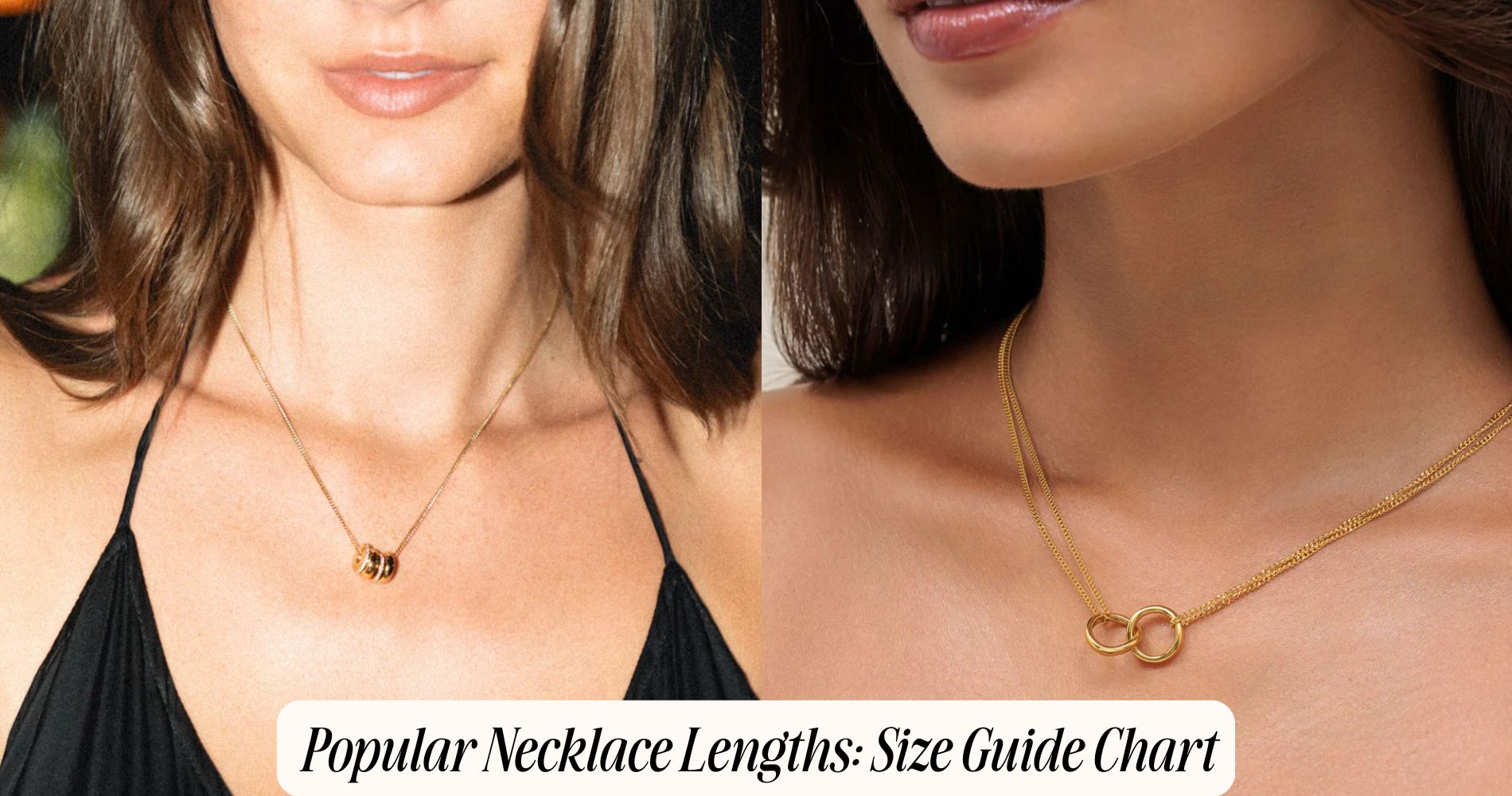
Popular Necklace Lengths: Size Guide Chart
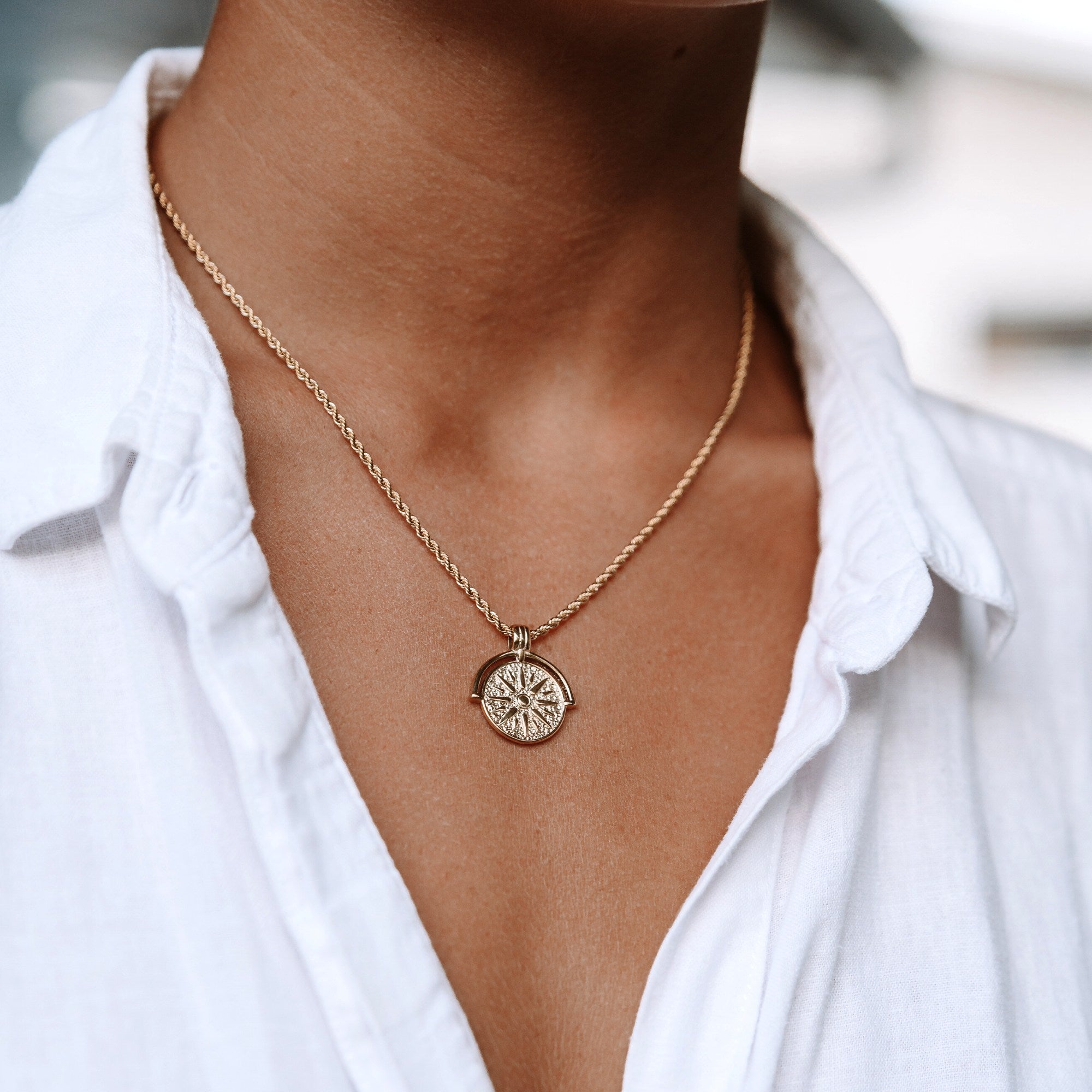
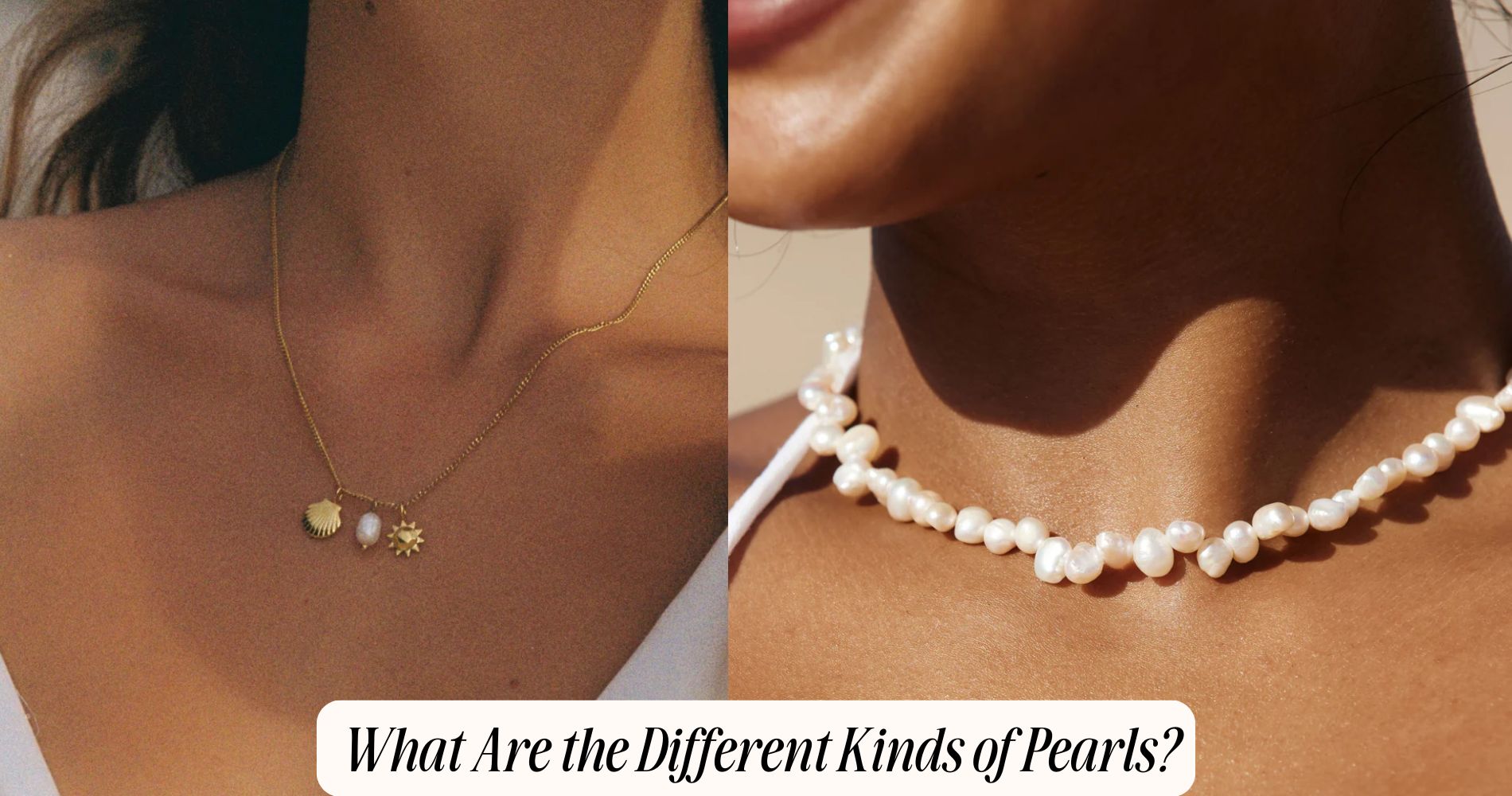
This guide breaks down popular necklace lengths so you can choose the right fit with confidence. A collar sits high at 12–14", a choker hugs the base of the neck at 14–16", a princess length hits the collarbone at 17–19", a matinee falls on the upper chest at 20–24", and an opera drops to mid or lower chest at 28–36". Measure your neck snugly, add 10–20 mm for comfort, and match the length to your neckline for the most flattering result. For women, 14–18.9" is most common; for men, 20–22" typically lands at the collarbone. For easy layering, stack 16", 18", and 20–22" chains with about 2" of spacing—styles like Minimalist Gold Necklaces make these combinations look clean and effortless. Next, you’ll see precise charts and fit tips.
Necklace Length Names and Where They Sit
Although jewelry terms can vary by brand, most guides recognize six standard necklace lengths and their typical resting points:
- collar (12–14 in) sits high on the neck;
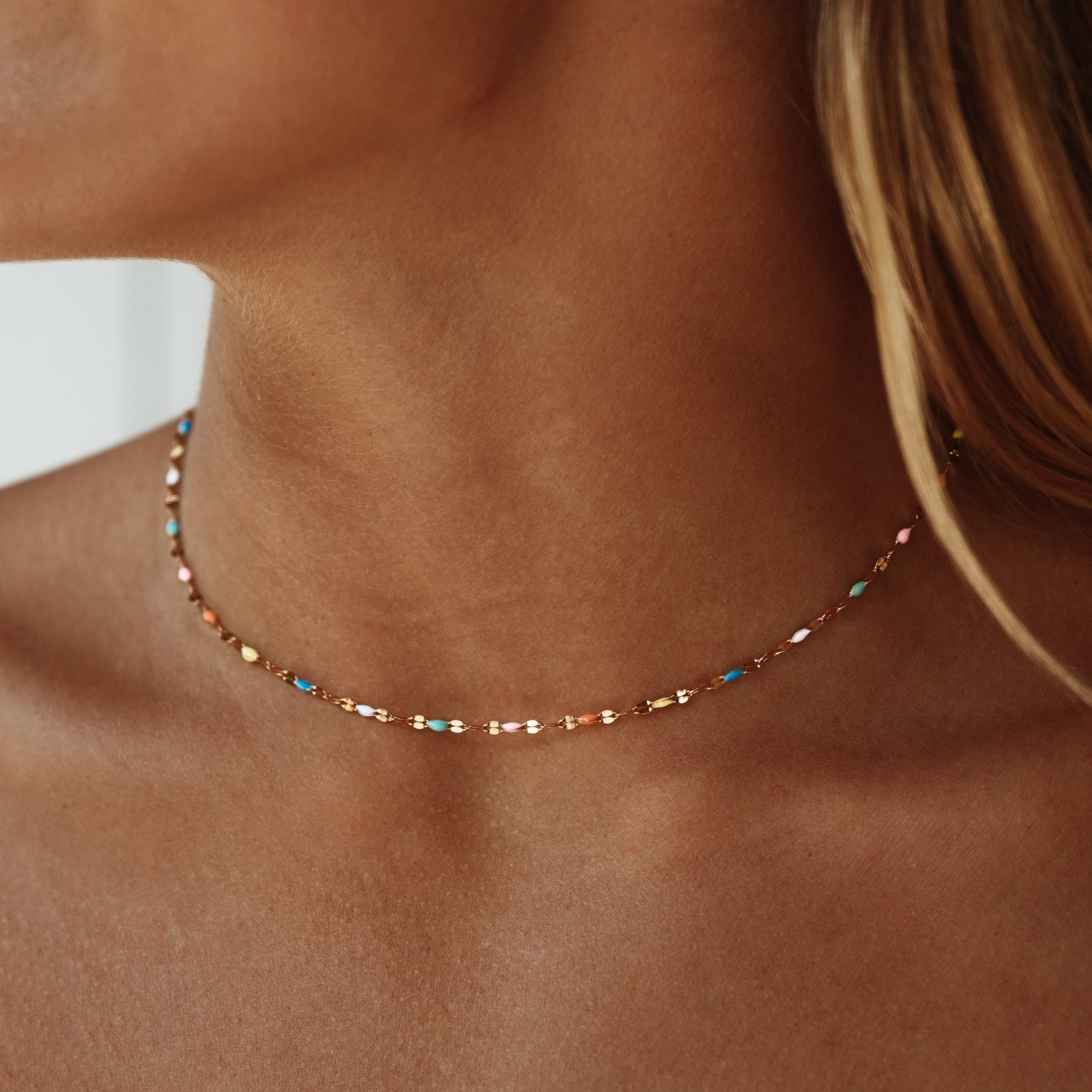
- choker (14–16 in) encircles the base of the neck;
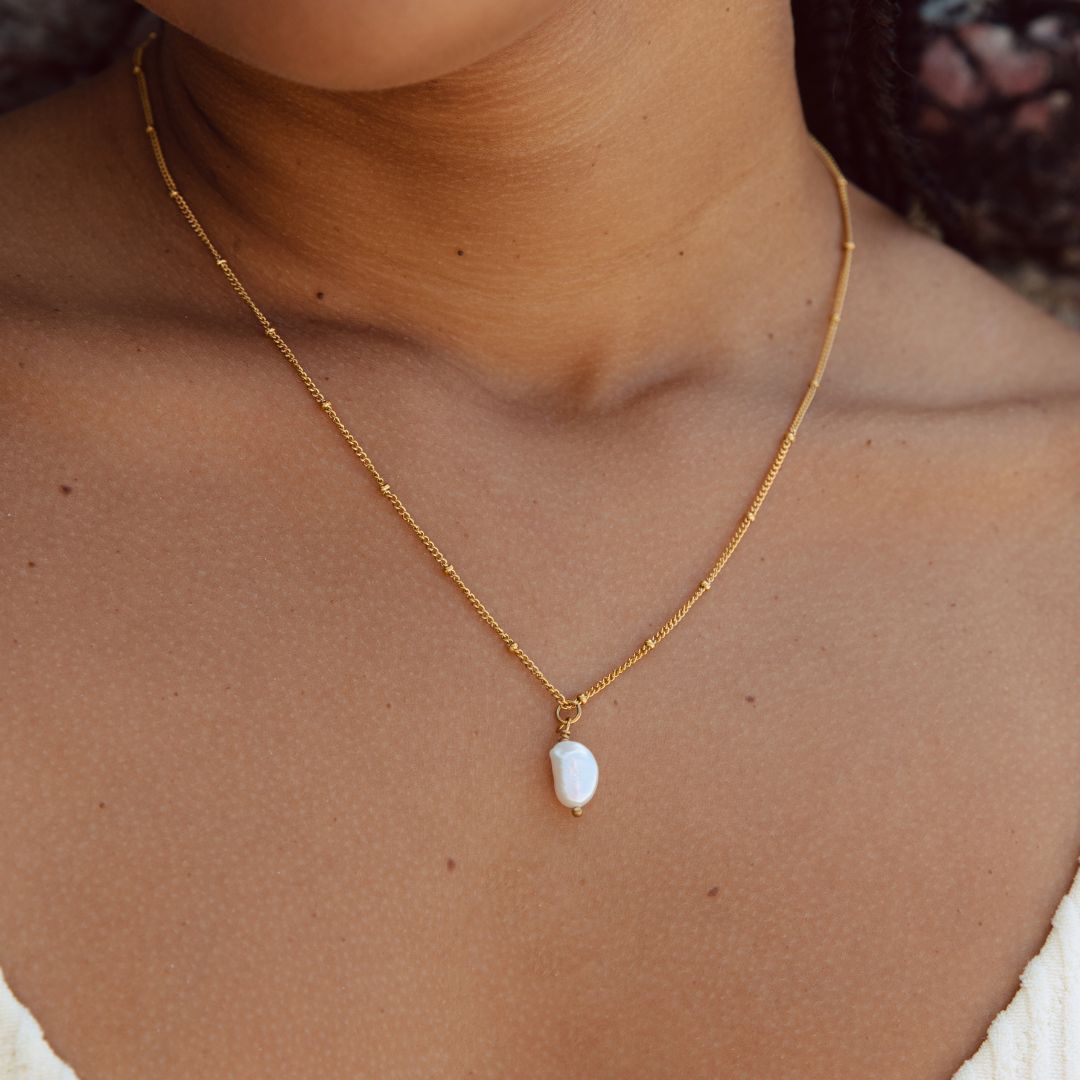
- princess (17–19 in) rests near the collarbone;
- matinee (20–24 in) falls on the upper chest;
- opera (28–36 in) reaches the mid to lower chest;
- and rope or lariat (over 36 in) drapes below the bust or doubles for layered looks.
You’ll see this necklace terminology across jewelers because it maps to consistent anatomical landmarks, improving fit predictions.
Use it to compare popular styles: pendants typically suit princess, statement pieces favor matinee, and layered looks lean on opera and rope.
When chains list adjustable ranges, prioritize the midpoint.

How to Measure Your Neck and Ideal Drop
Two quick measurements give you a reliable fit: neck circumference and desired pendant drop.
Use validated neck measurement techniques: wrap a flexible tailor’s tape at the base of your neck, level and snug without compression. Record to the nearest millimeter. If you lack a tape, use a string, mark the overlap, then measure it with a ruler. Add 10–20 mm for breathing room, more if you prefer ease or plan to layer.
For ideal drop considerations, measure from the neck base notch (suprasternal notch) straight down to the point you want the pendant or strand to rest.
Note clothing necklines you wear most; they change perceived length. Factor pendant height and bail length into total drop. Re-measure seated and standing; posture alters chain hang.
Women’s Standard Necklace Lengths
Six core lengths define most women’s necklaces: 35–38 cm (choker), 40–43 cm (princess short), 45–48 cm (princess), 50–55 cm (matinee short), 55–65 cm (matinee), and 70–90+ cm (opera/rope).
Choose length by neckline height, clavicle width, and pendant scale. Chokers emphasize the neck line; princess lengths center at the collarbone for daily wear. Matinee ranges bypass high necklines and suit structured tops. Opera and rope lengths enable doubling, knotting, and layered focal points.
Match necklace materials to drape: fine chains in gold or platinum hang straighter; heavier sterling, pearls, or bead strings add visual weight and shorten perceived drop.
Track fashion trends: rising necklines favor longer matinee; minimalist styling revives princess; statement pendants often require 50–55 cm to sit clear of collars.

Men’s Standard Necklace Lengths
After mapping women’s core lengths, turn to men’s standards: common ranges include 45–50 cm (base of neck), 50–55 cm (rests at collarbone), 55–60 cm (just below collarbone), and 60–65+ cm (top of sternum to mid-chest).
You’ll see these intervals across major retailers and fit guides because they align with male cervical and thoracic landmarks, ensuring predictable drape and pendant drop.
Choose 45–50 cm for minimal profiles and high crewnecks. Opt for 50–55 cm for daily wear; it clears most collars and suits casual styles without crowding the neckline.
Select 55–60 cm when layering or showcasing modest pendants. Reserve 60–65+ cm for bold chains, large medallions, or deeper V-necks.
For formal occasions, target 50–55 cm so the chain sits cleanly under lapels and doesn’t foul bow ties.
Choosing Lengths for Different Body Types
Start with proportional fit: match chain length to your neck circumference, height, and torso depth so the drape hits intended landmarks (base of neck, collarbone, sternum). Measure your neck; add 2 inches for a close but comfortable collar.
Petite frames often read balanced at 14–16 inches; tall or long-torsoed bodies distribute weight better at 18–22 inches. For fuller necks or broad chests, choose 20 inches and longer to prevent compression and visual crowding.
Use body shape considerations to calibrate focal points: place pendants above the bust for apple shapes, at mid-sternum for rectangles, and near the waist-to-bust midpoint for hourglasses.
Curvier figures benefit from thicker gauges for scale; fine chains suit smaller frames. Align choices with personal style preferences—minimalist, statement, layered—while maintaining anatomical proportion.
Matching Necklace Lengths to Necklines
While fabrics and cuts vary, the goal is consistent: align chain length with the neckline’s negative space to create clean visual continuity.
Match necklace types to neckline styles by mirroring lines and avoiding overlap. For crew necks, choose a 16–18" collar or princess length that sits above the edge.
With V-necks, select a pendant that echoes the V; aim for the tip to land one to two inches above the point.
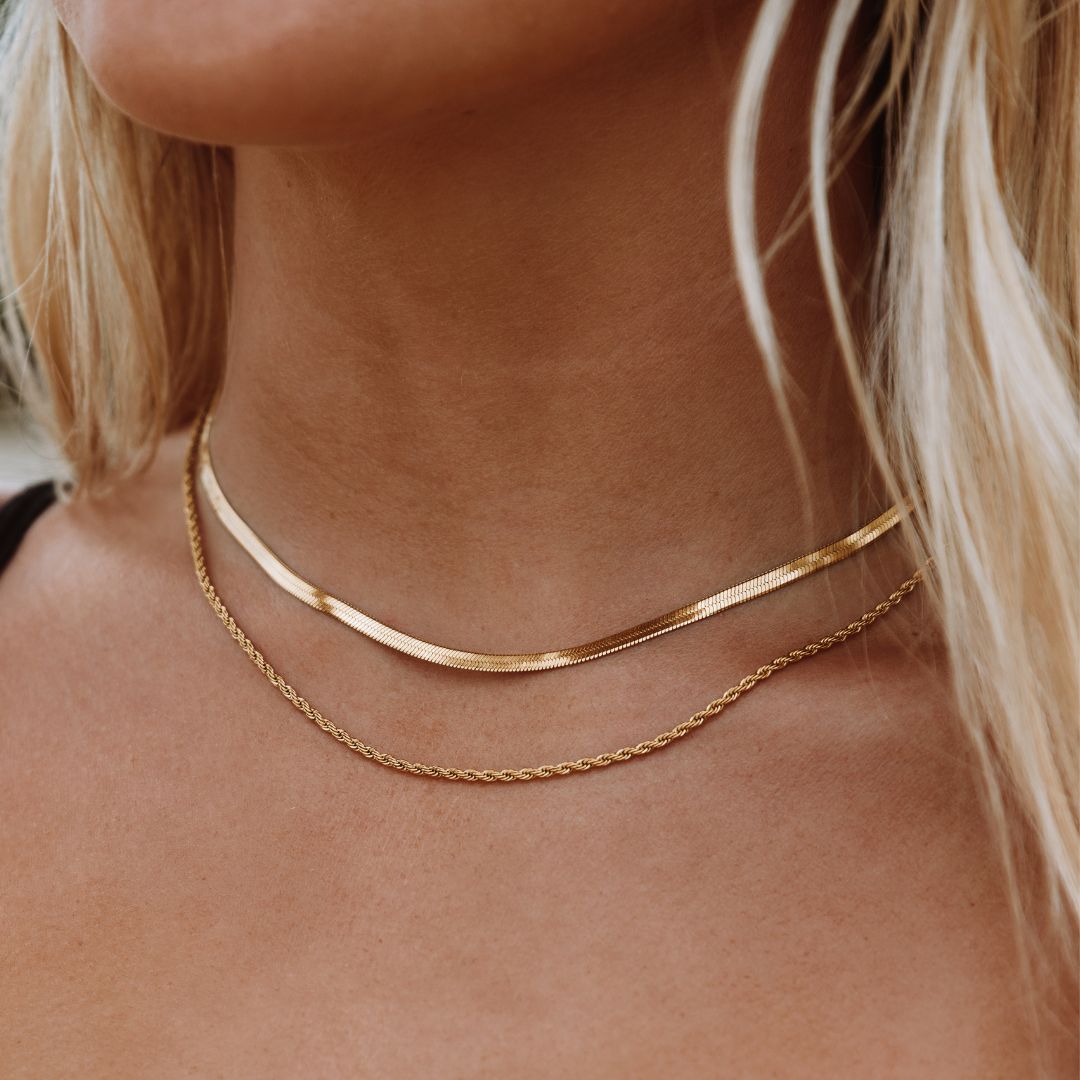
Scoop necks pair with short arcs that trace the curve. Strapless and sweetheart necklines favor 14–16" chokers that frame the clavicle.
Boat necks benefit from longer 20–24" lengths to elongate. Collared shirts suit 18–20" pendants resting mid-placket.
Turtlenecks call for 24–30" chains to break vertical density and maintain proportion.

Layering Chains: Length Combinations That Work
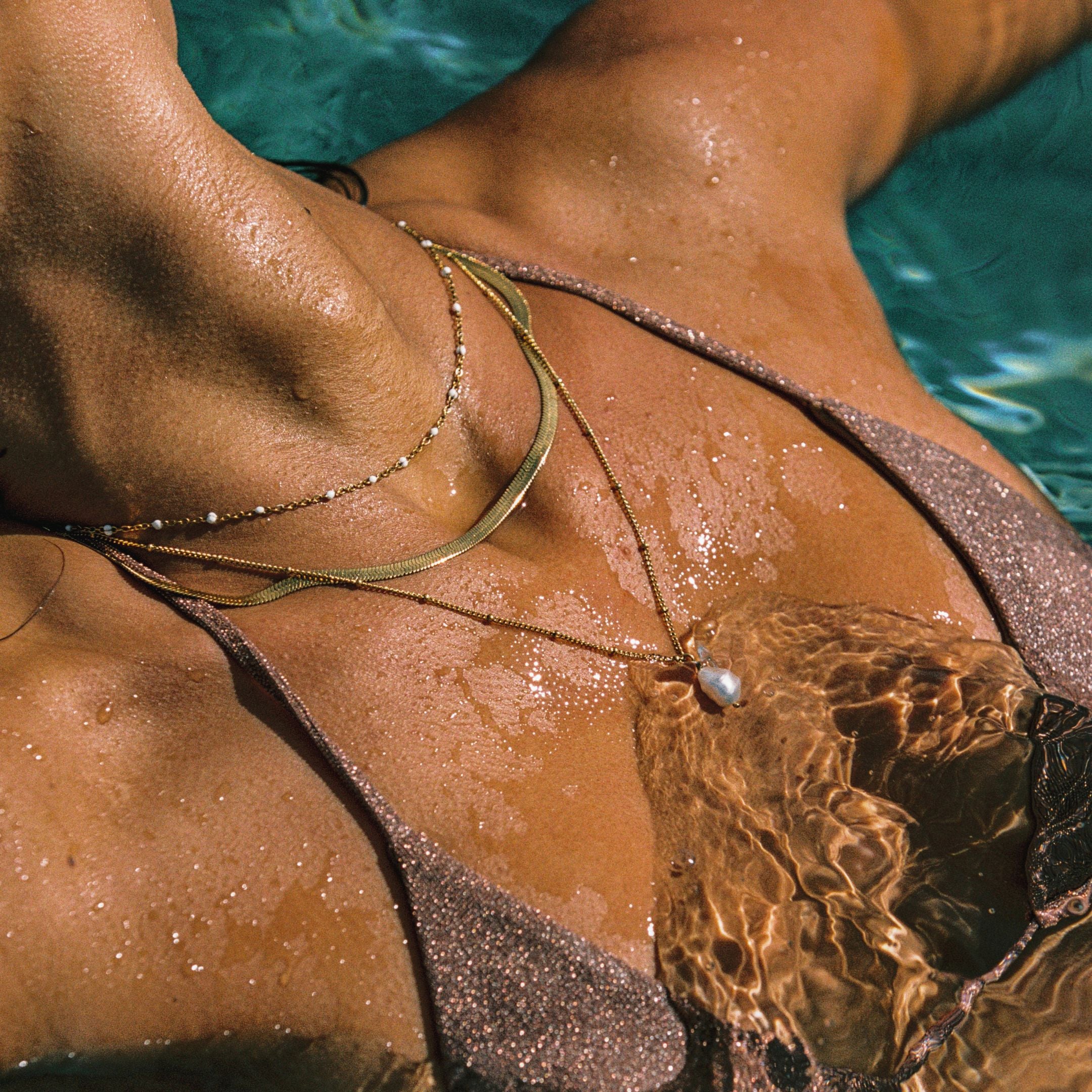
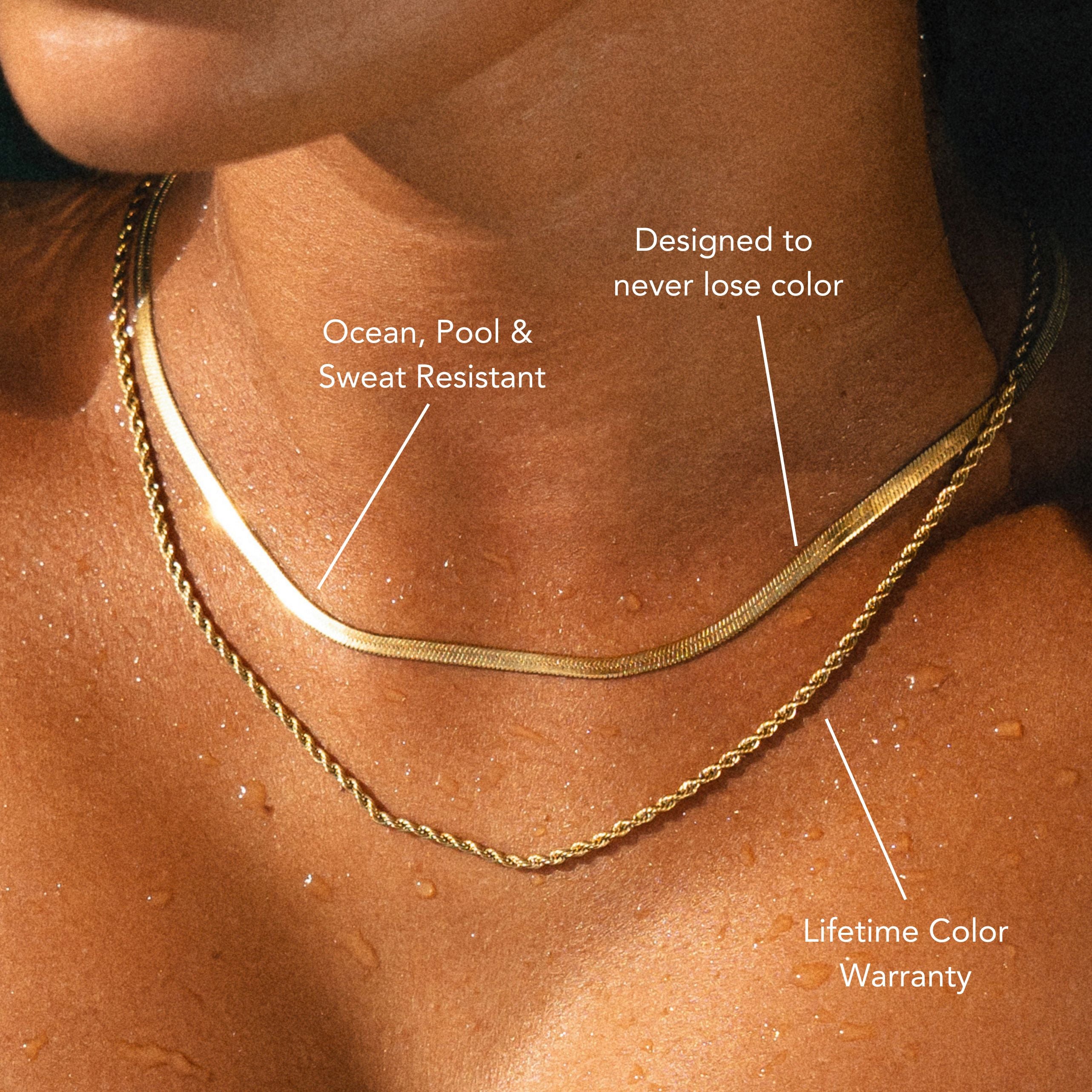
Because layered necklaces can look cluttered fast, anchor the stack with clear length tiers that create separation and rhythm: a 14–16" choker to frame the clavicle, an 18" princess as the mid layer, and a 20–22" matinee to extend the line.
Use layering techniques that vary chain styles, thickness, and pendant scale to avoid tangling and visual noise. Pair a fine cable or box choker with a slightly heavier curb or wheat at 18", then a fluid rope or paperclip at 20–22".
Keep only one focal pendant; let the others stay minimal. Maintain 2-inch spacing between layers; extenders help micro-adjust drop. Balance finishes—match metals; mix textures.
For durability, choose soldered links, quality clasps, and low-friction surfaces to reduce abrasion.
Necklace Size Guide Chart and Fit Tips
With your layers set, exact lengths matter. Use a standardized chart: 14–16 inches sits at the base of the neck; 18 inches rests at the clavicle; 20–22 inches drops to upper chest; 24–30 inches reaches mid-torso; 32+ inches forms opera or rope lengths.
Validate necklace fit by measuring your neck circumference and adding 2 inches for comfort, 4 inches for drape. Account for pendant drop; add the bail length to chain length.
Chain materials affect behavior: solid gold and platinum drape heavier; sterling holds shape; titanium and stainless feel lighter; silk cord stretches; leather relaxes over time.
Clasps add 0.25–1 inch. Use extenders for fine-tuning. For wide necklines, increase length by 2 inches.
Recheck fit after seasonal weight or hairstyle changes.
Frequently Asked Questions
How Do Metals and Finishes Affect Perceived Necklace Length?
Metals and finishes alter perceived length by changing visual weight and reflectivity. You see heavier metal types and high-polish finish effects read shorter; lighter alloys, matte or brushed surfaces elongate. Contrast with skin tone further compresses or extends appearance.
Are Adjustable Extenders Reliable for Daily Wear?
Yes. Quality adjustable extenders withstand daily wear when constructed from soldered links, corrosion-resistant alloys, and secure clasps. Avoid flimsy jump rings. Inspect weekly, rinse after sweat exposure, and replace if deformation, plating loss, or clasp backlash appears.
What Necklace Lengths Suit Sensitive Skin or Allergies?
Choose lengths that keep metal off reactive areas: 16–18″ for minimal contact or 20–24″ to bypass collarbones. Prioritize sensitive materials and hypoallergenic options—solid 14k+ gold, platinum, titanium, or surgical steel—avoid nickel, mixed alloys, and plated finishes.
How Do Clasp Types Impact Comfort and Drape?
Clasp types change comfort and drape by altering weight distribution, flexibility, and skin contact. You optimize feel with clasp placement at the nape and hypoallergenic clasp materials. Lobster and magnetic clasps balance security, smooth edges, and minimal torque.
How to Travel and Store Multiple Necklace Lengths Tangle-Free?
Pack each necklace in a separate mini zip bag with the clasp secured. Use straws or silicone tubes for threading chains. Employ a compartmentalized travel roll. Layer anti-tarnish strips. These travel tips and storage solutions prevent tangling reliably.
Conclusion
You’ve got the tools to choose necklace lengths with intention. Measure your neck, note your ideal drop, and reference standard lengths for women and men. Adjust for body type, height, and face shape to balance proportions. Match lengths to necklines for clean lines, and layer with 2–3 chains spaced 2–4 inches apart for definition. Use the size guide chart to confirm fit and clasp placement. When in doubt, start with a 16–18" base and build strategically.





Leave a comment
This site is protected by hCaptcha and the hCaptcha Privacy Policy and Terms of Service apply.