

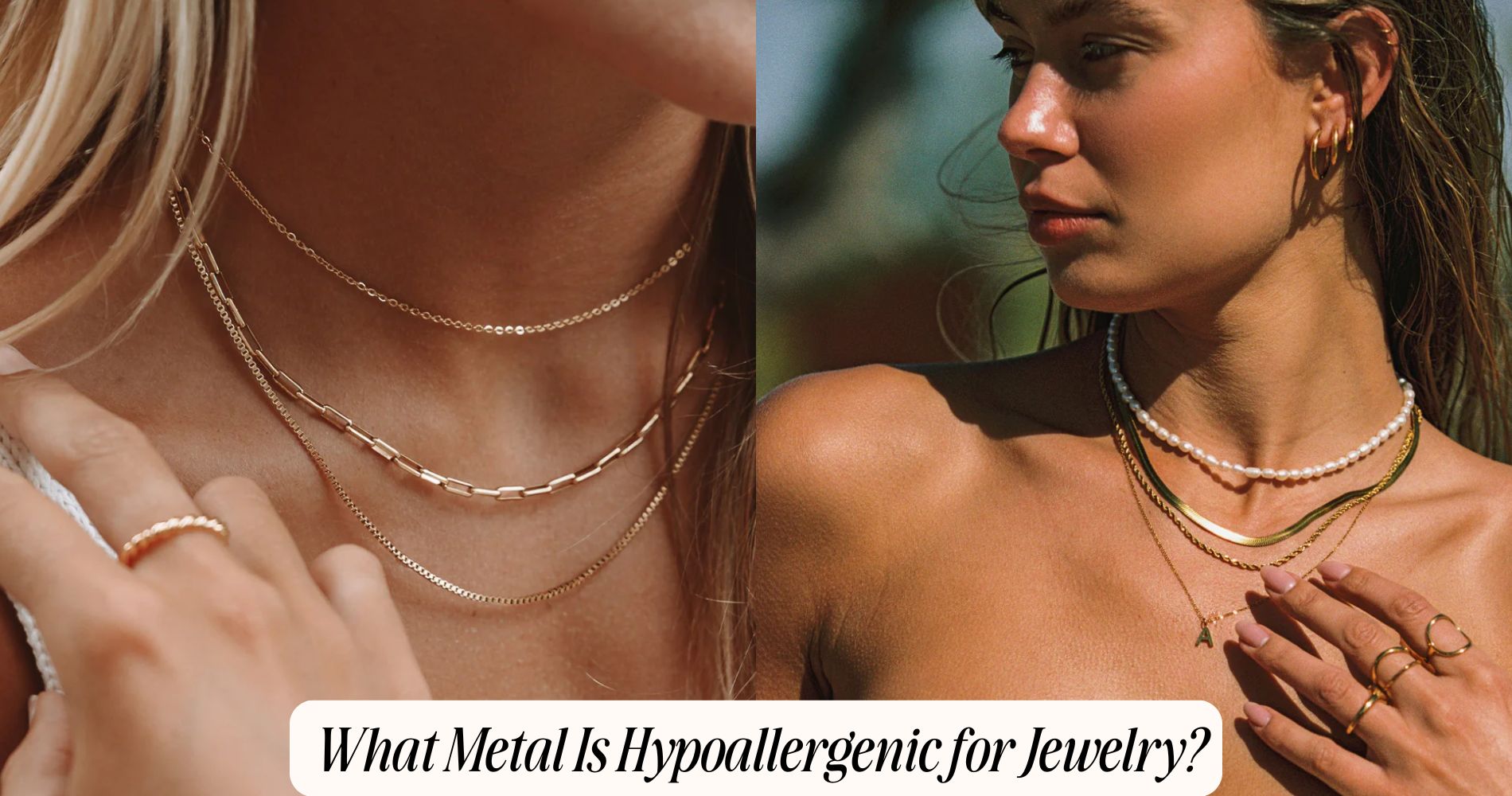
What Metal Is Hypoallergenic for Jewelry?
What metal is hypoallergenic? For hypoallergenic jewelry, choose inert metals with very low nickel release, such as implant-grade titanium (ASTM F136/F67), commercially pure niobium, platinum (≥950), high-karat yellow gold, or 316L surgical stainless steel. Avoid nickel-containing white gold and low-grade stainless. For extra assurance, look for REACH EN 1811 nickel-release compliance, clean manufacturing, and high-quality finishes—PVD coatings can also add a stable protective barrier. Keep in mind that cobalt and chromium can sensitize some skin types, and copper-heavy alloys may irritate. Choosing pieces from Hypoallergenic Jewelry makes it easier to wear your favorites comfortably with the right materials and care.
What “Hypoallergenic” Really Means in Jewelry
Although marketers use it loosely, hypoallergenic in jewelry refers to alloys and finishes engineered to minimize sensitization risk—primarily from nickel release—under normal wear.
You should interpret it as a performance claim tied to controlled nickel migration, surface stability, and clean manufacturing. Hypoallergenic materials typically include high-grade titanium, niobium, platinum group alloys, and specific stainless steels verified for low nickel release.
Don’t rely on slogans; look for jewelry certifications and test data. In the EU, compliance with REACH Nickel Directive (EN 1811) indicates release rates below regulatory limits.
For ear studs, ISO 10993 biocompatibility data adds confidence. Verify disclosures on base metal, plating thickness, and passivation, since microcracks or poor barriers can raise exposure.
Choose vendors who provide assay reports, alloy designations (e.g., ASTM/ISO), and documented surface treatments.

Common Metal Allergens and Why They Cause Reactions
While many metals are inert on skin, a few routinely trigger allergic contact dermatitis because they ionize in sweat and penetrate the epidermis.
You react when divalent metal ions bind epidermal proteins, forming haptens that T cells recognize after sensitization. Nickel is the leading culprit; nickel allergies are dose-dependent and intensified by friction and perspiration.
Cobalt often co-occurs with nickel, especially in base-metal alloys and some white golds. Chromium salts can leach from low-grade stainless steel or plating residues and provoke dermatitis.
Brass and bronze can cause copper sensitivity in a subset of wearers due to Cu2+ release, sometimes compounded by zinc.
Even noble-metal alloys can be problematic if they contain trace nickel or cobalt or if porous plating exposes reactive substrates.
Safest Metals for Sensitive Skin: Titanium, Niobium, and Platinum
Because minimizing ion release is key to preventing sensitization, titanium, niobium, and platinum rank as the most reliable choices for sensitive skin.
You benefit from titanium’s passive oxide layer (TiO2), which resists corrosion, reduces metal ion shedding, and delivers excellent strength-to-weight ratio—core titanium benefits for daily wear and piercings.
Niobium forms a similarly stable oxide (Nb2O5), enabling niobium versatility: it’s work-hardenable, anodizes for color without dyes, and remains inert in sweat and saline.
Platinum’s noble character and high corrosion potential mean negligible ion release, superior biocompatibility, and durability in harsh environments.
Choose grades with minimal alloying: implant-grade titanium (ASTM F136/F67), commercially pure niobium, and high-purity platinum (≥950).
Verify finish quality; polished, defect-free surfaces reduce crevice corrosion and further limit sensitization risk.

Understanding Gold Purity, Alloys, and Karat Grades
Even if you love the warm look of gold, you need to know that pure gold (24k) is soft, so jewelers alloy it with metals to improve hardness, wear resistance, and color.
Karat denotes gold composition by parts of 24: 18k is 75% gold, 14k is 58.5%, and 10k is 41.7%. As fineness decreases, hardness and yield strength generally increase.
You’ll see distinct alloy characteristics. Yellow gold typically blends gold with silver and copper for balanced ductility and warm hue.
Rose gold increases copper for a pink tone and higher hardness. White gold uses palladium or nickel to desaturate color; nickel-bearing grades can trigger sensitivities, while palladium white gold is more skin-friendly.
For hypoallergenic priorities, choose higher karat yellow or palladium-based white gold, verified by assay marks and manufacturer disclosures.
The Truth About Stainless Steel, Plating, and Coatings
Although stainless steel is marketed as “nonreactive,” its hypoallergenic performance depends on grade, microstructure, and surface condition.
Austenitic 316L (surgical) contains molybdenum and reduced carbon, minimizing nickel ion release; 304 and ferritic grades can leach more nickel under sweat, salt, or abrasion.
Passivation quality and surface finish (polished vs. rough-machined) strongly influence corrosion resistance and skin compatibility.
You should verify if plating is merely decorative or functional.
Ion-plated or PVD coatings (e.g., TiN, DLC) provide hard, inert barriers but can fail at edges or scratches.
Electroplated gold or rhodium can mask nickel initially, yet porosity and wear expose the substrate.
Stainless steel durability remains high, but barrier integrity dictates outcomes.
Appropriate jewelry maintenance practices—rinsing after perspiration, gentle cleaning, and prompt scratch mitigation—reduce nickel exposure.
Smart Shopping Tips and Care for Irritation-Free Wear
When you shop for hypoallergenic jewelry, verify metal grade and surface treatments, then match them to your sensitivity profile.
Prioritize ASTM F138/F1295 implant-grade steel, ASTM F136 titanium, commercially pure titanium, niobium, or platinum. For gold, choose 18k or higher, nickel-free alloys.
Request composition data sheets and EU REACH/Nickel Directive compliance. Avoid “nickel safe” claims without test reports.
Use smart shopping practices: select solid metals over thick plating; if plating, demand ≥2.5 microns vermeil or PVD on a nickel-free substrate.
Check return policies for sensitization events and confirm lead/cadmium limits.
Practice rigorous jewelry care: cleanse with mild surfactant and water, dry fully, and store dry.
Remove pieces before workouts, swimming, or lotions. Replace worn posts/backs promptly.
Disinfect piercings with saline, not alcohol.
Frequently Asked Questions
Can You Develop a Metal Allergy Later in Life After Years of Wear?
Yes, you can develop metal allergies later. Repeated exposure, skin barrier damage, or hormonal shifts act as metal sensitivity triggers. You’ll notice allergy symptoms progression: delayed itching, erythema, vesicles, then chronic dermatitis. Switch to inert alloys and seek patch testing.
Do Climate and Sweat Acidity Affect Jewelry Allergy Risk?
Yes. Warmer, humid climates and acidic sweat composition increase metal ion release, elevating sensitization risk. Climate factors like heat-driven perspiration, salt, and pH fluctuations accelerate corrosion. You’ll reduce reactions by selecting inert alloys, ensuring passivation, and maintaining dry, clean skin.
Are Lab-Grown Diamond Settings Safer Than Natural Diamond Settings?
Yes. You’re safer when the metal is hypoallergenic; the stone itself is inert. Lab grown durability equals natural diamond safety. Prioritize platinum, palladium, or high‑karat gold settings, avoid nickel alloys, and request documented alloy composition and finish specifications.
How Do Piercings Healing Stages Change Metal Sensitivity?
Healing stages modulate metal sensitivity: early inflammation increases reactivity; proliferative and remodeling phases reduce risk as epithelialization matures. You should prioritize inert jewelry materials during the longest piercing duration. Use implant‑grade titanium, niobium, or 14k+ nickel‑free gold.
Can Dietary Nickel Intake Influence Skin Reactions to Jewelry?
Yes. If you’re nickel‑sensitized, dietary nickel intake can exacerbate systemic contact dermatitis, worsening reactions to jewelry. Track nickel exposure, implement targeted dietary changes (low‑nickel diet), and consult dermatology for patch testing and management, including barrier strategies and nickel‑free materials.
Conclusion
You can avoid reactions by choosing inert, low‑nickel metals and verifying their specs. Prioritize implant‑grade titanium (Ti‑6Al‑4V ELI, ASTM F136), commercially pure titanium (Grade 1–4), niobium, and platinum (PT950). Opt for 14k–18k nickel‑free gold alloys; confirm palladium‑based white gold instead of nickel. Be cautious with stainless steel; select ASTM F138/F316LVM only. Don’t rely on plating—coatings wear. Buy from vendors disclosing alloy composition, keep pieces clean, and patch‑test new jewelry for 24–48 hours.





,%20commercially%20pure%20niobium,%20platinum%20(%E2%89%A5950...)
Leave a comment
This site is protected by hCaptcha and the hCaptcha Privacy Policy and Terms of Service apply.