

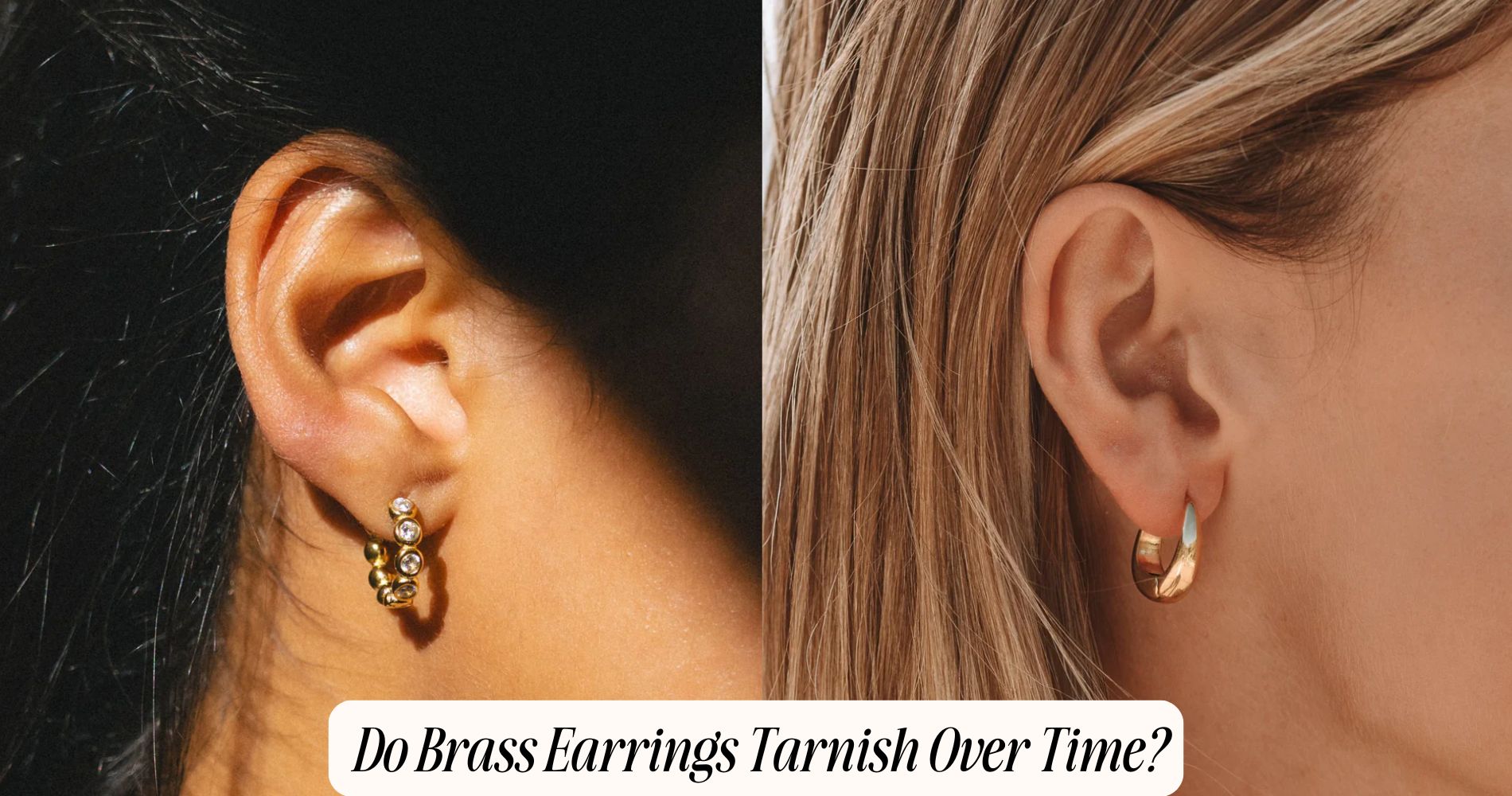
Do Brass Earrings Tarnish Over Time?
Do brass earrings tarnish? Yes — your brass earrings will tarnish over time because the copper in the alloy reacts with oxygen, moisture, sweat, and sulfur-containing pollutants to form oxides and sulfides that darken the surface. Tarnish rate depends on humidity, sweat chemistry, wear, and storage; abrasion and chloride-rich sweat accelerate corrosion by exposing fresh metal—making low-maintenance options like Atolea’s Waterproof Earrings collection a smart everyday alternative. You can remove or slow tarnish with cleaning, coatings, and dry storage, and the following sections explain the chemistry, prevention, and practical fixes.
Do Brass Earrings Tarnish? Quick Answer and What to Expect
Although brass is visually similar to gold, it’s an alloy (primarily copper and zinc) that will chemically react with air, moisture, and skin oils, so you should expect it to tarnish over time; the process forms copper oxide and sulfide layers that darken the surface and alter conductivity and appearance.
You’ll observe variable rates: humidity, sweat composition, and storage conditions accelerate visible darkening and localized pitting.
For practical brass care, implement routine cleaning, dry storage, and minimal skin contact to reduce reaction kinetics.
For tarnish prevention, apply clear lacquers, museum-grade waxes, or electroplated barriers where aesthetic and hypoallergenic performance matter.
Monitor coatings and reapply as needed; inspect junctions and posts, since coatings wear first and determine long-term surface stability.

Why Brass Darkens: The Chemistry for Jewelry
1 key reason brass darkens is its copper content reacting with the environment to form oxides and sulfides on the surface.
You should understand that brass composition—an alloy primarily of copper and zinc—dictates the pathways and products of these chemical reactions.
Copper atoms oxidize to Cu+ and Cu2+ states, producing Cu2O (red oxide) and CuO (black oxide); sulfur compounds yield Cu2S (black sulfide).
Zinc can preferentially corrode (dezincification), altering surface morphology and exposing more copper for reaction.
These processes proceed via electrochemical cells at microscopic surface heterogeneities, driven by oxygen and sulfur species in air.
Recognizing these mechanisms lets you predict patina formation and select treatments or coatings to inhibit further surface conversion.
What Speeds Up Tarnish: Wear, Sweat and Environment
When you handle brass jewelry, mechanical wear, body chemistry, and local environmental conditions act together to accelerate surface reactions that produce oxides and sulfides.
You increase tactile abrasion at contact points, removing protective micro-oxides and exposing fresh brass that reacts faster.
Sweat effects are significant: chloride ions, amino acids and urea in sweat create an electrochemical environment that promotes corrosion cells and accelerates sulfide formation.
Environmental factors such as humidity, temperature fluctuations, airborne sulfur compounds and salt spray raise reaction kinetics and deposit reactive species on surfaces.
If you store or wear pieces near industrial pollutants or in coastal climates, tarnish initiates and propagates more rapidly.
You can predict relative rates by evaluating abrasion frequency, sweat chemistry variability and local pollutant concentration.

Patina or Corrosion: How to Spot and Act
How can you tell if a brass earring has developed a desirable patina or damaging corrosion? Inspect surface color, texture, and adherence.
Patina development yields a thin, uniform oxide or sulfide layer—matte to slightly colored, evenly bonded, no flaking.
Corrosion produces localized pitting, powdery green-blue salts, or raised roughness where metal loss occurs. Use magnification and gentle probing; a stable patina resists light abrasion, whereas active corrosion disaggregates.
Measure electrical continuity where relevant: decreased conductivity can indicate insulating corrosion products.
For action, prioritize corrosion prevention: remove sources of chloride and sulfur exposure, control humidity, and store in inert environments to stop electrochemical attack.
If structural integrity is threatened, consult a metals conservator rather than attempting aggressive home treatment.
Remove Tarnish From Brass Earrings: Quick At‑Home Fixes
Now that you can distinguish stable patina from active corrosion, you can choose safe, effective cleaning methods for brass earrings without risking damage.
For targeted tarnish removal, test a small hidden area first. Use a microfibre cloth and mild abrasive like baking soda paste (3:1 baking soda to water) applied with gentle circular strokes; rinse thoroughly and dry immediately to prevent water spots.
For recessed details, use a soft-bristled toothbrush. Alternatively, prepare a dilute acidic cleaning solution—equal parts white vinegar and water—for brief immersions (no more than 1–2 minutes), then neutralize with a baking soda rinse.
Avoid prolonged exposure to strong acids or commercial polishes that remove surface metal. Record each method’s effect so you can repeat the safest, most effective cleaning solutions.
Keep Them Shining: Coatings, Storage and Care
If you want brass earrings to keep a bright, consistent finish, apply protective coatings and control storage conditions to slow oxidation and prevent surface wear.
You should evaluate coating types — clear lacquers, microcrystalline waxes, and PVD/ceramic thin films — by thickness, adhesion, and permeability to oxygen and sulfurous compounds.
Apply coatings under clean, degreased conditions; standardized curing reduces porosity and prolongs life.
For storage solutions, use inert, low-humidity containers with desiccants and oxygen absorbers, and separate pieces to prevent abrasion and galvanic interaction.
Routine care includes gentle cleaning with non‑abrasive agents and periodic inspection of coating integrity.
Track environmental variables (humidity, pollutants) and recoat or recondition items when protective layers show microcracks or discoloration.

Buying Tips: Choose Brass Earrings That Resist Tarnish
When you’re selecting brass earrings that will resist tarnish, focus on alloy composition, surface treatment, and manufacturing quality because those factors determine corrosion drivers and coating performance.
Inspect alloy specs: lower copper content and added zinc or nickel reduce patination rate; ask for ASTM or EN material designations.
Prefer mechanical or electrochemical surface treatments—passivation, nickel plating, or PVD—that create continuous, adherent barriers.
Verify coating thickness (microns) and adhesion test results.
Evaluate manufacturing: precision forming, deburring, and anti-tarnish packaging limit crevice corrosion initiation.
Seek tarnish resistant claims backed by laboratory certificates rather than marketing alone.
Compare warranty terms across jewelry brands and request maintenance guidance.
You’ll minimize future oxidation by prioritizing documented materials data, measurable coatings, and controlled production processes.
Frequently Asked Questions
Do Brass Earrings Cause Skin Discoloration or Green Stains?
Yes — you can get green stains or discoloration from brass earrings. Brass composition (copper alloys) and individual skin reactions (acidity, sweat, oils) drive copper salts formation; coatings or different alloys reduce or prevent staining.
Can Brass Earrings Trigger Metal Allergies or Rashes?
Yes — you can develop metal sensitivity to brass; its copper and alloyed metals can provoke allergic reactions or contact dermatitis. You’ll experience localized redness, itching, or rash if you’re sensitized and exposed repeatedly.
Are Gold-Plated Brass Earrings Better Than Solid Brass?
Yes — gold-plated brass often offers gold plating benefits like hypoallergenic surface and corrosion resistance, while solid brass durability provides longevity and structural strength; you’ll weigh plating longevity, re‑plating needs, and allergen risk analytically.
How Long Do Protective Coatings on Brass Earrings Typically Last?
Protective coating lifespan typically ranges six months to five years depending on coating type, wear, and exposure; you should perform regular brass earring maintenance like gentle cleaning and avoiding moisture to maximize durability and delay re-coating.
Can Brass Earrings Be Resized or Repaired Professionally?
Yes — you can have brass earrings professionally resized or repaired; a jeweler specializing in earring maintenance will assess soldering, structural integrity, and plating, perform precise adjustments, and restore fit while minimizing damage and preserving finish.
Conclusion
Yes — brass earrings will tarnish over time, but you can manage it. Because brass is a copper–zinc alloy, it oxidizes and forms surface oxides and sulphides when exposed to air, sweat, or pollutants. If you want minimal maintenance, pick lacquered pieces, store them dry, and limit contact with moisture and chemicals. For existing tarnish, use mechanical polishing or mild chelators. Regular preventive coatings and controlled storage slow discoloration and extend aesthetic life.





コメントを書く
このサイトはhCaptchaによって保護されており、hCaptchaプライバシーポリシーおよび利用規約が適用されます。