

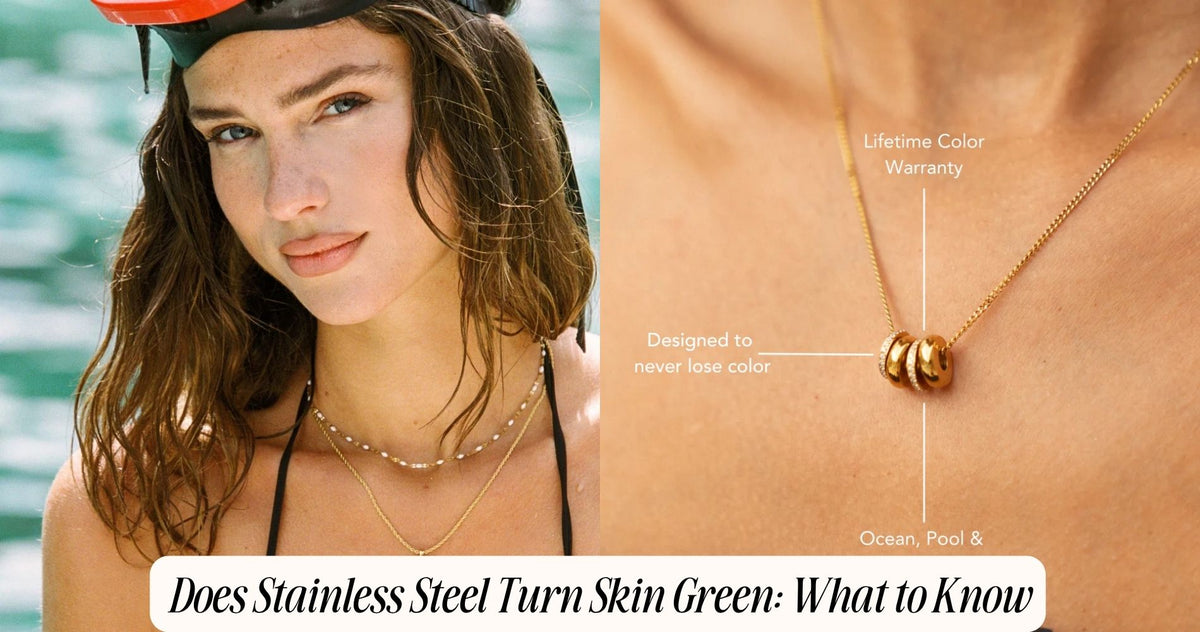
Does Stainless Steel Turn Skin Green: What to Know
Green skin discoloration is one of the most common complaints people have about jewelry, but stainless steel has built a reputation as one of the more reliable, low reaction metals available. So, does stainless steel turn skin green the way cheaper metals often do? The short answer is that high quality stainless steel rarely causes this reaction, though a few important exceptions are worth understanding before you assume every piece is equally safe. If you want jewelry that pairs reliability with everyday elegance, our Everyday Gold Necklaces collection offers pieces designed for comfortable, long term wear.
In this guide, we will explain why stainless steel generally resists causing green skin discoloration, when it might still happen, and how to make sure you are buying a quality piece.
Why Skin Turns Green From Jewelry in the First Place
Before addressing stainless steel specifically, it helps to understand why green skin discoloration happens at all. This reaction occurs when copper, either on its own or as part of a metal alloy, reacts with the natural oils, sweat, and acids present on human skin. This reaction forms a greenish compound called copper salt, which transfers onto the skin and creates the familiar green mark many people associate with lower quality jewelry.
Metals like brass, bronze, and lower quality costume jewelry alloys often contain significant amounts of copper, making them common culprits for this type of reaction.

Why Stainless Steel Is Different
Stainless steel is primarily composed of iron, combined with chromium and often nickel, rather than relying heavily on copper as a core component. The chromium content in particular is significant, since it forms a thin, stable oxide layer on the surface of the metal that provides excellent resistance to corrosion, tarnishing, and the kind of chemical reactions that lead to green skin discoloration.
Because stainless steel typically contains little to no copper, the primary chemical reaction responsible for green marks simply does not occur in the same way it might with copper rich alloys. This is a major reason stainless steel has become such a popular choice for everyday jewelry, particularly for people who have struggled with reactions to other metals in the past.
When Stainless Steel Might Still Cause Issues
While high quality stainless steel is generally very reliable, a few scenarios can still lead to skin reactions or discoloration, even with this typically dependable metal. Lower quality or improperly manufactured stainless steel may contain inconsistent alloy compositions, sometimes including small amounts of copper or other reactive metals not typically found in proper stainless steel formulations. This is more common with very inexpensive, mass produced jewelry where manufacturing standards may not be as rigorously controlled.
Additionally, some products marketed as stainless steel are actually only stainless steel plated over a different base metal, meaning the surface layer may wear away over time, exposing a less reliable metal underneath that could potentially cause the type of reaction stainless steel itself would not.

Nickel Content and Separate Allergic Reactions
It is worth noting that green skin discoloration and nickel allergies are two distinct issues, even though both can cause skin related jewelry concerns. Many stainless steel formulations contain nickel as part of their alloy composition, and while this does not typically cause green discoloration, it can trigger a separate allergic reaction in people with nickel sensitivities, presenting as redness, itching, or swelling rather than a green mark.
If you experience skin irritation while wearing stainless steel jewelry, it is worth considering whether a nickel allergy, rather than the more copper related green discoloration reaction, might be the underlying cause, since these two issues require different solutions.
Surgical Grade Stainless Steel Versus Standard Stainless Steel
Not all stainless steel is created equal, and the specific grade used in a piece of jewelry can affect both its resistance to green discoloration and its likelihood of triggering nickel related reactions. Surgical grade stainless steel, often labeled with specific standards like 316L, is formulated with particular attention to biocompatibility and corrosion resistance, making it a more reliable choice for those with sensitive skin.
Lower grade or unspecified stainless steel used in less expensive fashion jewelry may not meet these same standards, potentially increasing the likelihood of either nickel related irritation or, in rarer cases, inconsistent alloy composition that could contribute to discoloration issues typically not associated with proper stainless steel.
How to Identify Quality Stainless Steel Jewelry
A few strategies can help you confirm you are purchasing genuine, high quality stainless steel rather than a lower grade imitation. Check product descriptions and listings for specific grade information, such as 316L or 304 stainless steel, since reputable sellers typically disclose this information for buyers concerned about quality and skin compatibility.
Be cautious of jewelry marketed simply as stainless steel without further detail, particularly at unusually low price points, since this can sometimes indicate a lower quality alloy or a plated surface rather than solid, properly formulated stainless steel throughout.

What to Do If Stainless Steel Jewelry Causes a Reaction
If you experience any skin reaction while wearing jewelry labeled as stainless steel, a few steps can help you determine the cause and find a solution. First, remove the jewelry and allow your skin to recover, monitoring whether symptoms improve once contact with the metal stops. If the reaction involves green discoloration specifically, this may indicate the piece contains more copper than expected, potentially suggesting a lower quality or mislabeled product.
If the reaction instead involves redness, itching, or swelling without green discoloration, this points more toward a possible nickel allergy, in which case switching to nickel free stainless steel or alternative hypoallergenic metals like titanium may be a better solution going forward.
Comparing Stainless Steel to Other Low Reaction Metals
Stainless steel is often grouped alongside other metals known for minimizing skin reactions, including titanium and niobium, though each offers slightly different benefits. Titanium is generally considered even more hypoallergenic than stainless steel, since it typically contains no nickel at all, making it an excellent choice for those with known nickel sensitivities. Stainless steel, meanwhile, offers a strong balance of affordability, durability, and general skin compatibility, making it a practical everyday choice for most people without significant metal allergies.

Final Thoughts
So, does stainless steel turn skin green? In most cases, no, thanks to its low copper content and the protective chromium oxide layer that forms on its surface. However, lower quality stainless steel, mislabeled products, or stainless steel plating over a different base metal can occasionally lead to issues, making it worth confirming the specific grade and quality of a piece before assuming all stainless steel jewelry behaves identically.
For most people, properly manufactured stainless steel remains one of the more reliable, skin friendly options available for everyday jewelry.
Frequently Asked Questions
1. Does stainless steel turn skin green?
Generally no, since stainless steel contains little to no copper and forms a protective surface layer that resists the chemical reaction responsible for green discoloration.
2. Can stainless steel still cause skin irritation even if it does not turn skin green?
Yes, some stainless steel formulations contain nickel, which can cause a separate allergic reaction involving redness or itching rather than green discoloration.
3. Is all stainless steel jewelry the same quality?
No, surgical grade stainless steel, like 316L, is generally more reliable than lower grade or unspecified stainless steel often used in inexpensive fashion jewelry.
4. How can I tell if my jewelry is genuine, high quality stainless steel?
Checking for specific grade labeling, such as 316L or 304, and being cautious of unusually cheap, vaguely labeled pieces can help confirm quality.
5. What should I do if stainless steel jewelry irritates my skin?
Remove the jewelry and monitor your skin. If irritation persists, it may indicate a nickel allergy, in which case switching to nickel free or titanium jewelry may help.






コメントを書く
このサイトはhCaptchaによって保護されており、hCaptchaプライバシーポリシーおよび利用規約が適用されます。