


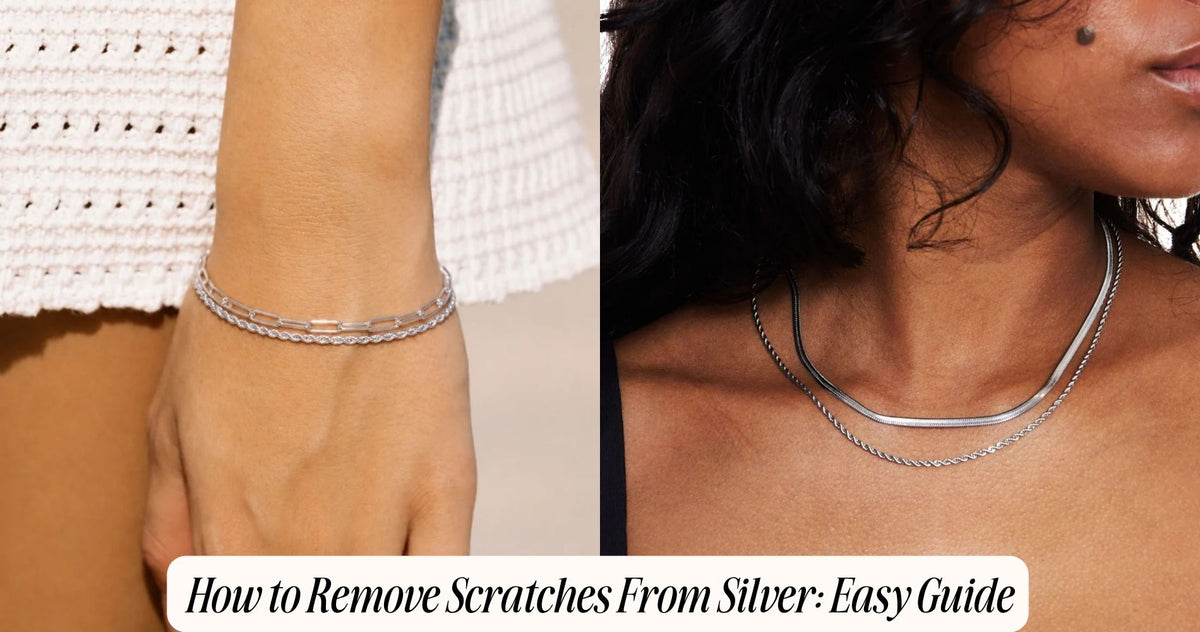
How to Remove Scratches From Silver: Easy Guide
Silver jewelry has a way of picking up tiny scratches over time, whether from daily wear, contact with other jewelry, or simply the natural wear and tear of everyday life. The good news is that learning how to remove scratches from silver at home is often easier than people expect, especially for light surface marks. If you want jewelry that holds up well to daily wear while resisting tarnish, our Silver Waterproof Jewelry collection offers durable pieces built for exactly that kind of everyday use.
In this guide, we will cover effective methods for removing light to moderate scratches from silver, when professional help is the better option, and how to prevent future scratching.
Understanding Why Silver Scratches So Easily
Silver is a relatively soft metal compared to options like stainless steel or titanium, which is part of why it has remained popular for intricate, detailed jewelry designs over the centuries. This same softness, however, makes silver more prone to surface scratches than harder metals, particularly with regular contact against other jewelry, rough surfaces, or everyday friction.
Most scratches on silver jewelry are relatively shallow, affecting only the top layer of the metal, which is good news, since this means many scratches can be successfully minimized or removed entirely using simple at home methods.
Assessing the Severity of the Scratch
Before choosing a removal method, it helps to assess how deep and significant the scratch actually is. Light surface scratches, often just thin hairline marks visible primarily under certain lighting, can typically be addressed with basic polishing techniques at home. Deeper scratches, gouges, or dents that catch on a fingernail when run across the surface generally require more intensive treatment and may be better handled by a professional jeweler to avoid further damage during the removal attempt.
Taking a moment to examine the scratch closely, ideally under good lighting with a magnifying glass if available, helps determine which approach is most appropriate.
Method One: Silver Polishing Cloth
For light, surface level scratches, a dedicated silver polishing cloth is often the simplest and most effective solution. These cloths are treated with a mild polishing compound specifically designed to smooth the metal's surface and remove minor imperfections, including light scratches and general dullness.
Gently rub the cloth over the scratched area using consistent, light pressure, working in the same direction rather than circular motions to achieve a more even finish. Continue for several minutes, periodically checking the scratch's appearance, since excessive rubbing is not usually necessary for truly minor marks.

Method Two: Silver Polish Paste or Cream
For slightly more noticeable scratches that a polishing cloth alone does not fully address, a silver polish paste or cream can provide additional polishing power. These products typically contain a finer abrasive compound than a basic polishing cloth, allowing for more targeted treatment of specific scratched areas.
Apply a small amount of the polish to a soft cloth, then gently rub it into the scratched area using light, even pressure. Continue for a minute or two, then wipe away any residue with a clean section of the cloth. Rinse the piece under clean water if the product instructions recommend it, then dry thoroughly before inspecting the results.
Method Three: Baking Soda Paste for Minor Scratches
A baking soda paste, commonly used for tarnish removal, can also help minimize very light scratches on silver due to its mild abrasive properties. Mix a small amount of baking soda with water to create a thick paste, then apply it to the scratched area using a soft cloth.
Gently rub the paste into the scratch using small, consistent motions, then rinse thoroughly and dry with a soft cloth. This method works best for very minor surface marks and is generally less effective than dedicated silver polish for more noticeable scratches.
Method Four: Professional Buffing for Deeper Scratches
For scratches too deep or significant to address with basic home polishing methods, professional buffing performed by a jeweler offers a more thorough solution. A jeweler uses specialized equipment and polishing compounds to carefully remove a thin layer of metal from the entire surface, effectively evening out the scratch along with the surrounding area.
This process should always be performed by a trained professional, since improper buffing at home using inappropriate tools, like rotary tools not designed for jewelry, can cause significant damage, removing too much metal or creating uneven surfaces that are difficult to correct afterward.

When Professional Help Is the Better Choice
A few specific situations call for professional attention rather than attempting a home remedy. Deep gouges or scratches that catch on a fingernail typically require more significant metal removal than home methods can safely achieve. Scratches on pieces with intricate detailing, engravings, or delicate settings are often better left to a professional, since home polishing methods risk unintentionally smoothing out fine design details along with the scratch itself. Valuable or sentimental pieces, particularly antiques or heirlooms, are generally safer in the hands of an experienced jeweler who can assess the piece's specific construction and material before attempting any repair.
Caring for Silver Jewelry With Gemstones or Detailed Settings
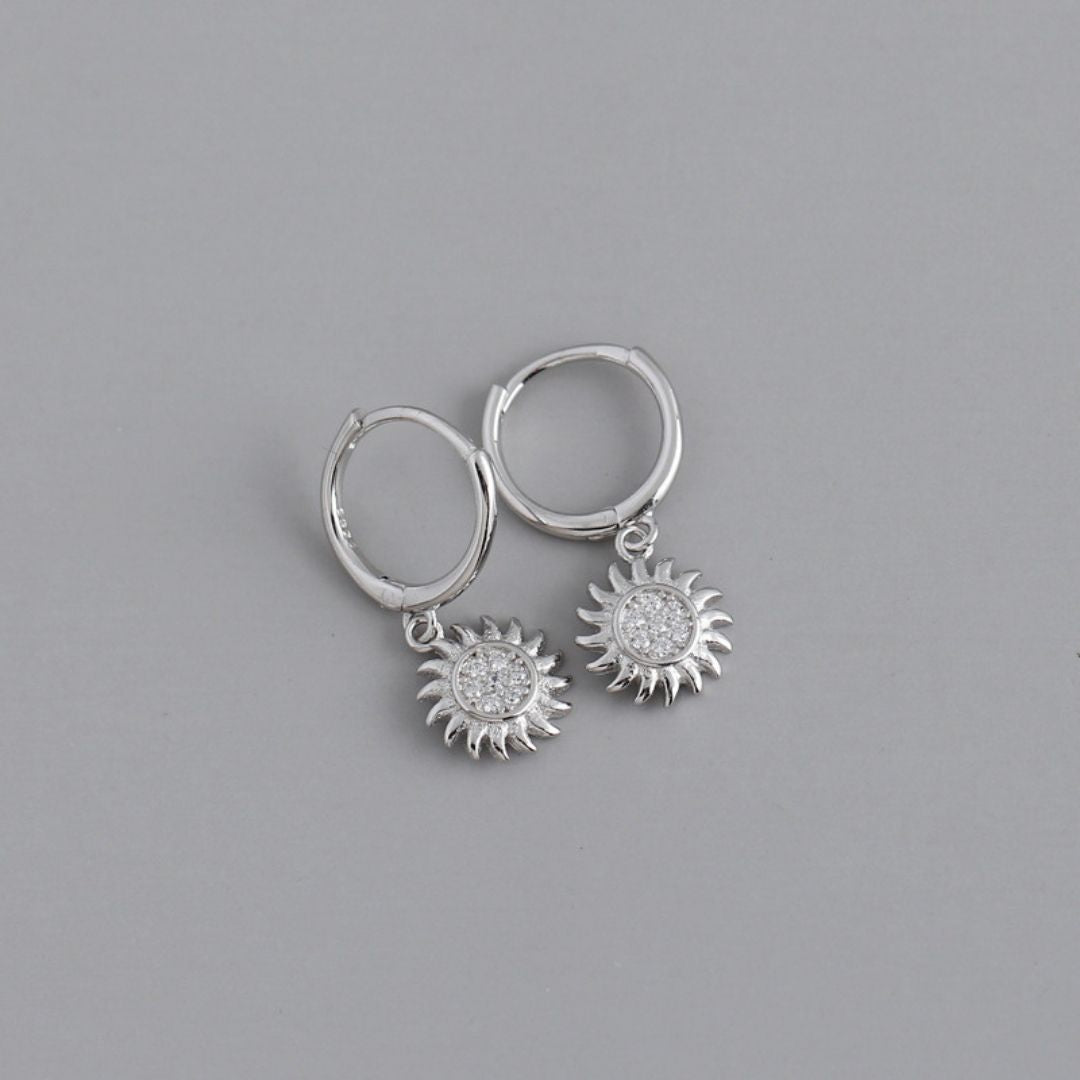
If your scratched silver piece includes gemstones or detailed settings, extra caution is needed during any scratch removal attempt. Avoid applying polish directly to gemstones, since certain polishing compounds can dull or damage softer stones, even if the surrounding metal tolerates the treatment well. Focus polishing efforts specifically on the metal surface, using a cotton swab or the corner of a cloth for more precise application around delicate settings, rather than broadly applying polish across the entire piece.
Preventing Future Scratches
Once you have successfully minimized or removed existing scratches, a few preventive habits can help keep your silver jewelry looking smoother for longer. Store silver pieces separately from other jewelry, ideally in individual pouches or compartments, to prevent contact with harder materials that could cause new scratches during storage. Remove silver jewelry before activities involving significant friction or impact, such as intense physical activity, certain manual tasks, or contact sports. Avoid stacking multiple silver rings or bracelets together without padding between them, since direct metal to metal contact during regular wear is one of the most common causes of everyday scratching.
Realistic Expectations for Scratch Removal
It is worth noting that while many light to moderate scratches can be significantly improved or fully removed using the methods described above, extremely deep scratches may never be completely invisible without professional intervention involving actual metal removal. For everyday wear and tear, however, most scratches respond well to basic at home polishing, restoring a smooth, bright appearance without requiring professional help.

Final Thoughts
Learning how to remove scratches from silver does not require specialized tools or professional training for most everyday marks. A silver polishing cloth, polish paste, or baking soda solution can effectively address light surface scratches, while deeper or more significant damage is best handled by a professional jeweler equipped to safely restore the piece.
With the right approach and a bit of preventive care, your silver jewelry can maintain a smooth, polished appearance for years of continued wear.
Frequently Asked Questions
1. Can I remove scratches from silver jewelry at home?
Yes, light to moderate scratches can often be improved or removed using a silver polishing cloth, polish paste, or baking soda solution applied with gentle, consistent pressure.
2. How do I know if a scratch is too deep to fix at home?
If a scratch catches on your fingernail when you run it across the surface, it is likely too deep for home methods and may require professional buffing instead.
3. Is baking soda effective for removing scratches from silver?
Baking soda works best for very minor surface marks and tarnish, though it is generally less effective than dedicated silver polish for more noticeable scratches.
4. Should I polish silver jewelry with gemstones the same way as plain silver?
No, avoid applying polish directly to gemstones and focus on the metal surface specifically, using a cotton swab or cloth corner for precise application around settings.
5. When should I take scratched silver jewelry to a professional?
Deep gouges, scratches near intricate detailing, or damage on valuable or sentimental pieces are generally best handled by a professional jeweler rather than home methods.





コメントを書く
このサイトはhCaptchaによって保護されており、hCaptchaプライバシーポリシーおよび利用規約が適用されます。