


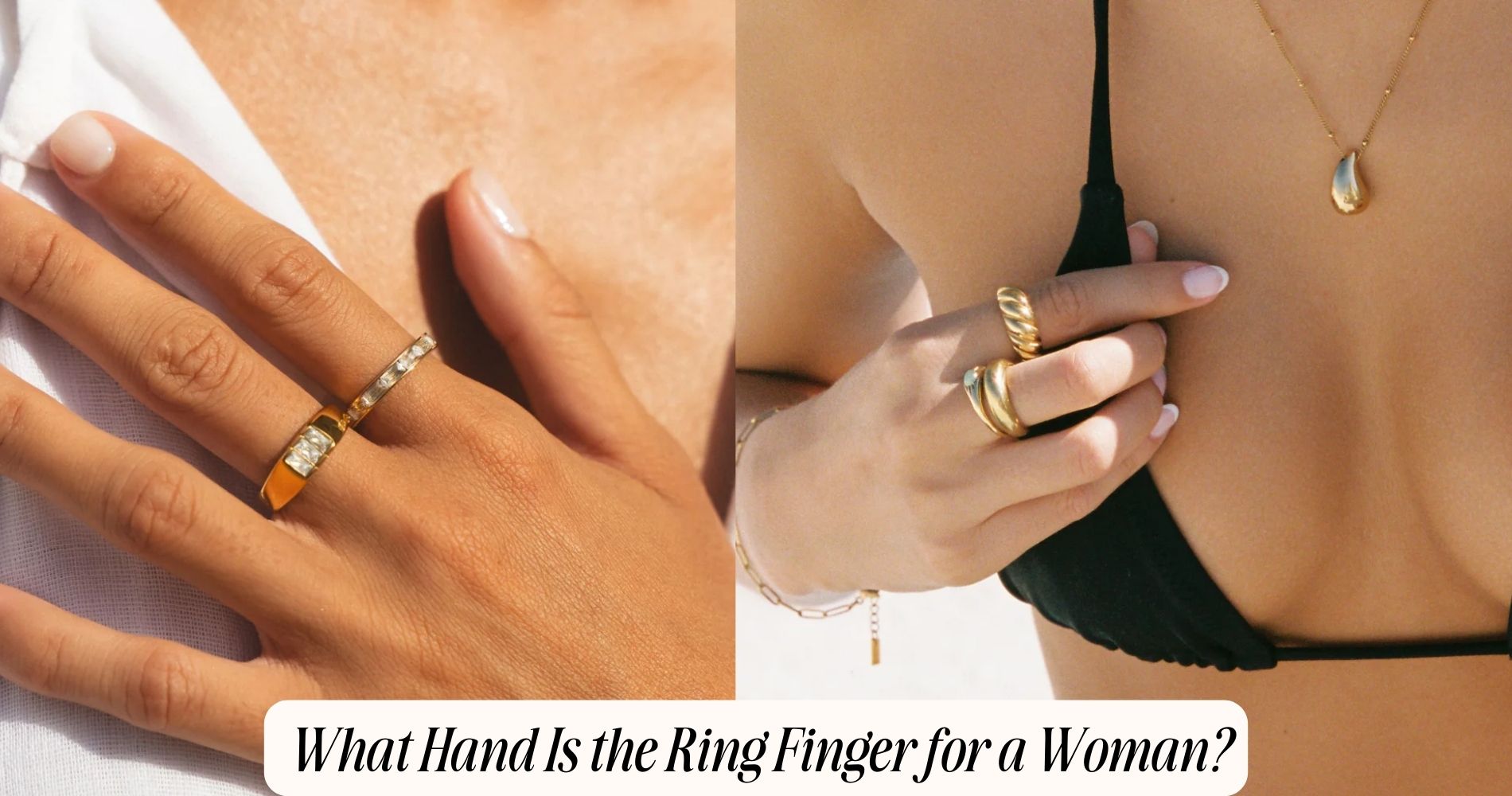
What Hand Is the Ring Finger for a Woman?
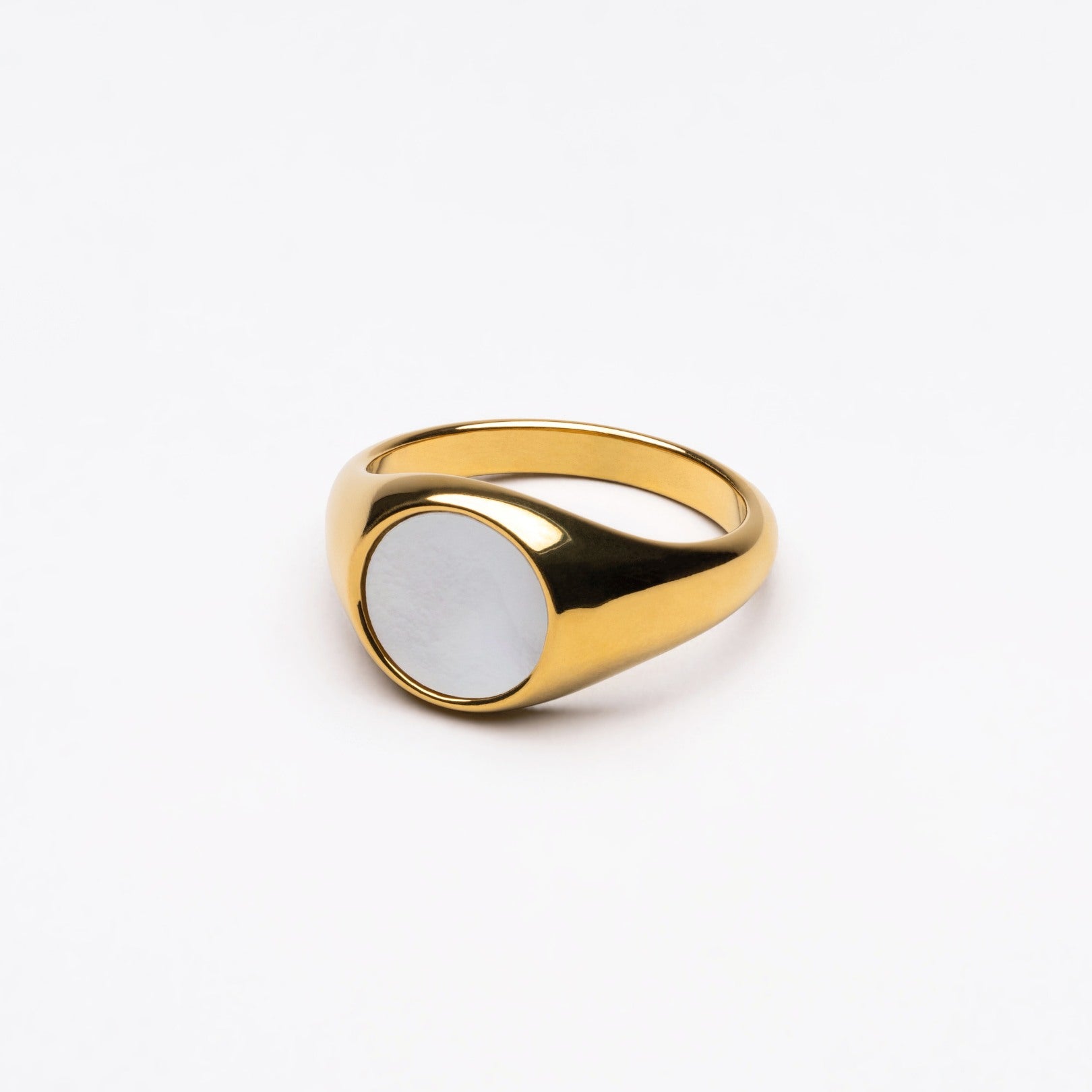
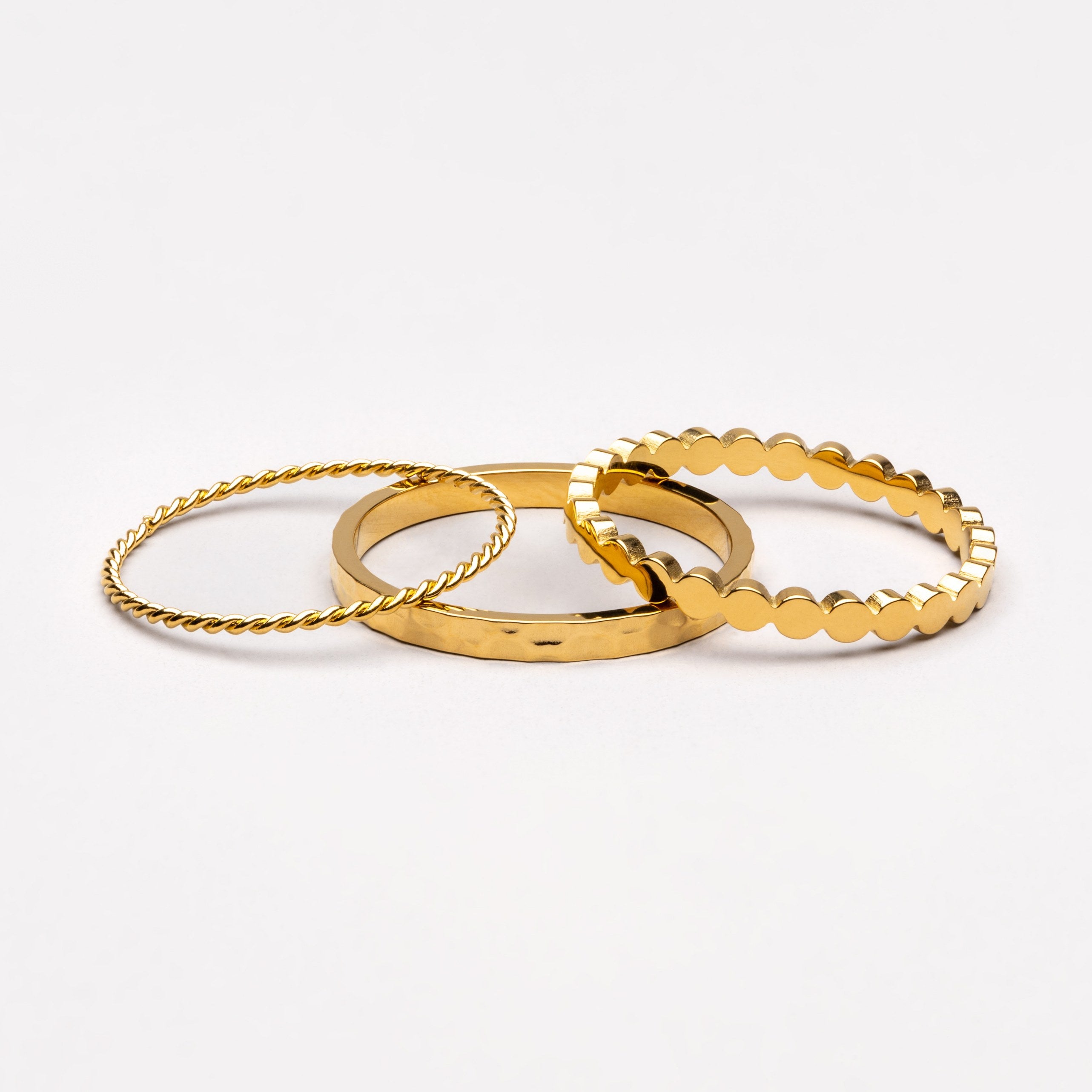
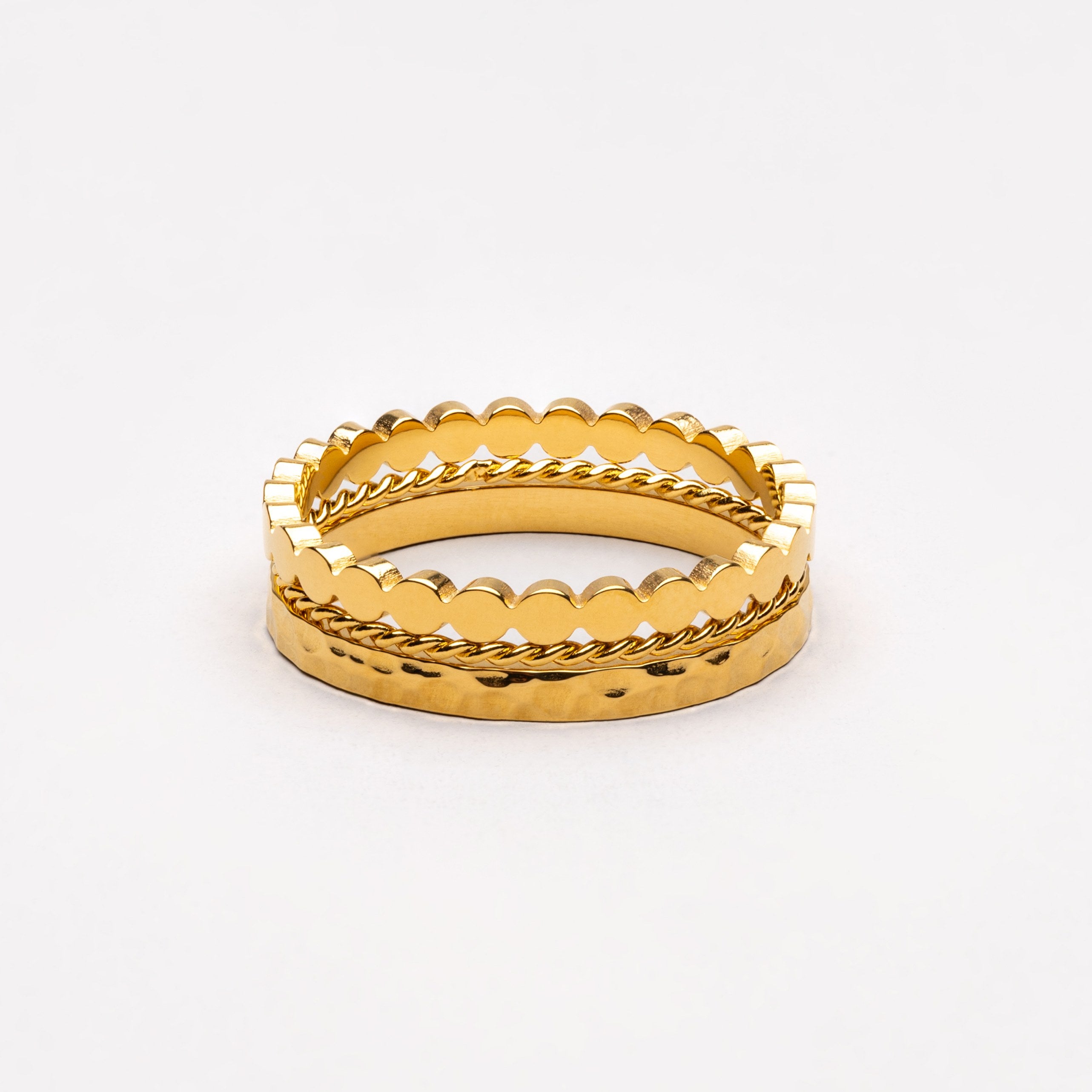
What hand is the ring finger for a woman? In most Western countries you’ll wear a ring on your left ring finger to signal engagement or marriage, but many Eastern European, Orthodox, some Latin American, and Indian traditions use the right hand instead. Choice often reflects culture, religion, family custom, or personal comfort—not strict rules—and people sometimes switch hands for ceremonies or practical reasons. No matter which hand you choose, timeless designs like those in Atolea’s Minimalist Gold Rings collection suit both tradition and modern style. If you want to pick the best hand for you, there are clear cultural and practical factors to evaluate next.
Quick Answer: Which Hand Is the Ring Finger On?
Which hand do you wear a ring on? You’ll typically place an engagement or wedding ring on the ring finger of the left hand, reflecting common Western conventions.
This isn’t just habit: ring finger symbolism links that digit to commitment and marital status in legal and social contexts, so you’ll find clarity when signaling relationship status.
Left hand significance comes from tradition and perceived proximity to the heart, giving your choice communicative weight. If you want an immediate, widely recognized signal of engagement or marriage, the left ring finger is the precise option.
You should still consider personal, cultural, or religious nuances elsewhere, but for straightforward public recognition, use the left hand’s ring finger.
Regional Traditions: Left Hand vs Right Hand Explained
Although many Western countries place engagement and wedding rings on the left hand, you'll find strong and consistent traditions across the world that instead favor the right hand — a difference shaped by religion, law, and local custom.
You should recognize regional variations: many Eastern European, Greek, Russian, Indian, and some Latin American communities use the right hand for marriage rings. That choice carries cultural significance, signaling marital status according to local norms rather than personal preference.
When you travel or attend multicultural ceremonies, observe which hand people wear rings on and ask respectfully; it's often tied to faith practices, civil codes, or family tradition.
Understanding these distinctions helps you interpret symbols correctly and avoid assumptions about commitment or gender roles.
Historical Reasons Behind Left-Hand Rings
Because many ancient cultures linked the left hand directly to the heart—through a belief in a “vena amoris” running from the fourth finger to the heart—people began placing wedding rings on the left ring finger to symbolize emotional and physical unity.
You should see this claim as part of broader historical significance: Romans and later European societies popularized the practice, framing the left ring finger as a visible token of intimate bonds.
Over centuries, the custom acquired cultural symbolism beyond physiology, signaling legal commitment, social status, and marital identity.
When you trace jewelry customs, you’ll notice pragmatic factors—comfort, handedness, and fashion—shaped adoption alongside myth.
Understanding these roots helps you contextualize why left-hand rings persist in many modern Western traditions.

Religious and Cultural Reasons for Left or Right Hands
When you look beyond myths about veins and sentiment, religious teachings and cultural norms reveal why some societies favor the left ring finger while others choose the right: doctrines, ritual symbolism, and legal customs have long dictated which hand marks marital, social, or spiritual bonds.
You’ll see that cultural significance often traces to liturgical practices—processions, blessings, sacramental rites—that assign symbolic meaning to a specific hand.
Religious beliefs shape legal norms too: canon law, community elders, or state registries can formalize a handedness for marital rings.
In diaspora communities you’ll notice adaptive mixes: families may retain ancestral handedness for identity while conforming to local conventions for practicality.
Understanding these drivers helps you interpret ring placement as public language, not mere fashion.
Engagement, Wedding, and Mourning: When People Switch Hands
If you’ve noticed a ring migrate from one hand to the other, you’re seeing how life events — engagement, marriage, bereavement — can change the public grammar of jewelry.
You’ll observe ring symbolism shifting: an engagement band often starts on one hand to announce a promise, then moves at marriage to signal legal and social commitment.
Mourning can reverse or relocate rings to express loss or preserve a deceased partner’s memory. These shifts reflect finger significance as much as personal preference; hands communicate status, relationship phase, and cultural cues.
When you see someone switch hands, you’re reading a concise social code. Pay attention to context — ceremony, custom, or personal choice — to interpret that code accurately.
How to Choose Which Hand to Wear a Ring On
Wondering which hand should host your ring? Decide by balancing culture, comfort, and function.
Consider traditions—engagement or wedding rings often occupy the left ring finger in many Western countries—but regional customs can differ, so check context.
Test comfort: wear potential rings on both hands for a day to note interference with daily tasks.
Prioritize ring sizing accuracy; a proper fit prevents rotation and discomfort whether you choose left or right.
Think about symbolism you want to convey—public commitment, fashion, or mourning—and select the hand that communicates it clearly.
Finally, trust your personal preference: choose the hand that feels natural and aligns with your lifestyle, wardrobe, and the message you want the ring to send.

Frequently Asked Questions
Does Finger Size Affect Which Hand You Choose for a Ring?
Yes — finger measurement can influence which hand you choose for a ring; you’ll prioritize comfort and fit, but cultural preferences often guide placement too, so you’ll balance practical sizing with traditions when deciding where to wear it.
Can Medical Conditions Influence Ring-Wearing Hand Choice?
Yes — health conditions like arthritis, swelling, circulation issues, or nerve problems can affect which hand you choose for a ring; you’ll weigh medical needs against personal preferences, comfort, and practicality when deciding where to wear it.
Are Ring Materials Important for Left Vs Right Hand?
Yes — ring materials can matter for left versus right hand wear. You’ll weigh cultural significance and personal preference, plus durability, comfort, and allergies; choose metals and settings that suit lifestyle, skin reactions, and symbolic meaning.
How Do Fashion Trends Impact Ring-Hand Conventions?
Trends shift which hand you choose; you’ll follow fashion symbolism and cultural influences that redefine ring-hand conventions, so designers, celebrities, and social movements actively reshape meanings, prompting you to adopt styles that signal personal and collective identity.
Do Professional Settings Dictate Which Hand to Wear Rings?
Yes — professional settings can influence which hand you wear rings, but they rarely dictate it; cultural symbolism and workplace norms shape expectations, yet your personal preference, role, and company policy ultimately determine acceptable choices.
Conclusion
In short, there’s no single “correct” hand for a woman’s ring finger — it depends on culture, religion, and personal preference. In many Western countries you’ll wear engagement and wedding rings on your left ring finger, while parts of Europe and some religions favor the right. Historical and symbolic reasons shape those choices, but you can switch for comfort, career, or mourning. Choose the hand that feels meaningful and practical for you.






コメントを書く
このサイトはhCaptchaによって保護されており、hCaptchaプライバシーポリシーおよび利用規約が適用されます。