

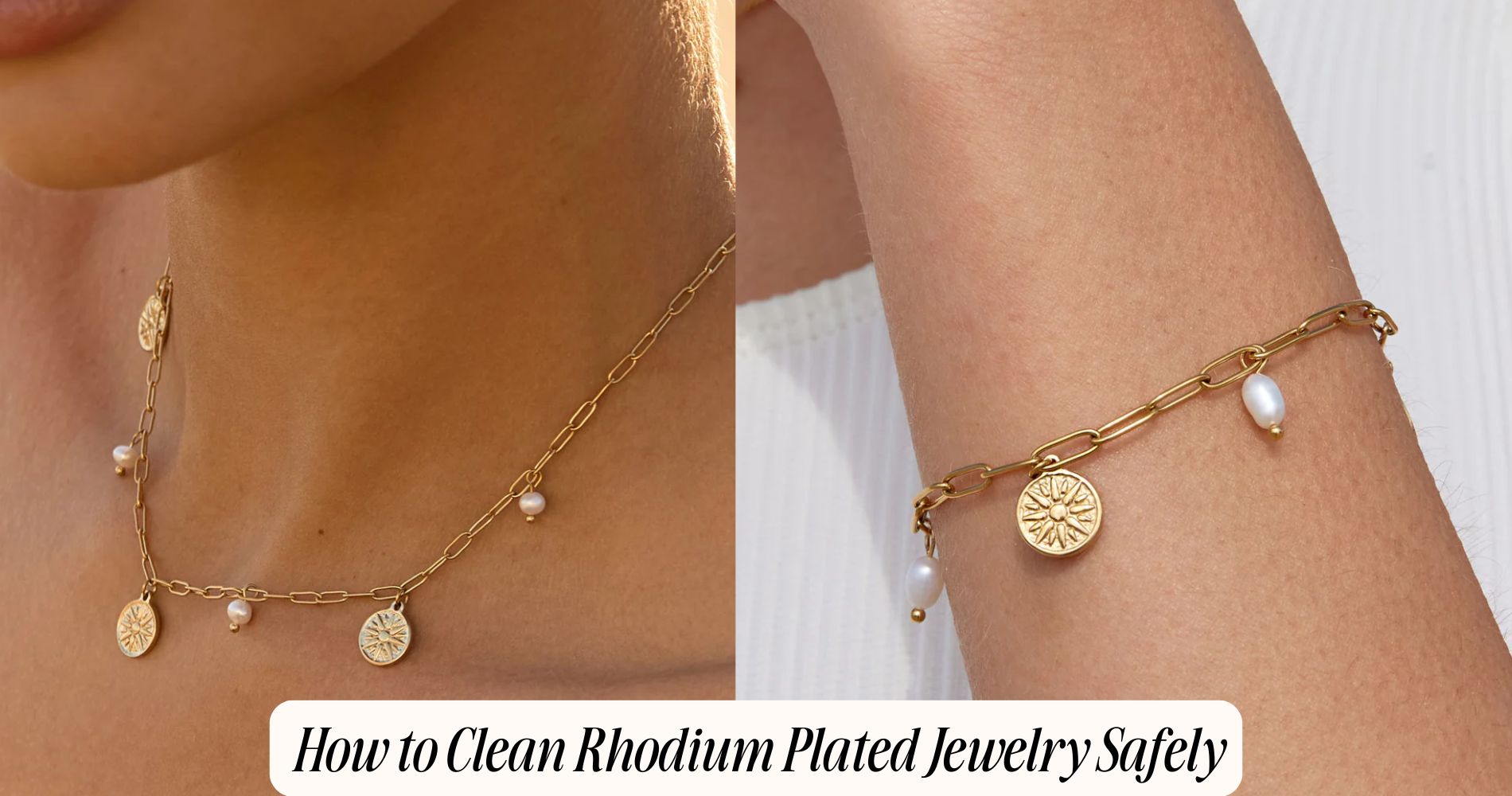
How to Clean Rhodium Plated Jewelry Safely
How to clean rhodium plated jewelry? You can clean rhodium-plated jewelry safely by rinsing pieces under lukewarm water, adding a drop of mild dish soap, and gently rubbing with a soft microfiber cloth or soft-bristled brush to lift dirt. Rinse thoroughly, pat dry with a lint-free cloth, and polish lightly in one direction to restore shine—especially for radiant designs like those in Atolea’s Sun Jewelry collection. Avoid soaking, abrasives, bleach, ammonia, and ultrasonic cleaners unless a pro advises it. Keep reading for step-by-step tips, safe alternatives, and when to replate.
Quick Safe Cleaning Method for Rhodium‑Plated Jewelry (30‑Second Checklist)
1 quick routine you can do in 30 seconds will remove surface dirt and protect the rhodium finish: rinse the piece under lukewarm water, apply a drop of mild dish soap, gently rub with a soft microfiber or lint-free cloth (not a brush), rinse thoroughly, and pat dry with a clean cloth—always avoid soaking, abrasives, or heat to prevent damage.
You’ll handle each item gently, inspecting clasps and settings as you go. Focus on light motions to preserve plating; rhodium benefits include increased scratch resistance and reduced tarnish, but the coating is thin.
Regular brief care prevents buildup that shortens plating life. Store pieces separately, avoid chemicals and perspiration, and perform this quick jewelry care routine after wear to maintain appearance and longevity.

Clean Rhodium‑Plated Rings, Necklaces & Bracelets : Step‑By‑Step
When cleaning rhodium‑plated rings, necklaces, and bracelets, work slowly and gently so you remove dirt without wearing away the thin plating.
First, inspect each piece for loose stones, lifted settings, or heavy grime; note items that need professional attention.
Next, prepare a mild cleaning solution and use a soft brush to lift surface dirt, following metal contours and jointed links.
Rinse thoroughly with lukewarm water and blot dry with a lint‑free cloth—never rub aggressively.
For chains, hold clasps closed while you clean to protect links.
After drying, polish gently with a soft cloth to restore shine.
Store pieces separately to avoid abrasion.
These steps emphasize careful rhodium care and routine jewelry maintenance to prolong the plating’s life.
Safe Household Cleaners & Tools to Use
After you’ve inspected and gently cleaned each piece, pick household cleaners and tools that remove grime without stripping the rhodium layer.
Use mild dish soap diluted in warm water for routine cleaning; it's safe and effective. For stubborn residue, a diluted vinegar solution (one part vinegar to four parts water) can help, but rinse quickly and avoid soaking.
Never use abrasive powders or pastes—avoid straight baking soda on surfaces; if you must, make a very mild paste and test on an inconspicuous spot first.
Soft-bristled toothbrushes, microfiber cloths, and non-abrasive cotton swabs are your tools of choice.
Skip ultrasonic cleaners and harsh chemical dips unless a professional recommends them.
Handle each piece gently and dry thoroughly to prevent water spots and corrosion.

Dry, Polish & Restore Shine Without Abrasion
Since rhodium is thin and easily worn, dry and polish with gentle, nonabrasive motions to restore shine without removing plating.
Use a clean, lint-free microfiber or soft cotton cloth dedicated to jewelry; don’t reuse a cloth that held grit.
Hold the piece securely and move the cloth in one-directional strokes, applying only light pressure. This dry polishing technique minimizes abrasion and targets fingerprints and light oils.
For chains and settings, work slowly into crevices with a soft brush of microfiber fibers rather than abrasive tools.
Inspect under good light as you go to judge progress and avoid overworking any spot.
Regular, cautious dry polishing keeps rhodium intact and supports long-term shine restoration without harsh chemicals.
Remove Stubborn Grime Without Ruining the Plating
Dry polishing handles light oils, but tougher buildup needs a gentler wet approach so you don't strip the thin rhodium layer.
Start by rinsing in lukewarm water with a drop of mild, phosphate-free dish soap to loosen grime. Work over a soft bowl or folded towel to avoid drops.
For stubborn stains, soak for a few minutes, then use a soft-bristled toothbrush and gentle scrubbing in short, controlled strokes along contours — never press hard or use circular abrasion. Rinse thoroughly and pat dry with a microfiber cloth.
If residue persists, repeat the soak rather than escalating pressure or chemicals. Always inspect under good light and handle only by edges to minimize fingerprints; store cleaned pieces separately to preserve the finish.
What to Avoid : Cleaning Mistakes That Strip Rhodium
When you clean rhodium-plated jewelry, resist the urge to reach for strong chemicals, harsh abrasives, or aggressive scrubbing — those are the fastest ways to wear away the thin rhodium layer.
Don’t use bleach, ammonia, or jewelry dips; they’re common cleaning mistakes that strip plating and dull gemstones. Avoid abrasive materials such as toothpaste, scouring pads, or coarse brushes, which abrade the finish.
Don’t soak plated pieces for hours or expose them to high heat; prolonged exposure breaks down protective coatings. Skip ultrasonic cleaners unless advised by a pro, and don’t tumble polish plated items.
If you’re unsure, test a small hidden area first. Treat every action as irreversible: gentle soap, lukewarm water, and a soft cloth preserve the plating far better.
When to Use Ultrasonic Cleaning or Professional Re‑Plating
If your rhodium-plated piece has persistent grime in tight settings, visible wear to the plating, or gemstones that need professional attention, consider ultrasonic cleaning or re‑plating rather than home methods.
You’ll want ultrasonic cleaning only when a trained technician confirms your stones and settings tolerate it; soft stones, glued settings, or delicate filigree can be damaged.
Choose a reputable jeweler who documents metal condition before and after service. For thinning or bare spots, professional re‑plating restores protection and uniform appearance; ask about metal prep, rhodium thickness, and warranty.
Keep records of treatments and avoid repeated aggressive interventions. When in doubt, err toward conservator-minded care: professional evaluation preserves both appearance and long‑term integrity of your plated jewelry.

Simple Habits to Prevent Buildup and Extend Rhodium Life
After leaving professional cleaning or re‑plating to the experts for heavy wear, you can prevent buildup and lengthen the life of rhodium plating with a few simple, regular habits.
Wipe pieces with a soft, lint‑free cloth after each wear to remove oils, sweat, and cosmetics; this daily maintenance stops abrasive grime from accumulating. Avoid exposure to chlorinated water, perfumes, and household chemicals, and put jewelry on last when dressing.
Inspect settings weekly for trapped debris and clean gently with a soft brush and mild soap when needed. Use individual soft pouches or a lined jewelry box and follow storage tips that keep pieces separate to prevent scratching.
Small, consistent actions preserve appearance and reduce the need for re‑plating.
Frequently Asked Questions
Can Rhodium Plating Cause Skin Allergies or Reactions?
Yes — you can develop rhodium allergy symptoms; you’ll notice redness, itching, or rash where jewelry contacts skin. If you have rhodium skin sensitivity, stop wearing the piece and consult a dermatologist for testing and care.
How Long Does Rhodium Plating Typically Last on Jewelry?
Rhodium plating lifespan typically ranges two to five years; you'll see variation. Factors affecting durability include wear frequency, exposure to chemicals, metal beneath, and plating thickness, so you’ll handle pieces gently and preserve plating longer.
Can Rhodium-Plated Jewelry Be Resized or Repaired?
Yes — you can resize and repair rhodium-plated jewelry, but you’ll need careful resizing techniques and repair options that minimize plating loss; a skilled jeweler will prioritize preservation, replate as needed, and discuss risks before proceeding.
Is Rhodium Plating Environmentally Friendly to Produce?
No, rhodium plating isn’t broadly environmentally friendly; you’ll need to contemplate sustainable sourcing and production impact, since mining and electroplating processes can harm ecosystems, so favor certified suppliers and low-impact finishing methods.
Can I Wear Rhodium-Plated Jewelry in Pools or Hot Tubs?
You can, but you shouldn’t regularly wear rhodium-plated jewelry in pools or hot tubs; pool chemicals can dull or strip plating, so prioritize jewelry maintenance, rinse and dry promptly, and reserve pieces for lower‑chlorine, gentler use.
Conclusion
Keep cleaning gentle and predictable to protect rhodium plating. Use mild, non‑abrasive soap, lukewarm water, and a soft brush or cloth, rinse thoroughly, and dry completely to avoid water spots. Skip harsh chemicals, ultrasonic baths for delicate pieces, and vigorous scrubbing that can wear the finish. When grime won’t budge or plating is thinning, get professional re‑plating. Regular light care and mindful storage will preserve shine and extend the life of your rhodium‑plated jewelry.







コメントを書く
このサイトはhCaptchaによって保護されており、hCaptchaプライバシーポリシーおよび利用規約が適用されます。