


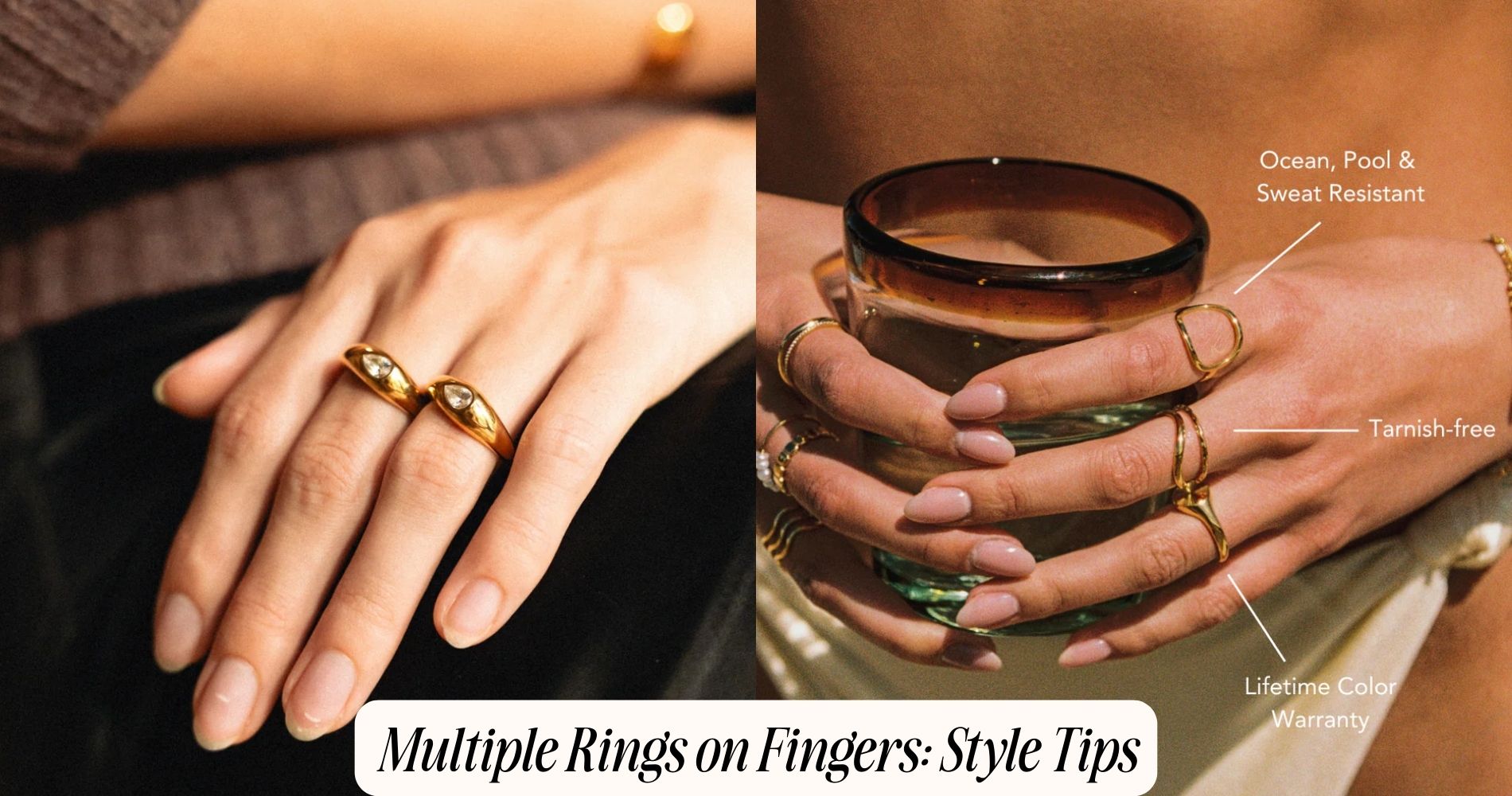
Multiple Rings on Fingers: Style Tips
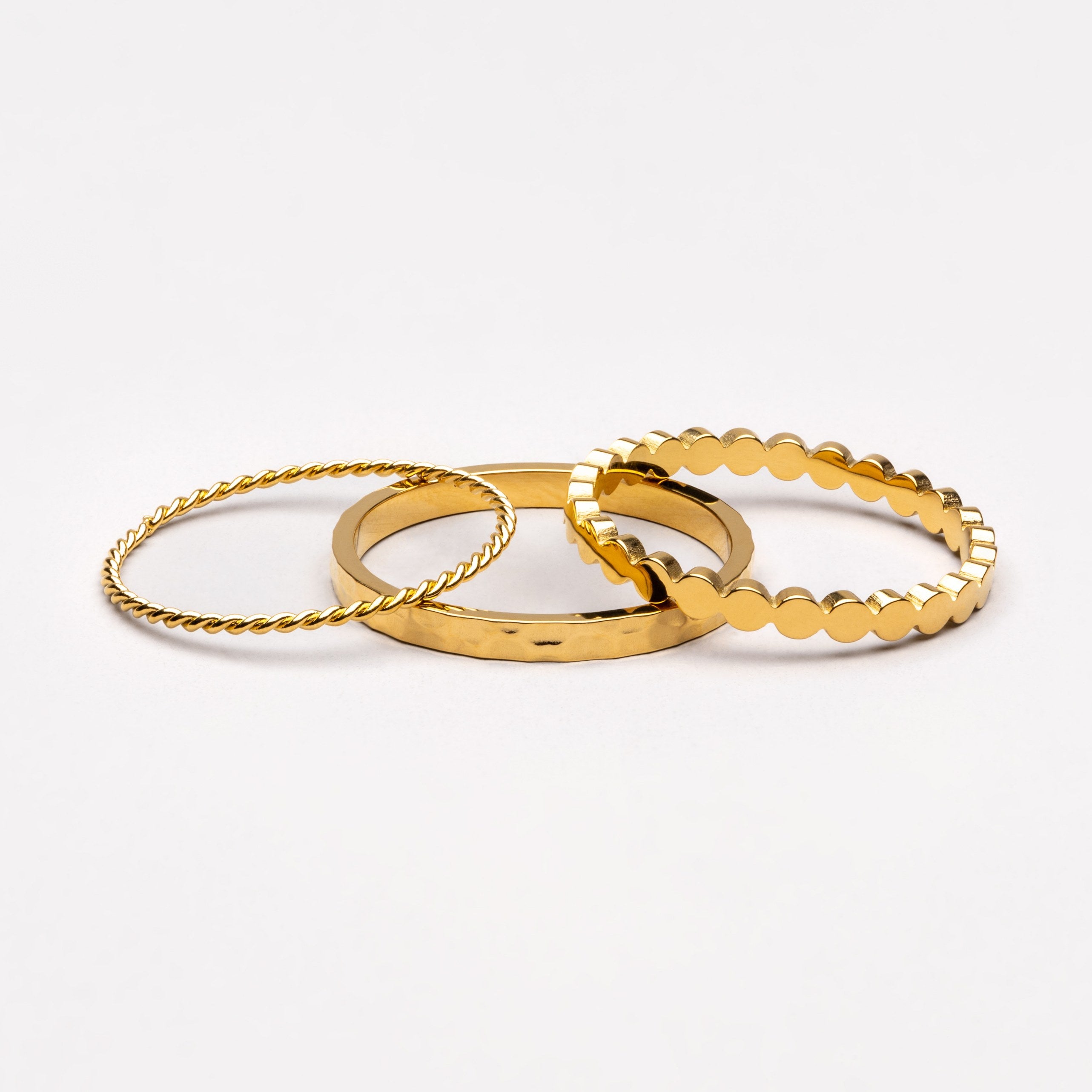
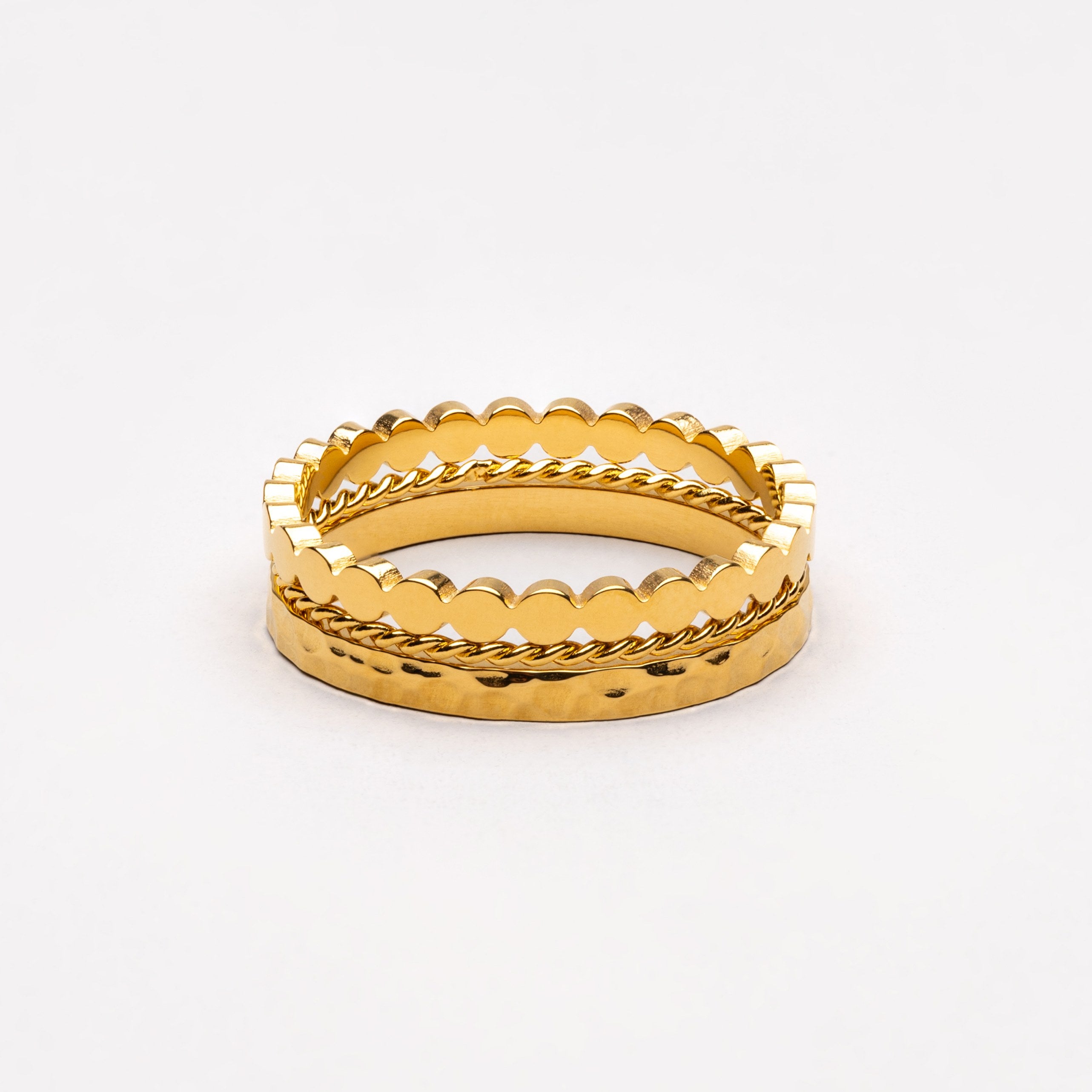
Wearing multiple rings on fingers looks effortlessly stylish when you balance scale, leave breathing room, and anchor the stack with one dominant metal. Pair slim bands with a mid-width textured ring or a single bold statement piece, allowing negative space so each ring feels intentional—delicate styles from Atolea’s Minimalist Gold Rings collection are perfect for building a refined stack. Mix textures and stone sizes for dimension, avoid stacking two wide bands on the same finger, and place standout designs on your index or middle finger for added impact. Keep maintenance simple, edit your stacks regularly, and explore more styling tips ahead.
Quick Rules for Wearing Multiple Rings
When you stack rings, keep balance and intention front and center: mix metals sparingly, vary textures to create contrast, and limit bulky styles to one finger so your hands don’t look crowded.
You’ll start by evaluating ring proportions—pair slim bands with a single bold piece, and let mid-width rings bridge extremes. Use stacking techniques that repeat a motif or alternate finishes to read cohesive from a glance.
Consider negative space: leaving a bare finger or knuckle-free gap sharpens the overall composition. Match scale to hand size—delicate settings for slender fingers, chunkier shapes for broader ones—while avoiding mirror-image placements that feel forced.
Finish by photographing your hand in motion; adjust until the arrangement looks intentional, not accidental.

Pick a Ring Look: Minimalist, Statement, or Eclectic
Which mood do you want your hands to convey: quietly chic, bold, or anything-goes?
Choose minimalist rings if you favor clean lines and refined repetition—slim bands, tiny gems, matched metals—so your look feels intentional and modern.
If you want impact, pick statement pieces: oversized stones, sculptural silhouettes, or a single dramatic cocktail ring that anchors other choices.
For playful contrast, embrace eclectic styles, mixing vintage finds, mismatched metals, and textured bands to tell a personal story.
Use simple layering techniques to balance any direction: pair one bold ring with two thin bands, or stack varying widths in a monotone palette.
Keep proportions in mind and edit ruthlessly—each ring should earn its place on your hand.
Pick Ring Sizes & Widths for Wearing Multiple Rings
You’ve picked the mood—now fit the pieces. Focus on ring sizing first: measure each finger when temperature’s neutral, and remember knuckle fit if sliding rings over joints.
Mix snug bands with slightly looser ones to keep comfort without gaps. For stacked looks, small size differences prevent spinning and crowding.
Width variation creates visual rhythm. Pair a thin stacking band, a mid-width textured ring, and a bold wide signet to balance proportions.
Avoid two wide rings on the same finger—compressing them flattens the effect. On adjacent fingers, alternate widths so your hand reads intentional, not cluttered.
Try on combinations, photograph them from different angles, and adjust sizes or widths until the composition feels modern, secure, and effortless.

Choose Finger Placement That Flatters Your Hands
Because finger placement shapes the whole story of your rings, think of each hand as a mini composition: place slimmer, elongated styles on longer fingers and chunkier, statement pieces on shorter or thicker digits to create balance.
You’ll assess finger length and hand shape quickly—shorter fingers suit vertical details like stacked slim bands to lengthen, while long fingers handle bold cocktail rings without overpowering.
Match ring profiles to knuckle prominence: low settings glide on delicate hands, raised settings read dramatic on broader palms.
Use asymmetry intentionally—one standout on the index or middle, subtler companions on adjacent fingers—to keep looks modern.
Rotate placements between hands for visual interest and comfort, and prioritize movement-free zones for larger pieces so wearability stays chic.
Control Scale & Spacing to Prevent Clutter
When layering rings, think of negative space as deliberately as you treat the jewels: give each piece breathing room by alternating thin bands with one statement ring and leaving an empty finger or two to let the eye rest.
You’ll control scale by pairing rings whose diameters and heights complement rather than compete — match a chunky dome with delicate midi bands rather than several bulky pieces.
Use consistent ring proportion within a single hand and vary weight across hands.
Apply simple layering techniques: stack three slim rings, then add a single bold piece on an adjacent finger; stagger widths so light and heavy elements alternate.
That controlled spacing keeps looks modern and intentional, prevents visual clutter, and makes each ring readable.
Balance Metals & Finishes When Mixing Rings
Now that you’ve set scale and spacing, think about how metal and finish choices keep a layered look cohesive. You’ll want a clear approach: pick a dominant metal type—gold, silver, or rose—and let others play supporting roles.
Use one unifying tone for most rings, then add limited finish contrasts to create subtle depth without chaos. Matte and high-polish pieces, for example, give dimension while staying harmonized if they share similar hues.
Mixed-metal looks work when you repeat a secondary metal across fingers or pair metals with shared warmth or coolness. Keep statement pieces minimal if you mix many metals, and use thin bands to bridge changes.
That way your stack looks intentional, modern, and effortlessly curated.

Mix Textures, Stones & Shapes for Interest
If you want your ring game to read deliberate rather than accidental, mix textures, stones, and shapes with intention: pair a hammered band with a smooth signet, slot a petite bezel-set diamond next to an open geometric cuff, and alternate clustered stones with plain metal to keep the eye moving.
You’ll create depth by mixing materials—think matte titanium with polished gold—and by using contrasting colors like inky onyx beside icy white sapphires.
Vary scale: slim stacking rings bridge bulkier statement pieces. Use unexpected silhouettes—a baguette, an asymmetrical cabochon, a split shank—to add architectural interest.
Keep a throughline, such as a repeating metal tone or small motif, so your combinations feel curated, not chaotic. Trust edits: less is often more.
Pair Multiple Rings With Bracelets, Necklaces & Watches
Someone searching for a polished, modern look will want to coordinate bracelets, necklaces, and watches with your ring stack so the whole wrist-to-hand story feels intentional.
You’ll balance proportions: keep chunky cuffs with simple rings, or pair delicate chains and thin bands for cohesive layered styles.
Mix metals deliberately—gold watch, silver rings—only when you plan for contrasting colors as a design choice, not accidental mismatch.
Match scale: dainty bracelets amplify petite rings; bold bangles ground stacked rings.
Let one piece lead—maybe a statement necklace—and echo its motif subtly in rings and a watch strap.
Keep finishes consistent (matte with matte) or intentionally contrast textures for depth.
Edit: remove anything that competes, so each accessory complements the overall look.
Match Your Rings to Outfits & Occasions
When you choose rings for an outfit or event, think of them as deliberate accents that finish your look—casual jeans call for relaxed, mixed stacks; office attire benefits from streamlined bands and a single signet; evening wear welcomes sculptural or gemstone statement pieces.
You’ll coordinate metals and stones with outfit hues for clear color coordination—warm golds with earth tones, cool silver with monochrome or pastels.
Prioritize occasion appropriateness: minimal, low-profile rings for conservative settings; bolder mixes for creative or social nights.
Match ring scale to sleeve length and activity: thin stacks under long sleeves, chunkier pieces for bare arms.
Keep balances intentional—one focal finger, supporting subtleties on others—so each ring complements, not competes, with your ensemble.
Quick Fixes, Common Mistakes & Easy Solutions
Now that you’ve matched rings to outfits and occasions, let’s tackle the little errors that wreck a polished stack and the quick fixes that save the look.
First, stop overcrowding one finger — redistribute rings to balance negative space. If rings spin, swap positions or add a thin spacer to stabilize. Tarnish dulls impact; keep a microfibre cloth handy and follow basic ring care to prevent buildup.
Mismatched metals can read messy; intentionally mix two tones only, then anchor with one dominant metal. Avoid overly large stones on every finger—scale matters.
When a ring feels loose, use sizing beads or a temporary liner instead of forcing smaller sizes. These small adjustments keep your stacks current, practical, and part of your ongoing style evolution.

Frequently Asked Questions
How Do I Care for Rings Made From Different Metals Together?
You should separate metals by wear, check metal compatibility, and use gentle cleaning techniques—mild soap, soft brush, and polishing cloths. Don’t mix harsh chemicals; store individually and have professional inspections for prong or plating issues.
Can I Stack Rings With Silicone or Comfort-Fit Bands?
Yes — you can stack silicone or comfort-fit bands; use mindful stacking techniques, prioritize band compatibility, mix thin metal rings with soft silicone, stagger widths for comfort, and avoid tight combos that cause rubbing or sliding.
Are There Ring Styles Safe for People With Metal Allergies?
Yes—you can choose alternative materials and hypoallergenic options like titanium, platinum, niobium, silicone, or ceramic. You’ll avoid reactions, keep trendy stacked looks, and still mix textures while prioritizing durable, skin-friendly metals.
How Do I Resize Multiple Stacked Rings Later?
You can resize stacked rings by using ring resizing techniques like stretching, cutting and soldering, or spring inserts; consult professional resizing options to guarantee alignment, comfort, and matched finishes—your jeweler’ll advise which approach preserves the stack.
Can I Wear Multiple Rings While Exercising or Sleeping?
You can, but you shouldn’t always: during exercise prioritize exercise safety—remove bulky rings to avoid injury or damage; while sleeping prioritize sleep comfort—swap to slim bands or take rings off to prevent snagging and circulation issues.
Conclusion
You’ve got the rules—now play. Stick to one clear look, mix widths and textures, and space rings so they breathe; you’ll avoid clutter and keep things modern. Place statement pieces where eyes naturally land, balance with slim bands, and let metal tones echo other jewelry or your outfit. For events, dial drama up or down. Keep a small repair kit and swap combos often—your hands are a style lab, so experiment and trust what feels right.





コメントを書く
このサイトはhCaptchaによって保護されており、hCaptchaプライバシーポリシーおよび利用規約が適用されます。