

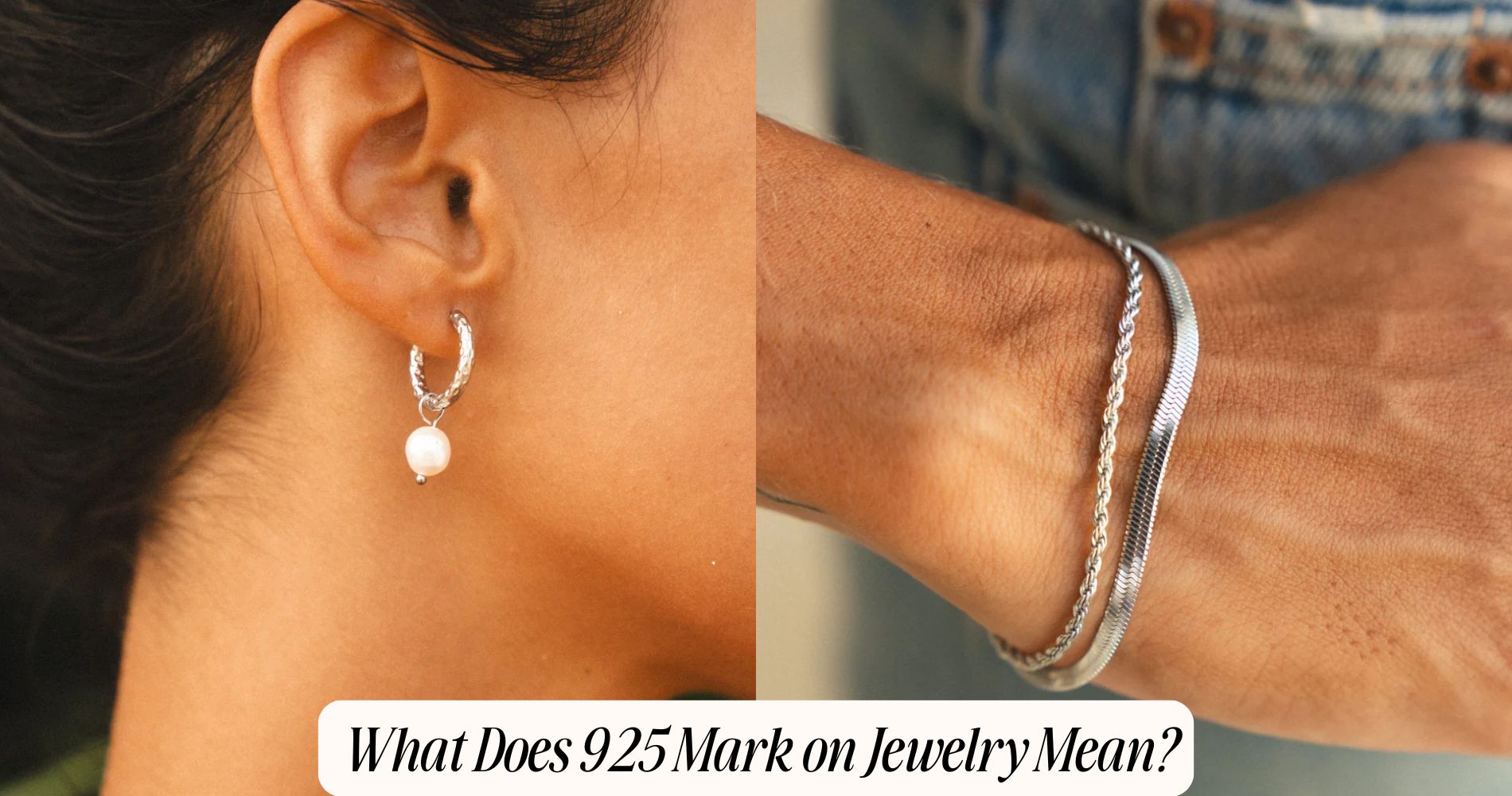
What Does 925 Mark on Jewelry Mean?
What does 925 mark on jewelry mean? A “925” stamp shows the piece is sterling silver, made from 92.5% pure silver and 7.5% alloy metals—usually copper—to boost strength and everyday wear resistance. This hallmark confirms compliance with assay standards and helps verify authenticity, though advanced tests like acid or XRF can provide extra certainty. While sterling silver may tarnish over time, it’s durable and easily refinished. For low-maintenance styles designed to resist discoloration, explore our Tarnish-Free Jewelry
collection—then continue to learn how to spot fakes, care properly, and assess the value of 925 pieces.
What “925” on Jewelry Means
925" stamped on jewelry denotes that the piece is sterling silver, meaning it contains 92.5% elemental silver and 7.5% other metals (typically copper) by mass; this alloying increases hardness and durability while retaining silver's appearance and electrical/thermal properties.
You should treat the mark as a standardized indicator used in assays and documentation to verify jewelry authenticity, not as a decorative motif.
When you inspect a piece, the 925 hallmark signals conformity to a defined silver alloys specification and supports traceability in supply chains and quality control.
You’ll still need corroborating tests—acid spot, XRF, or hallmark registry checks—to confirm composition and detect plating or counterfeit items.
Interpreting 925 correctly helps you assess material value, expected performance, and maintenance requirements.

Why Sterling Is 92.5% Silver (And Why That Matters)
Knowing that a 925 mark denotes sterling silver lets us ask why the alloy is set at 92.5% pure silver and 7.5% other metals.
You should understand this ratio as a compromise: pure silver (99.9%) is too soft for durable jewelry, so manufacturers add copper or other metals to achieve predictable hardness, tensile strength, and wear resistance without severely jeopardizing conductivity or color.
The silver composition standard emerged from assay practices and legal definitions that prioritized consistent performance and trade reliability; its historical significance ties to English assay office regulations that formalized 92.5% as acceptable for circulation.
Practically, the 92.5% threshold guarantees reproducible manufacturing properties and consumer protections grounded in metallurgy and regulatory history.
How to Spot Real 925 Sterling vs. Plated or Fake Silver
When you’re verifying a piece, start by examining the mark itself and the item’s physical properties: genuine 925 sterling will show a clear, appropriately placed "925" or "Sterling" stamp, consistent wear patterns on high-contact areas, and the weight and drape expected from a silver alloy rather than a thin surface layer.
Next, inspect seams and hollow areas for base metal exposure; plating often peels at joints. Use magnet testing—sterling is nonferrous—then perform a targeted nitric acid spot test on an inconspicuous area if necessary; a creamy or white reaction supports silver authenticity, green or brown indicates base metals.
For uncertain or high-value pieces, use professional jewelry testing with XRF or fire assay to quantify silver content and confirm genuine 925 composition.

925: Tarnish, Durability, and Everyday Wear
Silver alloys marked 925 develop tarnish through a predictable chemical process: sulfur-containing compounds in air and on skin react with the silver surface to form silver sulfide, darkening the metal and accelerating in humid or polluted environments.
You should understand that tarnish is surface-level chemistry; it doesn't indicate structural failure.
Durability factors include alloy composition (copper content alters hardness and corrosion susceptibility), manufacturing quality (work hardening, annealing), and mechanical design (thin gauges wear faster).
For everyday wear, you'll balance appearance and function: remove rings for abrasive tasks, avoid prolonged exposure to chlorine and cosmetics, and choose robust settings and thicker gauges for frequently worn pieces.
Proactive tarnish prevention and attention to durability factors will extend usable life without implying intrinsic fragility.
How to Clean and Care for 925 Sterling Silver Jewelry
Having covered how tarnish forms and what affects durability, you can take targeted steps to clean and care for 925 sterling silver to restore appearance and slow future corrosion.
First, select appropriate cleaning methods: use a mild, pH-neutral soap and warm water for routine removal of oils and contaminants; employ a soft-bristled brush for crevices; reserve chemical dips for severe tarnish and follow manufacturer dilution and timing precisely to avoid surface pitting.
For polished finishes, use a microfibre cloth or silver-specific polishing cloth with controlled, directional strokes to avoid abrasive wear. After cleaning, rinse thoroughly and dry immediately to prevent water spots.
Implement systematic jewelry storage: individual anti-tarnish pouches, low-humidity environments, and avoidance of rubber or sulfur-containing materials to reduce reaccretion of tarnish.
How 925 Affects Price, Resale Value, and Insurance
Because 925 denotes 92.5% pure silver alloyed with copper, it directly shapes market pricing, resale prospects, and insurance valuation: buyers and underwriters treat sterling as a lower per-ounce commodity than fine (999) silver and as less valuable than comparable gold or platinum pieces.
Yet its alloyed strength and widespread use in crafted jewelry preserve retail margins and secondary-market demand. You should expect retail price comparison models to reflect labor, design premium, and spot silver rates; scrap-value formulas will discount for alloy content and fabrication.
For resale strategies, document provenance, condition, and maker to capture collector premiums beyond metal content. Insurers base replacement cost on retail pricing plus workmanship; for claims they apply depreciation schedules acknowledging alloyed durability versus intrinsic metal value.

Smart Buying Tips: Verifying 925 Pieces and Avoiding Scams
If you want to buy sterling confidently, verify 925 markings through a combination of visual inspection, simple tests, and documentation checks to separate genuine pieces from mismarked or plated items.
For smart buying, inspect stamps under magnification: clear “925” with consistent font and proper placement reduces counterfeit risk. Perform non-destructive tests—magnetism (sterling is non-magnetic), specific gravity estimation, and professional acid spot tests when necessary—to corroborate visual cues.
Request documentation: assay certificates, receipts, or warranty cards tied to serial numbers. Compare seller reputation, return policy, and third-party appraisals to quantify risk.
Avoid deals lacking verifiable provenance or refusal of independent testing. Prioritize measurable evidence of jewelry authenticity over anecdotal claims to minimize fraud and guarantee long-term value.
Frequently Asked Questions
Can 925 Jewelry Cause Skin Allergies or Irritation?
Yes — you can experience skin sensitivity or allergic reactions from 925 jewelry if its copper or nickel traces, plating breakdown, or contaminants contact your skin; patch testing, hypoallergenic alternatives, and proper maintenance reduce reaction risk effectively.
Is 925 Stamped on Non-Silver Items Ever Legitimate?
Yes — 925 stamp legitimacy can be legitimate on non silver items when marking silver-plated, silver-filled, or silver-core components; you’ll need compositional assays, hallmarks, or vendor certification to verify true sterling content versus mere surface treatments or mislabeling.
Does 925 Silver Contain Nickel or Other Metals?
No, 925 silver typically doesn't contain significant nickel; it's sterling silver with about 92.5% silver and 7.5% alloy composition, usually copper or other metals. You should verify nickel content if you have allergies.
Can 925 Jewelry Be Resized or Repaired Safely?
Yes — you can safely resize and repair 925 jewelry if trained technicians assess alloy composition and condition. They’ll use appropriate jewelry resizing and repair techniques (soldering, annealing, plating) while controlling heat and stress to preserve integrity.
How to Identify Vintage or Antique 925 Marks?
You inspect hallmarks, maker’s marks, and assay stamps under magnification; vintage silver shows wear-consistent font, hand-punched antique markings, country codes, and date letters. You compare references, weight, and soldering techniques for verification.
Conclusion
When you see 925 stamped on jewelry, it means the piece is sterling silver: 92.5% pure silver alloyed with 7.5% usually copper to increase strength and durability. This standardized composition balances malleability and wear resistance, influences tarnish behavior, and sets baseline value. Verify 925 with acid tests, magnet checks, and reputable markings or assay documentation. For maintenance, use gentle cleaning and storage to minimize oxidation and preserve resale and insurance worth.






コメントを書く
このサイトはhCaptchaによって保護されており、hCaptchaプライバシーポリシーおよび利用規約が適用されます。